Red Raspberry Leaf Tea: Benefits, Uses, and What the Research Actually Shows
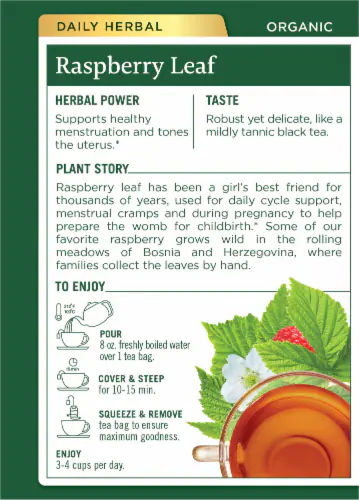
Red raspberry leaf tea is made from the dried leaves of the raspberry plant, Rubus idaeus, not from the berries themselves. This distinction matters because the leaves and the fruit have almost nothing in common in terms of taste or active compounds. The tea has a mild, slightly earthy, green-tea-adjacent flavor and a long history of use in Western herbal medicine, particularly for women’s health applications during pregnancy and menstruation.
Beyond its traditional uses, red raspberry leaf contains a range of bioactive compounds that make it genuinely useful as a daily herbal tea for anyone interested in antioxidant support and mild nutritional supplementation. This guide covers what the research shows, what traditional use claims are reasonably supported, and how to use it safely.
What Red Raspberry Leaf Contains
The leaves of the red raspberry plant are rich in tannins, flavonoids, ellagic acid, and fragarine, a plant alkaloid unique to the Rubus genus. They also contain vitamin C, vitamin E, calcium, iron, magnesium, and potassium in amounts that are nutritionally meaningful for a herbal tea. The tannin content gives the tea a slightly astringent quality and contributes to its antioxidant capacity.
Fragarine is the compound most associated with the traditional use of red raspberry leaf for uterine health. It is believed to tone and strengthen the smooth muscle of the uterus, which explains the tea’s longstanding reputation as a uterine tonic. Research on fragarine’s mechanism is available through studies indexed on PubMed, though human clinical trial data on this specific application remains limited compared to the extensive traditional use record.
Traditional and Evidence-Based Uses
Menstrual Comfort
Red raspberry leaf tea has been used for generations in the US, UK, and continental Europe as a support for menstrual discomfort. The antispasmodic properties of fragarine and the anti-inflammatory effects of the flavonoids are proposed mechanisms for reducing the cramping and heavy flow that characterizes difficult menstruation. Women who drink it regularly during the weeks leading up to menstruation report reduced cramping and improved cycle regularity in observational accounts.
Clinical trial evidence is limited, but the mechanism is plausible given the documented muscle-relaxing effects of fragarine. It is safe to use throughout the menstrual cycle for most healthy adult women. Starting with one cup per day and increasing to two to three cups during the week before and during menstruation is the most commonly recommended approach in herbalist practice across the US and UK.
Antioxidant Support
The ellagic acid and flavonoid content of red raspberry leaf provides meaningful antioxidant activity. Ellagic acid is a polyphenol also found in pomegranates, strawberries, and walnuts and has been studied for its ability to neutralize free radicals and support cellular health. A cup of red raspberry leaf tea brewed from quality dried leaves delivers a genuine antioxidant contribution that complements other dietary sources of polyphenols.
For athletes dealing with the oxidative stress of consistent high-intensity training, incorporating red raspberry leaf tea as one of several daily herbal teas is a practical, low-cost way to diversify antioxidant intake across multiple compound families. Variety in antioxidant sources matters because different polyphenols neutralize different types of free radicals and work through different biological pathways. Pair varied nutrition with training gear that is built for the long haul, including the knee sleeves and nylon lifting belt from Genghis Fitness.
Nutritional Mineral Content
One underappreciated aspect of red raspberry leaf tea is its mineral content. The leaves provide bioavailable calcium, magnesium, iron, and potassium, making a cup of this tea a genuine, if modest, dietary mineral source. For women who are borderline deficient in iron or calcium, regularly including mineral-rich herbal teas alongside dietary sources provides incremental daily support that adds up meaningfully over time.
Pregnancy Use: The Nuanced Truth
Red raspberry leaf tea is widely recommended in natural parenting circles for use during the third trimester of pregnancy to prepare the uterus for labor. The claim is that fragarine tones the uterine muscle and may shorten labor duration. A small number of clinical studies have examined this. Results are mixed and the research quality is limited, with some studies showing modest reduction in labor duration and others showing no significant effect.
The important safety note is that red raspberry leaf should not be used during the first trimester because the uterine-stimulating effects of fragarine carry a theoretical risk of stimulating contractions during early pregnancy. Most herbalists and midwives who recommend it for pregnancy specify that use should begin no earlier than 32 weeks gestation and only after consultation with a healthcare provider. Anyone who is pregnant should not begin using this tea without first discussing it with their obstetrician or midwife.
How to Brew Red Raspberry Leaf Tea
Use one to two teaspoons of dried red raspberry leaf per cup of boiling water. Unlike delicate teas such as white or green tea, raspberry leaf can handle a full boil without damage to its active compounds. Steep for five to ten minutes. Longer steeping extracts more tannins and produces a stronger, more astringent flavor. Shorter steeping gives a lighter, more pleasant cup.
The tea can be drunk hot or iced and combines well with other herbal teas including peppermint, lemon balm, and nettle leaf. A blend of raspberry leaf, peppermint, and nettle makes an excellent daily mineral and antioxidant tea that is far more nutritionally interesting than plain water. Cold-brew it overnight in the refrigerator for a smooth, less astringent version that works well as a daily hydration option.
Where to Buy Quality Red Raspberry Leaf
Red raspberry leaf tea is widely available in the US and UK at health food stores, herbalists, and online retailers. Look for organic dried leaf from reputable bulk herb suppliers. Quality varies considerably between commercial tea bags, which often contain dust-grade leaf with minimal active compound content, and whole or cut-and-sifted leaf from dedicated herb vendors. The whole or cut-and-sifted form consistently produces a more potent, flavorful brew than dust-grade tea bags.
Growing raspberry plants and harvesting the leaves yourself is a genuinely practical option if you have garden space. Raspberries are hardy, productive plants across most US and UK climates. The leaves can be harvested before the plant flowers, dried on a screen out of direct sunlight, and stored in sealed glass jars for up to twelve months. Home-harvested and dried raspberry leaf produces a noticeably fresher, more aromatic tea than anything available commercially.
Safety and Who Should Avoid It
Red raspberry leaf tea is safe for most healthy adults, including men, at consumption amounts of one to three cups per day. The main contraindications are early pregnancy (as discussed above), known allergy to Rubus species plants, and active estrogen-sensitive conditions such as certain hormone-sensitive cancers, where the phytoestrogenic activity of the flavonoids warrants medical consultation before regular use.
The high tannin content means that drinking large amounts on an empty stomach can cause mild nausea in some people. Drinking it with food or after meals eliminates this issue for most people. At typical consumption amounts for a healthy adult, red raspberry leaf tea has an excellent safety record spanning centuries of traditional use in multiple cultures.
FINAL WORDS
Red raspberry leaf tea offers genuine antioxidant value, meaningful mineral content, and plausible traditional applications for menstrual and reproductive health that are consistent with its known active compounds. The evidence for specific clinical benefits is stronger in some areas than others, but the safety profile is excellent and the nutritional contribution is real. Add it to your herbal tea rotation alongside other evidence-supported options, brew it from quality dried leaf, and let it contribute to the consistent, detail-focused approach that produces results over time.
Certified strength and conditioning specialists with over 10 years of combined experience in powerlifting, nutrition coaching, and evidence-based fitness content. Based in New York City, the Genghis Fitness team tests every protocol in the gym before writing about it.