SHILAJIT HEALTH BENEFITS: THE ANCIENT MINERAL RESIN THAT MODERN RESEARCH IS VALIDATING
Shilajit is a thick, tar-like substance that oozes from rocks in the Himalayas, Altai, Caucasus, and other mountain ranges during warm months, formed over centuries from the slow decomposition of plant and microbial matter under geological pressure. It has been a cornerstone of Ayurvedic medicine for thousands of years, described as the destroyer of weakness and the conqueror of mountains by classical texts. Modern research has characterized its complex composition and begun validating several of its traditional applications through controlled clinical trials with results that are genuinely interesting.
WHAT SHILAJIT CONTAINS
Shilajit’s most pharmacologically significant component is fulvic acid, a complex organic acid derived from humic substances that makes up 15 to 20 percent of the purified resin. Fulvic acid functions as a molecular transport compound that enhances the cellular uptake of minerals and other nutrients, contributes directly to mitochondrial function, and has documented antioxidant and anti-inflammatory properties. The mineral content of shilajit includes iron, zinc, manganese, copper, and over 80 other trace minerals in ionic form that fulvic acid helps transport into cells.
Dibenzo-alpha-pyrones and their metabolites are a second major compound class unique to shilajit. These compounds interact with the mitochondrial electron transport chain and support ATP production efficiency. Humic acids, proteins, and plant-derived metabolites round out the complex composition that makes shilajit difficult to characterize as a simple supplement. Studies indexed on PubMed have confirmed the bioavailability of fulvic acid and dibenzo-alpha-pyrones from oral shilajit supplementation.
TESTOSTERONE AND MALE FERTILITY: THE STRONGEST MALE EVIDENCE
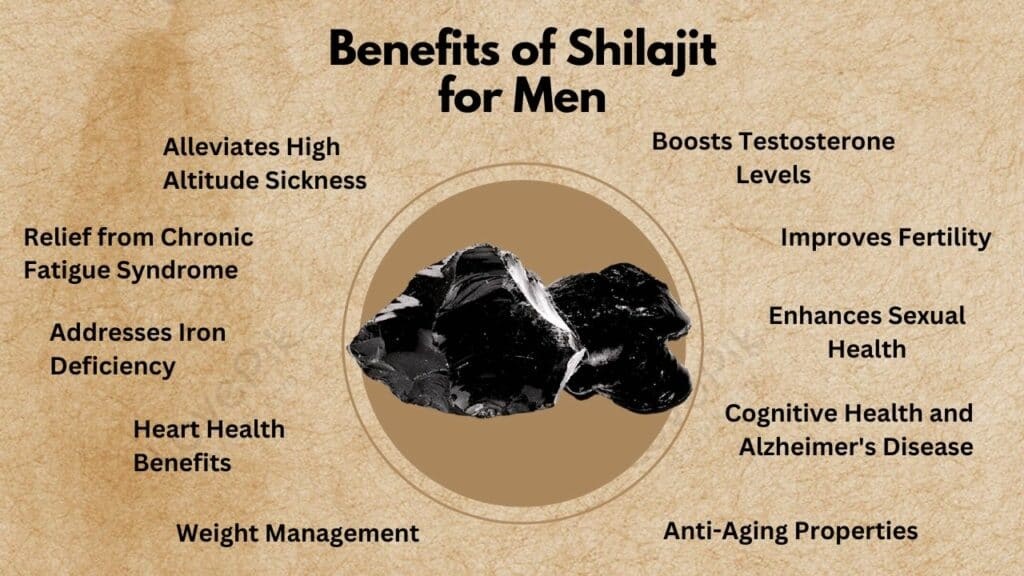
A randomized double-blind trial published in Andrologia found that processed shilajit supplementation at 250mg twice daily for 90 days significantly increased total testosterone, free testosterone, and DHEA compared to placebo in healthy male volunteers aged 45 to 55. A second trial in infertile men found improvements in sperm count, motility, and morphology alongside testosterone increases. The mechanisms proposed include fulvic acid’s support of Leydig cell function and the mineral cofactors necessary for steroidogenesis.
For male athletes in the 40-plus age range experiencing the natural testosterone decline of andropause, or for younger athletes interested in supporting optimal testosterone production through non-pharmaceutical means, shilajit provides evidence at the clinical trial level rather than just theoretical mechanisms. Compare with the testosterone-supporting evidence for fenugreek which works through different enzyme inhibition mechanisms.
MITOCHONDRIAL FUNCTION AND ENERGY PRODUCTION
The dibenzo-alpha-pyrone compounds in shilajit interact with CoQ10, a key component of the mitochondrial electron transport chain, in a synergistic relationship that preserves and enhances CoQ10’s function. A study found that shilajit supplementation significantly increased mitochondrial CoQ10 levels in skeletal muscle and improved mitochondrial function markers compared to CoQ10 supplementation alone.
This mitochondrial energy production support translates to potential benefits for physical endurance, recovery from exercise-induced mitochondrial stress, and the age-related decline in mitochondrial efficiency that reduces energy availability in older adults. The energy mechanism provides a rational basis for shilajit’s traditional description as an energy enhancer beyond just stimulant effects.
COGNITIVE FUNCTION AND NEUROPROTECTION
Fulvic acid from shilajit inhibits tau protein aggregation in laboratory models, which is directly relevant to Alzheimer’s disease pathology where tau neurofibrillary tangles are a primary pathological feature. A study found that fulvic acid disrupted existing tau aggregates and prevented new aggregation formation in cell models. While this research is preliminary and far from clinical translation, it represents the kind of mechanistic finding that justifies further investigation.
Shilajit also modulates the dopaminergic system and demonstrates acetylcholinesterase inhibitory activity, similar to rosemary’s cognitive mechanism. For older adults interested in proactive cognitive health support through dietary means, shilajit’s combination of tau inhibition research and cholinergic support provides a mechanistic rationale alongside the testosterone and energy benefits.
ANTI-INFLAMMATORY AND ANTIOXIDANT PROPERTIES
Fulvic acid’s antioxidant capacity has been measured in multiple standardized assays confirming meaningful free radical scavenging activity. The anti-inflammatory mechanisms include NF-kB inhibition and reduction of pro-inflammatory cytokine production similar to those documented for plant polyphenols, despite fulvic acid’s distinct chemical structure.
For athletes managing the chronic inflammatory load of training, shilajit’s antioxidant and anti-inflammatory contributions complement the tea-based anti-inflammatory protocol covered in our anti-inflammatory tea guide through a non-polyphenol mechanism that adds diversity to the dietary anti-inflammatory approach.
QUALITY AND SAFETY CONSIDERATIONS
Raw, unprocessed shilajit from unverified sources can contain heavy metals including lead, arsenic, and mercury at concerning concentrations. The geological source material and formation process make contamination a genuine concern rather than a theoretical one. Purified, tested shilajit from reputable manufacturers with third-party heavy metal testing and standardized fulvic acid content is essential for safe supplementation.
Shilajit is generally well-tolerated in the dose ranges used in clinical trials, typically 250 to 500mg of purified resin daily. It should be used with caution in people with gout as the purine content may elevate uric acid. Active iron supplementation should not be combined with shilajit without medical guidance as the mineral interactions can produce unpredictable iron accumulation in susceptible individuals.
SHILAJIT FOR WOMEN: THE EVIDENCE IS LESS DEVELOPED
Most controlled clinical trials on shilajit have enrolled male participants, making the testosterone-specific evidence inapplicable to women and leaving the female-specific applications less well-characterized. The mitochondrial function, antioxidant, and mineral transport mechanisms of fulvic acid operate independently of sex hormones, meaning these benefits are theoretically applicable to both sexes. However, the absence of women-specific trial data means extrapolating from male trial results requires more caution than for herbs with mixed-sex evidence bases.
Women interested in the adaptogenic and energy-supporting properties of shilajit have better-evidenced alternatives through ashwagandha for HPA axis normalization and energy, and through functional mushrooms like reishi and lion’s mane for cognitive and immune support. Shilajit’s female-specific evidence base may develop further as research expands, but currently the male-focused clinical literature is what drives the supplementation guidance.
HOW TO TAKE SHILAJIT AND WHAT TO LOOK FOR
Purified shilajit resin is typically dissolved in warm water or milk and consumed as a beverage. A pea-sized amount, roughly 300 to 500mg, is dissolved and consumed once or twice daily. The resin form is considered superior to capsules by most practitioners because it is less processed and retains the full molecular complexity of the original substance. Standardized products should declare their fulvic acid percentage, with quality products typically containing 50 to 60 percent fulvic acid.
Third-party heavy metal testing certification is non-negotiable for shilajit quality assessment. Reputable brands publish certificates of analysis from independent laboratories confirming lead, arsenic, mercury, and cadmium levels below safe limits. Without this documentation, the geological sourcing risks discussed earlier cannot be managed. Price is often a reasonable proxy for quality in the shilajit market: products priced significantly below category average typically reflect lower purification standards that increase heavy metal contamination risk.
FINAL WORDS
Shilajit is one of the more interesting traditional medicines to receive modern clinical validation, with specific human trial evidence for testosterone support, mitochondrial function enhancement, and sperm quality improvement that exceeds what is available for most Ayurvedic compounds. The fulvic acid mechanism for mineral transport and mitochondrial CoQ10 enhancement provides a rational basis for the energy and performance applications. For male athletes interested in supporting testosterone and mitochondrial function through evidence-backed supplementation, shilajit from a quality-tested, standardized source is a legitimate addition to the supplement toolkit. The heavy metal contamination risk from low-quality sourcing makes product selection the critical variable that determines whether you are getting a valuable health supplement or an unintended toxic exposure.
Certified strength and conditioning specialists with over 10 years of combined experience in powerlifting, nutrition coaching, and evidence-based fitness content. Based in New York City, the Genghis Fitness team tests every protocol in the gym before writing about it.