SQUAT AND DEADLIFT EXERCISES: THE COMPLETE GUIDE TO BUILDING MAXIMUM LOWER BODY STRENGTH
Why Squats and Deadlifts Are the Foundation of Real Strength
Every serious strength program built on actual results puts the squat and the deadlift at the center. Not because they are trendy, but because they are the two most effective exercises ever devised for building total lower body strength, posterior chain development, and systemic hormonal stimulus. Together they train every major muscle group from the feet to the traps through heavy, compound, loaded movement patterns that translate directly into athletic performance and functional capacity. Research published in the Journal of Strength and Conditioning Research confirmed that heavy compound lower body training produces significantly greater anabolic hormone response, including testosterone and growth hormone, compared to isolation exercises at comparable effort levels. That systemic effect is why athletes who squat and deadlift consistently look and perform differently from those who rely on machines and isolation work. Protect the spine and knees through every heavy session with a lifting belt and knee sleeves.
The squat and deadlift also complement each other mechanically in ways that make programming them together more effective than training either in isolation. The squat builds quad-dominant knee extension strength and upper back rigidity under load. The deadlift builds hip-dominant pulling strength and posterior chain power. Together they cover the complete lower body kinetic chain with heavy bilateral loading that no other combination of exercises matches for efficiency and total stimulus.
The Squat: Muscles, Mechanics, and Variations
Primary Muscles Worked
The squat is primarily a knee-extension exercise driven by the quadriceps, but the involvement extends throughout the entire lower body and core. The glutes and hamstrings work as hip extensors during the ascent. The adductors work to maintain knee tracking and hip stability. The spinal erectors and core musculature work isometrically throughout the movement to maintain a rigid, upright torso under the barbell load. The upper back muscles, including the traps and rhomboids, work to keep the bar in position and prevent forward torso collapse. A heavy squat is genuinely a full body exercise despite being classified as a leg movement.
Back Squat
The back squat places the barbell across the upper back, either in the high-bar position resting on the upper traps or the low-bar position resting across the rear deltoids. High-bar squatting encourages a more upright torso and deeper knee flexion, placing greater demand on the quads. Low-bar squatting allows a more forward torso lean that distributes load more evenly between quads and posterior chain. Both are effective. The choice depends on individual anatomy, mobility, and training goals. For powerlifting competition and maximum load potential, the low-bar position is standard. For Olympic lifting carry-over and maximum quad development, the high-bar position is preferred. A quality 10mm lever belt provides the spinal support needed for both variations at heavy loads.
Front Squat
The front squat holds the barbell across the front deltoids and clavicles, requiring a significantly more upright torso than either back squat variation. This upright position maximally loads the quadriceps while reducing posterior chain involvement. The front squat also demands significant thoracic mobility and wrist flexibility for the rack position, making it more technically demanding than back squat variations. It is the primary squat variation in Olympic weightlifting training and an excellent quad developer for athletes with the mobility to perform it correctly.
Box Squat
The box squat introduces a brief pause at the bottom position by sitting back onto a box set at or below parallel depth. The pause eliminates the elastic rebound that assists the ascent of a standard squat, requiring the lifter to generate force from a dead stop at the bottom. This trains the ability to produce force from the most mechanically disadvantaged position, which is the exact scenario where squat failures occur. Box squats are widely used in powerlifting programs to build starting strength in the hole.
The Deadlift: Muscles, Mechanics, and Variations
Primary Muscles Worked
The deadlift is the most complete posterior chain exercise in existence. The hamstrings and glutes drive the hip extension that initiates and completes the lift. The spinal erectors work at maximum isometric intensity throughout to maintain lumbar extension against the flexion force of a loaded barbell. The lats and upper back maintain bar proximity to the body and prevent rounding of the thoracic spine. The traps work to keep the shoulders pulled back and down. The forearms and hands transmit the entire load. No other single exercise loads this many major muscle groups simultaneously at maximum intensity.
Conventional Deadlift
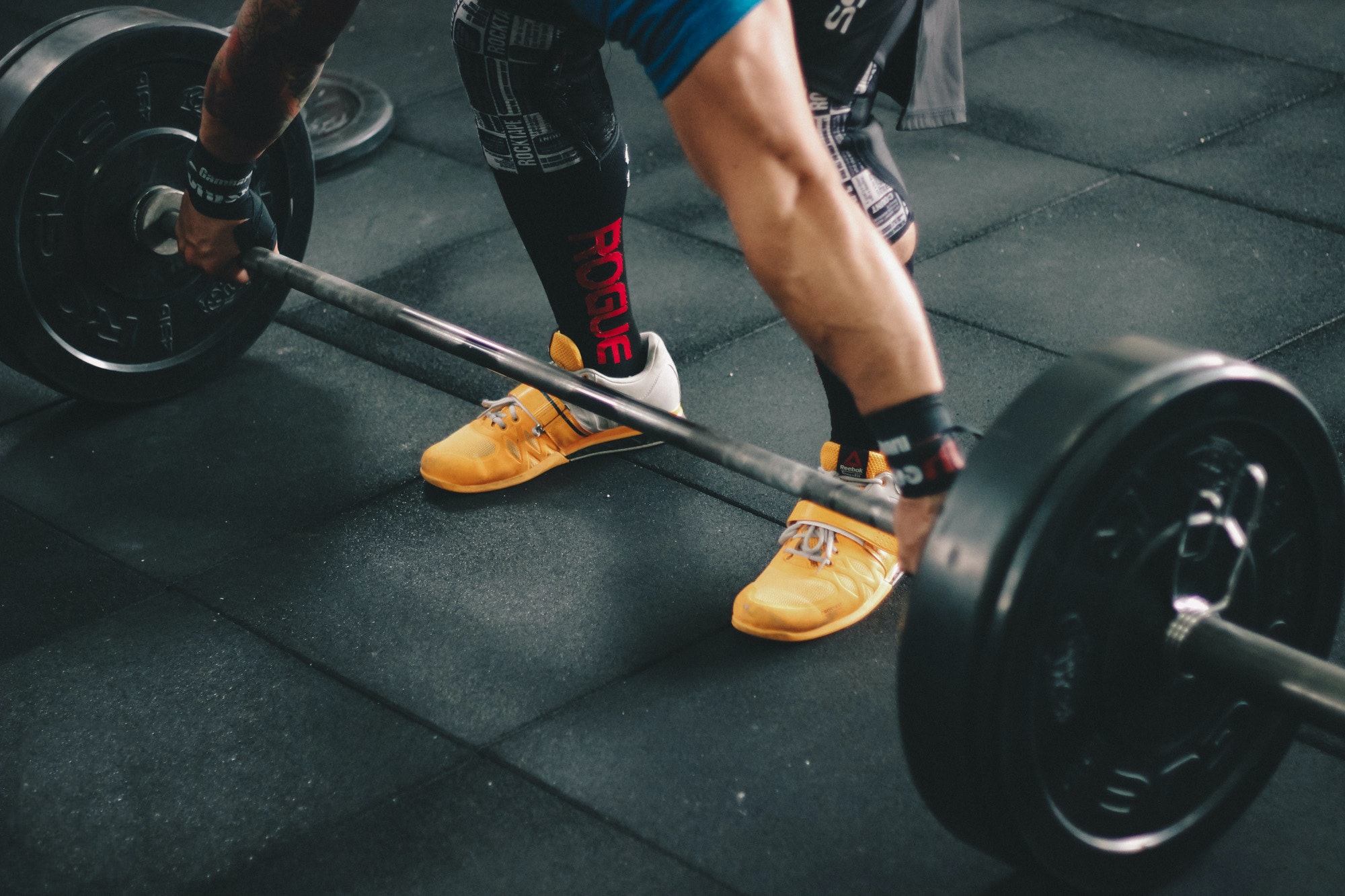
The conventional deadlift uses a hip-width stance with hands outside the legs. The pull initiates through leg drive, transitioning to hip extension as the bar passes the knees. The conventional stance places greater demand on the hamstrings and lower back compared to sumo and is the most common competition standard. A quality pair of leather lifting straps removes grip as the limiting factor at maximal loads and allows the back, hips, and hamstrings to work to their true capacity.
Sumo Deadlift
The sumo deadlift uses a wide stance with toes pointed out and hands inside the legs. The wider stance reduces the range of motion and places greater demand on the hip abductors and adductors compared to conventional. Many athletes with longer torsos or limited hip mobility find sumo mechanics more natural and more powerful than conventional. Both are legal in powerlifting competition. The choice should be based on individual anatomy and which variation allows stronger mechanics, not on which looks more impressive.
Romanian Deadlift
The Romanian deadlift begins from the standing position rather than the floor, with a hip hinge that lowers the bar along the front of the legs until a strong hamstring stretch is felt, then drives back to standing through hip extension. The RDL is primarily a hamstring and glute exercise and one of the best posterior chain builders available. Performed with lighter loads and higher reps than the conventional deadlift, it builds the hamstring and glute strength that directly supports heavier conventional and sumo pulls.
Programming Squats and Deadlifts Together
Frequency and Volume
Most effective strength programs train the squat two to three times per week and the deadlift one to two times per week. The deadlift requires more systemic recovery than the squat due to its heavier loads and greater total muscle involvement, which is why most advanced programs reduce deadlift frequency while maintaining or increasing squat frequency. A simple three-day-per-week lower body schedule might look like: Monday heavy squat and light deadlift accessory, Wednesday moderate squat and Romanian deadlift, Friday light squat technique work and heavy conventional or sumo deadlift.
Intensity Periodization
Both squat and deadlift respond well to wave loading periodization where intensity cycles from moderate to heavy across a training block. A 12-week block might progress from 70 percent of maximum in weeks one and two, to 75 to 80 percent in weeks three through six, to 85 to 90 percent in weeks seven through ten, with a short deload and peak in weeks eleven and twelve. This gradual intensity increase allows the connective tissue, nervous system, and muscles to adapt progressively without the acute overuse injuries that come from sustained heavy training without planned variation.
Essential Accessories for Squat and Deadlift Training
Beyond the primary lifts, targeted accessory work addresses the specific weaknesses that limit squat and deadlift performance. For the squat, Bulgarian split squats address unilateral quad and glute strength. Good mornings build the spinal erector and hamstring strength that prevents forward torso collapse under heavy squat loads. For the deadlift, rack pulls train the lockout position where many conventional deadlifts fail. Glute bridges and hip thrusts with hip circle bands build the glute activation that drives hip extension in both lifts.
Equipment selection matters too. A 4 inch leather belt for heavy squats and deadlifts provides the rigid bracing surface that maximizes intra-abdominal pressure. Knee sleeves maintain joint warmth and stability through high-volume squat sessions. Lifting straps and figure-8 straps address grip on maximal deadlift attempts. Building this equipment foundation alongside the lifts themselves creates the conditions for sustained, injury-free progress.
FINAL WORDS
The squat and deadlift are the two exercises that, done consistently and progressively over years, produce the kind of strength and physical development that nothing else can replicate. Learn them correctly, train them hard, recover properly, and build the supporting accessories and equipment that let you do it safely for the long term. Everything else in training supports these two movements. Make them the center of your program and let everything else orbit around them.
Certified strength and conditioning specialists with over 10 years of experience in powerlifting, nutrition, and evidence-based fitness content. Based in New York City.