Genghis Fitness · Gear Reviews and Comparisons
Weight Lifting Hooks Comparison: Hook Types, Materials, Load Limits, and Which Works Best for Your Training
Updated 2026 | By Team Genghis Fitness | 18 min read
Lifting hooks are one of the more straightforward gear categories in terms of their function: they create a mechanical connection between the wrist and the bar that bypasses grip strength. But within this simple function, meaningful differences exist between hook types that affect how secure the connection is, how comfortable the wrist feels under load, how quickly the hooks can be applied and removed, and what loads they can safely handle. Understanding these differences prevents purchasing hooks that are technically functional but poorly suited to how you actually train.
Hook Types and Construction
Standard Steel Hook with Wrist Strap
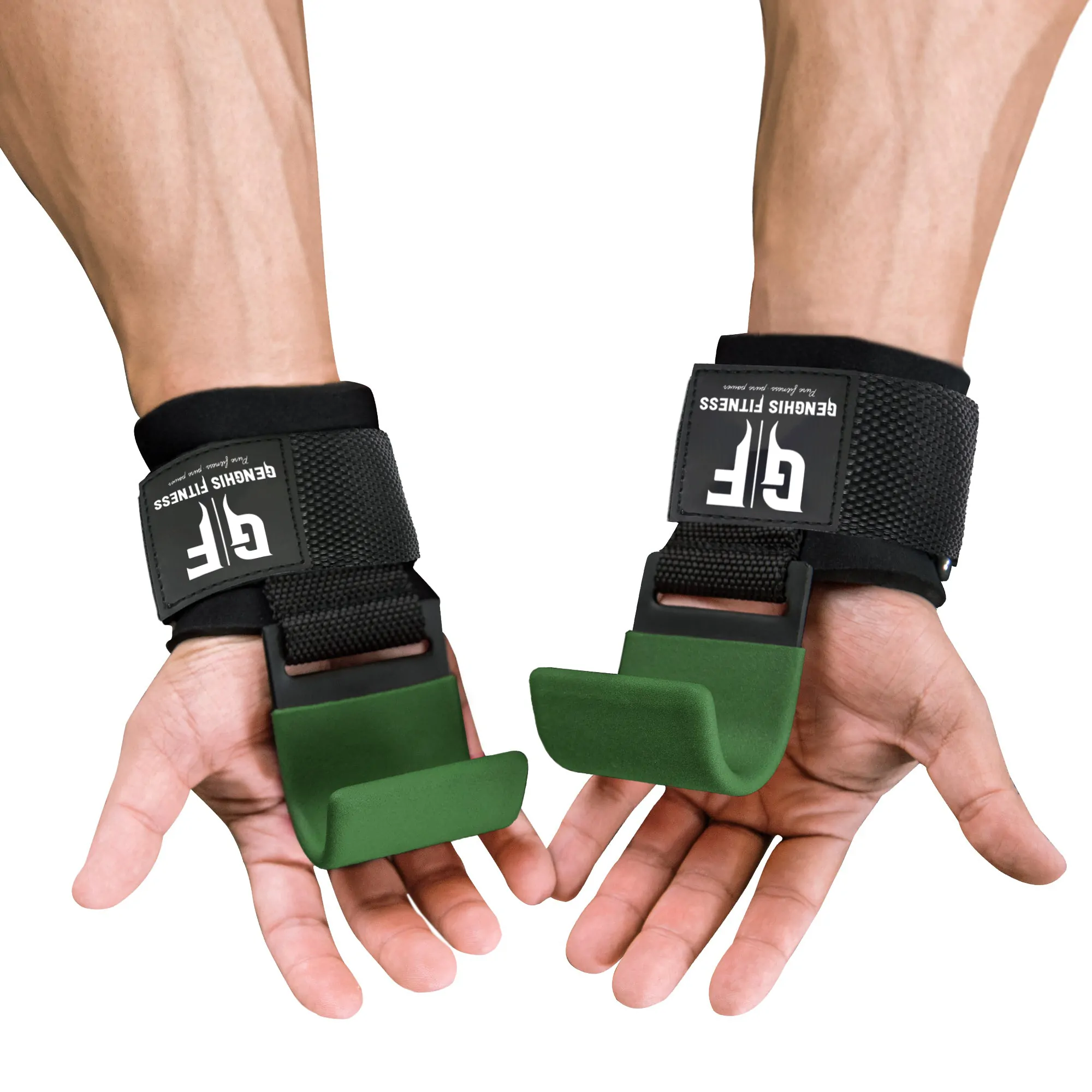
The most common design: a steel hook attached to a wrist strap, worn so the hook extends under the bar from the palm side of the hand. The wrist strap is typically neoprene or nylon with velcro or buckle closure. The hook extends from the wrist attachment and curves under the bar, creating a passive mechanical connection that holds the bar regardless of grip strength.
Hook material matters significantly at high loads. Steel hooks provide adequate rigidity for loads up to and beyond most training weights. Zinc alloy hooks that are chrome-plated to look like steel can crack under repeated high-load use. Press firmly on the hook with your thumb: quality steel has zero flex under hand pressure, while zinc alloy may show slight flex. The Genghis Fitness weight lifting hooks use steel hook construction with a padded neoprene wrist strap designed for the wrist pressure distribution that makes high-load hook use comfortable.
Adjustable Hook Length
Some hook designs offer adjustable hook length, allowing the depth of the hook under the bar to be increased for larger bars or adjusted for personal preference. For most standard barbell work, a fixed hook length at the standard bar diameter is adequate. Adjustable hooks are more practical for athletes who use hooks across multiple bar diameters (standard barbells, trap bars, axle bars) where the hook engagement depth varies.
Rubber-Coated Hooks
Some hooks have a rubber coating over the metal surface to reduce bar slipping and bar marking. Rubber-coated hooks provide slightly better friction engagement with the bar, which is relevant for exercises where the bar might rotate during the lift. The coating also reduces the metal-on-metal noise during setup. The trade-off is that rubber coatings can wear away over time with chalk and heavy use, eventually exposing the underlying metal.
Hooks vs. Straps: When Each Wins
The full comparison of hooks versus straps for different exercises is covered in our hooks vs straps guide, but the key comparison points for this hook-focused review:
| Factor | Hooks | Straps |
|---|---|---|
| Setup speed | 2 to 3 sec | 10 to 20 sec |
| Security at max load | High (passive lock) | Very high (figure-8 design) |
| Natural feel on bar | Lower (metal interface) | Higher (fabric wrap) |
| Wrist comfort under load | Variable (wrist angle) | Consistent (fabric distributes) |
| Best for high-rep work | Yes (fast on/off) | Less practical |
| Durability | Very high (metal hook) | Good (stitching limit) |
Best Applications for Hooks
A study published in the Journal of Athletic Training found that hook users reported significantly reduced grip fatigue during high-volume pulling exercises, confirming the practical load-management benefit of mechanical grip aids for accessory work. Hooks excel in three specific training contexts. First, high-volume accessory pulling work (shrugs, rack pulls, high-rep rows) where the speed advantage of hooks over straps across many sets adds up to meaningful time savings per session. Second, exercises where bar rotation during the movement is not a significant concern and the passive hook engagement is fully secure. Third, for athletes who find strap wrapping technically difficult or uncomfortable and prefer the simpler on/off of hook use.
For maximum-effort single-attempt deadlifts in competitive powerlifting, most experienced athletes prefer straps over hooks because straps provide a more adaptable connection across the full range of bar travel. The subtle wrist angle demands of a competitive deadlift from floor to lockout are better accommodated by the flexible strap wrap than the rigid hook geometry. The safety considerations around hook use for heavy deadlifts specifically are covered in our are lifting hooks safe guide.
Frequently Asked Questions
Do Lifting Hooks Hurt the Wrists?
Hooks can create wrist discomfort if the wrist strap is positioned incorrectly or if the hook angle creates a wrist extension force under heavy load. Ensure the wrist strap sits at the base of the palm rather than on the wrist joint. The hook should engage the bar with the wrist in a neutral or slightly extended position rather than highly flexed. If hooks consistently cause wrist discomfort, straps typically provide a more comfortable wrist interface and are worth trying as an alternative.
Are Lifting Hooks Better Than Straps for Beginners?
For beginners who are not yet planning competitive powerlifting, hooks are often more practical as a first grip aid because the setup is simpler and the on/off speed is faster during learning sessions where tempo and focus should be on movement patterns rather than equipment management. The trade-off of bypassing grip development is the same as straps but the simplicity advantage is real for beginners managing multiple new skills simultaneously.
Fast Setup. Maximum Security. Pull More Every Session.
Steel lifting hooks with padded wrist strap. Built for high-volume rows, shrugs, and heavy rack pulls.
Shop Lifting Hooks Shop Leather StrapsLoad Capacity, Hook Width, And What The Specs Actually Mean For Your Training
Weightlifting hook specifications can be confusing when you are trying to compare products. Load capacity ratings listed by manufacturers represent the maximum tested load the hook mechanism itself can withstand, not the maximum you should train with. For practical purposes, train at no more than 80 percent of the listed capacity to preserve the hook’s structural integrity over time. A hook rated to 500 pounds is appropriate for training sets up to 400 pounds, not for attempting a 500-pound pull where the hook is working at its absolute limit every rep.
Hook width determines which bar diameters work with a given hook. Standard Olympic barbells measure 28 to 29mm at the shaft. A hook designed for standard bars will not sit properly on an axle bar or a thick-grip barbell. If you train on varied equipment, confirm the hook’s rated bar diameter range before purchasing. Hooks designed specifically for standard Olympic bars offer the most secure seat and are appropriate for the vast majority of gym training situations. The Genghis Fitness weight lifting hooks are sized for standard Olympic barbells and rated for serious pulling loads with a padded wrist strap that distributes the load across a wide contact area.
When Hooks Make Sense And When Straps Are The Better Choice
Hooks excel in one specific scenario: when you need to eliminate grip fatigue almost entirely to focus exclusively on the target muscle group. For high-rep lat pulldowns, cable rows, and rack pulls where your back can handle far more volume than your grip can sustain, hooks let you train through that volume without grip becoming the limiting factor. They are also useful for athletes with grip injuries who need to maintain pulling volume while the injury heals.
The limitation of hooks is that they do not develop grip strength the way straps do. A traditional lifting strap still requires your hand to close around the bar, which maintains some grip engagement. A hook completely removes that requirement. For powerlifters and athletes who want to build grip alongside pulling strength, alternating between raw pulling and strap-assisted work is usually a better long-term approach than relying exclusively on hooks for heavy training.
Certified strength and conditioning specialists with over 10 years of experience in powerlifting, nutrition, and evidence-based fitness content. Based in New York City.
Browse all related guides in the gym accessories guides for how-to guides, buying recommendations, and training applications across every gym accessory.