Genghis Fitness · Equipment Maintenance
10mm Belt Storage Tips: Preventing Leather Damage, Correct Unrolled Storage, Buckle Care, Climate Considerations, and Long-Term Preservation
Updated 2026 | By Team Genghis Fitness | 22 min read
A 10mm full-grain leather weightlifting belt is a long-term training investment that should outlast 10 to 20 years of regular use when stored correctly between sessions. The enemies of leather longevity are moisture retention at flex points, heat that dries and cracks leather fibres, compression that creates permanent creases at stress points, and the accumulated sweat salts that draw moisture from leather over time. Each of these threats is addressed by straightforward storage practices that take seconds to implement and compound to months or years of additional belt life across a training career.
The Most Damaging Storage Mistake
The single most damaging storage practice for a leather weightlifting belt is coiling it tightly and sealing it in a gym bag immediately after a training session while it is still warm and damp from training. This creates three simultaneous damage mechanisms: the tight coil creates persistent stress creases at the bending points that become crack initiation sites in the leather over time; the sealed bag traps moisture and heat that accelerate bacterial growth and leather degradation; and the sweat residue left on the leather surface dries into the leather fibres and causes progressive brittleness at the most heavily sweated areas. Research on leather degradation under combined moisture and mechanical stress published in the Journal of Materials Science confirmed that the combination of residual moisture and mechanical stress at flex points accelerates fatigue crack initiation in leather significantly compared to either factor alone, directly explaining why the tight-coil sealed-bag storage causes disproportionate damage relative to the brief time involved.
Correct Unrolled Storage
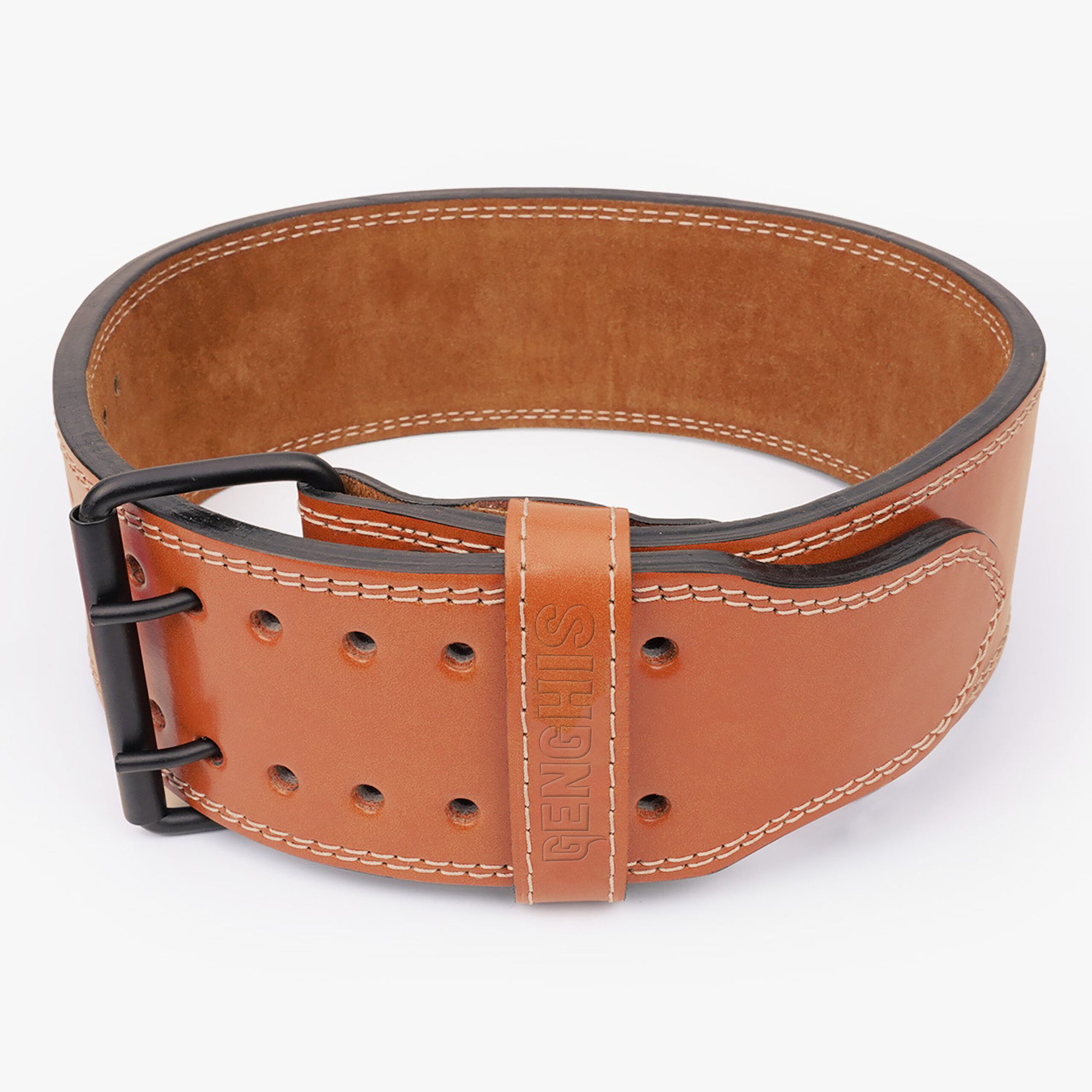
The correct storage approach for a 10mm leather belt is to unroll it completely after each session, wipe the inner surface with a dry cloth to remove sweat residue, and either hang the belt on a dedicated hook or lay it flat in a well-ventilated area until completely dry before putting it away. A belt hook mounted inside a wardrobe, on a rack, or in the training space is the ideal solution: it keeps the belt flat, allows air circulation on all surfaces, and makes the belt immediately accessible for the next session. If hanging is not practical, lay the belt flat on a surface rather than coiling it. The belt should never be stored while still warm or damp; the drying time at room temperature is typically 2 to 4 hours for a fully sweated belt. Complete drying before storage is the single most impactful storage practice for long-term leather health. The complete leather belt care protocol is in our leather belt care guide.
Buckle and Hardware Storage Considerations
The buckle hardware of a 10mm belt requires specific storage attention that is separate from the leather care considerations. For lever belts, store with the lever mechanism in the open position rather than snapped closed. Storing the lever in the closed position under the compression of a coiled belt creates mechanical stress on the lever pivot point that can cause progressive loosening of the mechanism over time. For prong buckles, check that the prong is seated in a hole rather than resting between holes during storage, as storage with the prong pressing against the leather between holes creates a stress point at that location. Both lever and prong hardware benefit from annual application of a small amount of machine oil or petroleum jelly to the moving parts to prevent corrosion and maintain smooth operation. The lever pivot point and the prong hinge are the specific lubrication points for their respective designs.
Climate and Environmental Storage Factors
Temperature and humidity significantly affect leather belt condition during storage. High heat (above 35 degrees Celsius), such as in a hot car in summer, accelerates moisture evaporation from leather fibres, causing progressive drying and brittleness that manifests as surface cracking months later. High humidity (above 70 percent relative humidity) promotes mould growth on leather surfaces and causes the leather to expand and distort if sustained. Direct sunlight fades and dries leather simultaneously. The ideal storage environment for a leather belt is a cool, dry, shaded location with moderate ventilation: an indoor cupboard or wardrobe in a climate-controlled space is ideal. Athletes who train in home gyms should store the belt indoors rather than in the garage or shed during temperature extremes. The Genghis Fitness 10mm lever belt and powerlifting leather belt are constructed from full-grain leather that responds well to correct storage practices and maintains its structural properties across decades when cared for correctly.
Frequently Asked Questions
Can You Store a Leather Belt in a Belt Bag?
Yes, provided the belt bag is breathable rather than sealed and the belt is fully dry before storage. Breathable fabric belt bags that allow air circulation around the belt are suitable for transport and temporary storage. Sealed or waterproof bags that trap moisture should not be used for leather belt storage. Dedicated belt bags designed for powerlifting equipment are typically made from mesh or breathable nylon that allows air circulation while protecting the belt surface from scratches and contact with other equipment during transport to competitions or training facilities.
How Often Should You Condition a Stored Belt?
A belt in regular training use should be conditioned with neatsfoot oil or leather conditioner every 4 to 6 weeks. A belt in storage between training cycles (not being used for more than 4 to 6 weeks) should be conditioned before being stored and again when taken out of storage for the next training cycle. Leather in storage continues to lose moisture to the surrounding environment over time, even without training-related sweat exposure. A conditioning treatment before extended storage and another upon return to training maintains the leather flexibility that prevents cracking during the first heavy sessions after a training break.
Store It Right. It Lasts a Career. Neglect It and It Does Not.
Two minutes of post-session care multiplied across years of training.
Shop 10mm Lever BeltSeasonal and Long-Term Storage for Competition Belts
Competition belts that see less frequent use than everyday training belts require specific long-term storage attention. A belt stored for an off-season needs to be conditioned before storage and inspected and conditioned again when taken out for competition preparation. Inspect the leather body for cracking, the buckle hardware for corrosion or mechanical loosening, and the stitching at attachment points for any separation before the first heavy training session of competition preparation. For lever belts, verify the mechanism snaps fully closed before using the belt at near-maximum loads after any extended storage period. Maintaining a simple log of when each belt was last conditioned and inspected provides a reliable maintenance reference that keeps the full maintenance schedule on track throughout the training year and across multiple competition seasons. Athletes who apply the same storage and maintenance protocol to both training and competition belts, with the competition belt receiving an additional inspection before each competition event, find their complete belt kit remains reliable. The 10mm lever belt and powerlifting leather belt are built to reward correct storage with decades of reliable service.
F;”>Shop Powerlifting BeltMore From The 10mm Belt Guide Series
Every aspect of choosing, fitting, using and caring for a 10mm weightlifting belt is covered across this series. Jump to the guide that fits where you are right now.
- 10mm Powerlifting Belt: Complete Guide To Competition-Ready Belts
- 10mm Belt Size Guide: How To Measure And Choose The Right Fit
- 10mm Belt Thickness Benefits: The Science Behind IAP Support
- Exercises With 10mm Weightlifting Belt: Squat, Deadlift And More
Certified strength and conditioning specialists with over 10 years of experience in powerlifting, nutrition, and evidence-based fitness content. Based in New York City.
Explore the full weightlifting belt guides for lever belt comparisons, leather belt reviews, neoprene belt recommendations, sizing guides, and sport-specific belt selection across powerlifting, CrossFit, and Olympic lifting.