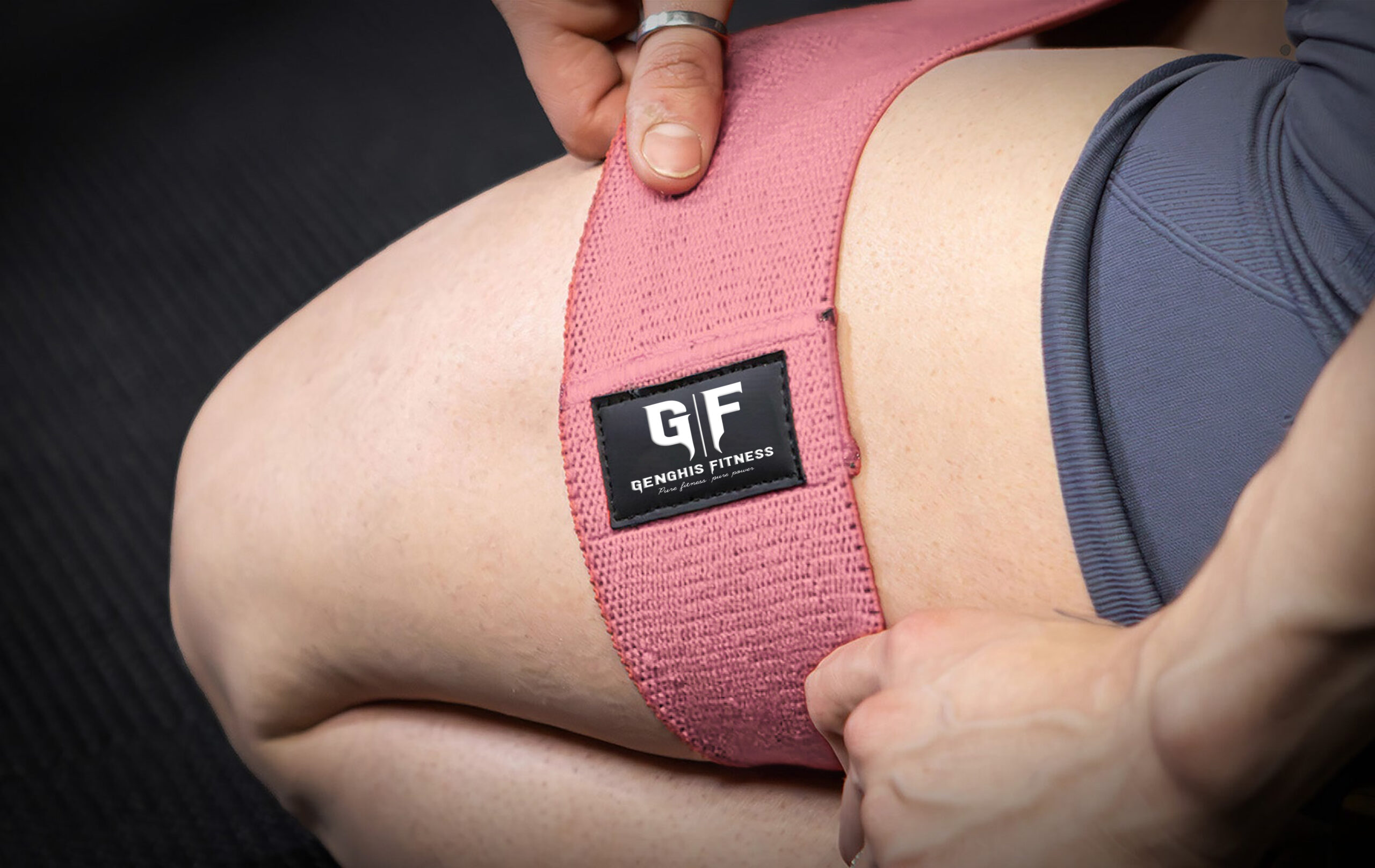
30 Day Booty Band Challenge: A Structured Program That Actually Builds Strength
Most 30-day fitness challenges are structured for completion, not for results. They increase volume rapidly, ignore recovery, and treat every day as an opportunity to push harder regardless of whether the body is ready to adapt. Athletes who complete them often feel accomplished but see limited physical changes because the programming principle underlying most challenges is accumulation rather than structured adaptation.
This 30-day booty band challenge follows a progressive overload model with planned recovery, systematic resistance increases, and a four-week structure that builds genuine hip abductor and glute strength. You will train 5 days per week with 2 rest days. The exercises increase in volume and difficulty each week. The resistance band you use progresses as strength develops. The result after 30 days is measurable improvement in hip abductor capacity, not just the completion of a routine.
Equipment Needed
You need a set of hip circle bands in at least three resistance levels: light, medium, and heavy. The hip circle bands are designed for exactly this type of structured progressive training. The hip circle design stays in position above the knees during lateral movements without rolling, which matters more during dynamic exercises as sets become longer and resistance increases. You also need a bench, sofa, or stable elevated surface for hip thrusts, and sufficient floor space for lateral band walks of at least 12 to 15 steps in each direction.
Week 1: Foundation (Days 1 to 7)
The first week establishes technique and builds the initial neuromuscular connection between the nervous system and the hip abductors. Use a light resistance band throughout. Rest 45 seconds between sets. Focus entirely on movement quality, not on completing the reps as fast as possible.
Daily Training (5 days, rest on any 2)
- Lateral band walk: 3 sets of 10 steps each direction. Quarter-squat depth throughout. Constant band tension.
- Clamshell: 3 sets of 12 repetitions per side. Full range hip external rotation. Two-second pause at the top.
- Banded glute bridge: 3 sets of 15 repetitions. Band above the knees. Outward knee pressure throughout. Two-second squeeze at top.
- Seated hip abduction: 2 sets of 20 repetitions. Low intensity activation to finish.
- Standing hip abduction: 2 sets of 12 repetitions per side. Torso upright, controlled tempo.
If any exercise produces hip or knee discomfort rather than the expected muscle burn, reduce the resistance band or modify the range of motion. The goal of Week 1 is technique establishment, not intensity.
Week 2: Load Increase (Days 8 to 14)
Move to a medium resistance band. Increase sets and reps across the board. Introduce the bench hip thrust to replace the floor glute bridge. Rest 60 seconds between sets.
Daily Training (5 days, rest on any 2)
- Lateral band walk: 3 sets of 15 steps each direction.
- Clamshell with pulse: 3 sets of 12 repetitions plus 5 small pulses at the top, per side.
- Banded hip thrust: 4 sets of 12 repetitions. Upper back on bench, feet flat, outward knee pressure throughout, two-second squeeze at full extension.
- Fire hydrant: 3 sets of 15 repetitions per side. On all fours, lift the knee out to the side through hip abduction.
- Donkey kick: 3 sets of 15 repetitions per side. Drive the leg backward and upward through hip extension.
- Banded squat: 3 sets of 15 repetitions. Constant outward knee pressure through the full range.
Week 3: Intensity (Days 15 to 21)
Remain on the medium band for most exercises. Move to the heavy band for the hip thrust. Increase all set counts by one relative to Week 2. Rest 60 to 75 seconds between sets.
Daily Training (5 days, rest on any 2)
- Lateral band walk: 4 sets of 15 steps each direction.
- Clamshell with pulse: 4 sets of 15 repetitions plus 5 pulses, per side.
- Banded hip thrust with heavy band: 4 sets of 12 repetitions.
- Fire hydrant: 3 sets of 20 repetitions per side.
- Donkey kick: 3 sets of 20 repetitions per side.
- Banded squat: 4 sets of 20 repetitions.
- Standing hip abduction: 3 sets of 15 repetitions per side.
Week 4: Peak and Test (Days 22 to 30)
Move to the heavy band for all exercises. This is the peak week. Maintain the volume from Week 3 with the resistance increase across all movements. Rest 60 seconds between sets.
Daily Training (5 days, rest on any 2)
- Lateral band walk: 4 sets of 20 steps each direction.
- Clamshell: 4 sets of 20 repetitions per side.
- Banded hip thrust: 5 sets of 12 repetitions. Maximum peak contraction at each top position.
- Fire hydrant: 3 sets of 20 repetitions per side.
- Donkey kick: 3 sets of 20 repetitions per side.
- Banded squat: 4 sets of 20 repetitions.
- Standing hip abduction: 3 sets of 20 repetitions per side.
On Day 30, perform the Week 1 exercise sequence using the heavy band. Compare the form quality, ease of completion, and muscle activation you feel now versus the first session with the light band. The improvement across those two data points is your 30-day result.
Recovery During the Challenge
Five training days per week for 30 days requires adequate protein intake and sleep to support the muscle adaptation that produces the results. Aim for at least 0.7 grams of protein per pound of body weight daily. Prioritize 7 to 9 hours of sleep per night. Use the two rest days per week as genuine recovery rather than supplementing with additional training that prevents the muscular recovery the program depends on.
If significant soreness from one session persists through the third or fourth training day of the same week, take an additional rest day rather than training through compromised movement quality. Adaptation happens during the recovery periods, not during the training sessions themselves. The sessions provide the stimulus. Rest is when the change occurs.
Integrating the Challenge with Other Training
If you are also doing barbell training during the 30 days, use the band exercises as activation before your lower body sessions rather than running them as a fully separate workout. The activation protocol from Week 1 and 2 works well before heavy squatting sessions: 2 sets of lateral walks and banded squats prime the hip abductors before loading. The knee sleeves go on for the loaded squatting work that follows, and a powerlifting leather belt or nylon lifting belt handles lumbar bracing for heavy working sets.
After the Challenge
The 30-day structure is a starting point for hip circle band training, not a one-time event. At the end of the month, you will have a clear understanding of which exercises challenge you most and which resistance levels match each movement. Use this information to build an ongoing program that continues developing hip abductor and glute strength as a component of your broader lower body training.
For athletes ready to progress beyond band resistance, the ankle straps for cable machine allow cable machine hip abduction and kickback exercises with adjustable resistance that continues to challenge the muscles as band training provides a ceiling. Combining progressive cable work with continued band activation covers the full range of hip development needs as strength grows beyond what any band set can provide.