HOW TO CHOOSE A WEIGHTLIFTING BELT: THE COMPLETE DECISION FRAMEWORK
Choosing a weightlifting belt is a decision with long-term consequences for both training performance and spinal health, and the number of available options makes it easy to buy the wrong product without a clear evaluation framework. The best belt for any individual athlete is the one that correctly matches material, thickness, width, closure type, and size to that athlete’s specific training context, body proportions, and practical lifestyle. This guide provides that framework as a series of questions that narrow the field to the correct product for any athlete, regardless of training level, sport, or budget.
STEP 1: IDENTIFY YOUR PRIMARY TRAINING CONTEXT
The single most important question in belt selection is what training context the belt will primarily serve. A competitive powerlifter preparing for IPF federation meets needs a full-grain leather belt that is on the federation approved equipment list, sized to the competition rules specifications, and broken in during training preparation so it performs identically in competition as it has throughout the preparation cycle. A CrossFit athlete doing varied intensity work across multiple movement patterns needs a belt that provides meaningful support during heavy barbell work without restricting range of motion during dynamic movements. A recreational lifter training three days per week at moderate to heavy intensities needs a comfortable, practical belt that supports heavy compound work without the maintenance demands of leather. Identifying the primary training context first eliminates most of the belt market from consideration before any other evaluation criteria are applied.
STEP 2: CHOOSE THE RIGHT MATERIAL FOR YOUR TRAINING INTENSITY
Material determines the rigidity ceiling of the belt, which is the primary performance variable. Research on belt stiffness and intra-abdominal pressure confirms that stiffer belts generate higher IAP at equivalent bracing effort. Full-grain leather at 10mm is the stiffest option and the correct choice for athletes training or competing at near-maximum loading where maximum IAP generation is the priority. Quality nylon at 4-inch width provides meaningful rigidity for training intensities up to near-maximum with the advantages of immediate comfort, moisture resistance, and easy maintenance. Neoprene provides the most flexibility and comfort for training contexts that span a wide intensity range within the same session. Verify that leather belts specify full-grain construction explicitly, not just genuine or premium leather which can describe inferior grades.
STEP 3: CHOOSE THE RIGHT CLOSURE SYSTEM FOR YOUR TRAINING WORKFLOW
The closure system determines the practical usability of the belt across a training session. The lever closure applies and releases in five seconds, produces identical tension on every application, and is the preferred choice for athletes doing multiple heavy sets per session who value consistency and speed. The prong closure, as in the powerlifting leather belt, allows tension adjustment between exercises and is preferred by athletes who want different tensions for squatting versus deadlifting in the same session. Nylon buckle closures allow infinite micro-adjustment within the range of the ratchet or roller mechanism. The closure choice is a practical workflow decision, not a performance decision, as both lever and prong closures deliver equivalent IAP at equivalent tension.
STEP 4: CHOOSE THE RIGHT WIDTH FOR YOUR TORSO PROPORTIONS
Width at 4 inches is the competition-legal standard for major powerlifting federations and the most appropriate choice for most athletes whose torso proportions allow the belt to sit between the iliac crest and the lower ribs without contacting both simultaneously. Athletes with shorter torsos where the iliac crest and lower ribs are separated by less than 4 inches in a deep squat position often find that a 3-inch belt eliminates the contact issue while providing equivalent lumbar coverage. The 4-inch leather belt suits most athlete proportions. When torso proportions make neither standard width optimal, a custom-designed lifting belt specifies the exact width, length, and closure position for the individual.
STEP 5: SIZE CORRECTLY USING YOUR TRAINING WAIST MEASUREMENT
Sizing must be based on the training waist measurement taken at the iliac crest level rather than at the clothing waist position. The iliac crest position is two to four inches lower than the natural waist and proportionally larger in circumference. Using clothing waist size to order a belt is the most common sizing error and produces a belt that is too small at the actual training position. Stand in training clothes, place the tape measure at the iliac crest level, and measure after a relaxed exhale. Compare this measurement to the manufacturer’s sizing chart. When between sizes, choose smaller for lever belts and neoprene sleeves. Verify the fit produces firm bracing contact by performing the tension test: take a full belly breath with the belt on; it should resist the expansion firmly at the correct tension.
STEP 6: EVALUATE QUALITY AGAINST BUDGET
Budget is a practical consideration but should not be the primary evaluation criterion for a tool that directly affects spinal safety across years of heavy training. Quality full-grain leather belts at performance tier pricing typically fall in the sixty to one hundred and twenty dollar range. Quality nylon and neoprene belts at fifty to eighty dollars. Budget products below forty to fifty dollars typically use lower-grade leather, inadequate hardware, or synthetic materials with insufficient denier rating to maintain performance across the service life their price implies. Cost-per-year analysis often makes quality belts more economical than budget alternatives that require annual replacement versus the multi-year service life of quality products.
STEP 7: START WITH NYLON OR NEOPRENE IF YOU ARE NEW TO BELT USE
For athletes who are new to belt use and uncertain which material and closure type will work best for their training, the practical recommendation is to start with a quality nylon belt or neoprene belt that provides immediate usability without a break-in period and at a price point that does not require significant commitment before personal preferences about belt feel and function are established through training experience. After three to six months of regular belt use, athletes typically have clear preferences about width, tension, and closure type that make a more targeted belt purchase, potentially in full-grain leather with a preferred closure type, a well-informed decision based on actual training experience rather than pre-purchase assumptions.
BUILDING A COMPLETE SUPPORT SYSTEM AROUND YOUR BELT
Pair the belt with the other support equipment that makes heavy training most productive and safe. Knee sleeves throughout every lower body session for joint warmth and proprioception. Lifting straps for heavy pulling sets where grip would otherwise limit posterior chain training volume. This complete support system, correctly sized and correctly used, covers every major joint and limiting variable across the full range of heavy compound training that serious athletes need to train consistently and productively across years of progressive loading.
FINAL WORDS
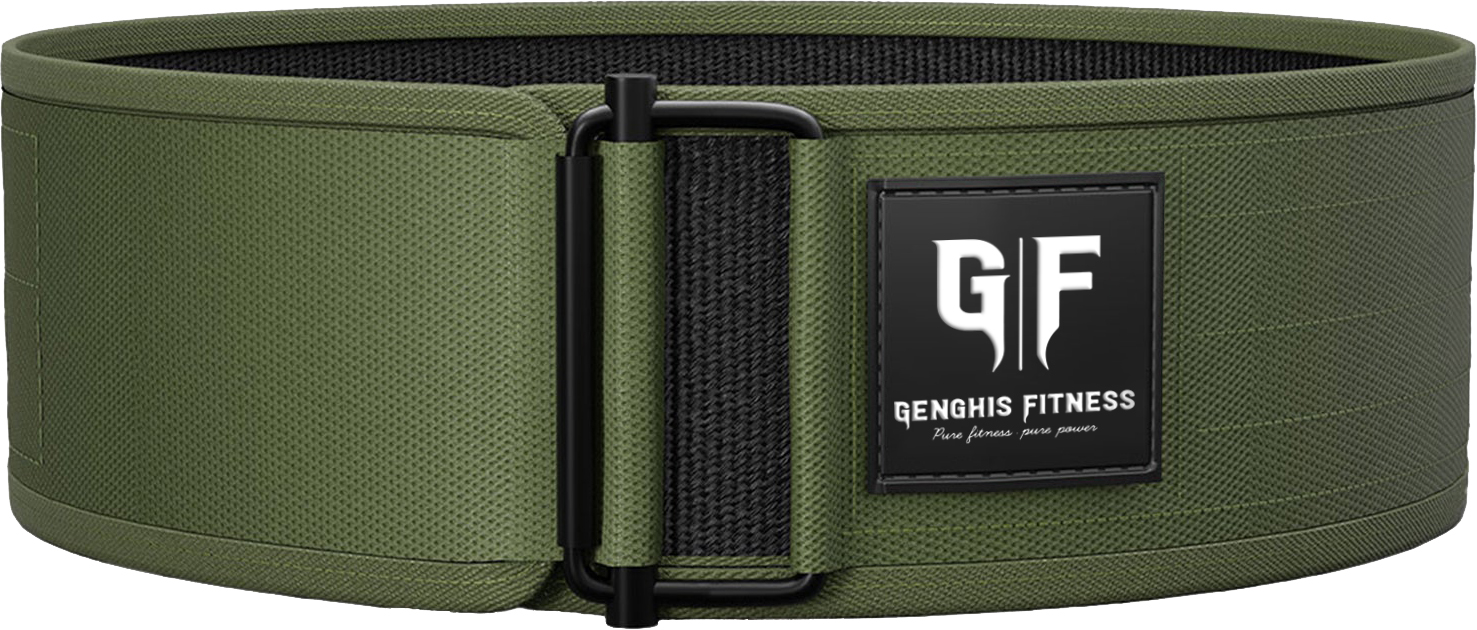
The right weightlifting belt is the one that matches your training context, fits correctly at the training waist position, produces firm bracing contact at the correct tension, and comes from a manufacturer whose construction quality will hold up across the service life you are purchasing it for. The Genghis Fitness 10mm lever belt serves competition and maximum-intensity training. The powerlifting leather belt provides prong closure flexibility. The nylon belt delivers immediate comfort and packability. The neoprene belt offers flexibility across varied intensity training. Use this guide to identify which combination of properties best serves your specific training, then verify the construction quality and fit before committing to a purchase.
Certified strength and conditioning specialists with over 10 years of experience in powerlifting, nutrition, and evidence-based fitness content. Based in New York City.
Explore the full weightlifting belt guides for lever belt comparisons, leather belt reviews, neoprene belt recommendations, sizing guides, and sport-specific belt selection across powerlifting, CrossFit, and Olympic lifting.