Genghis Fitness · Training Guides
Overhead Press: Complete Technique Guide, Muscle Activation, Programming for Strength and Size, and Common Faults Fixed
Updated 2026 | By Team Genghis Fitness | 24 min read
The overhead press (also called the strict press or military press) is the purest test of upper body pressing strength available in barbell training. Unlike the bench press, where the bench provides a stable platform and the legs can drive force into the ground, the overhead press demands that the entire body from feet to fingertips functions as a rigid integrated unit to press a barbell from the shoulders to full arm extension overhead. This total-body integration requirement is why the overhead press develops not just shoulder and triceps strength but also core stability, thoracic extension, and the full-body tension that transfers to almost every other strength training movement.
This guide covers the complete overhead press from first principles: the muscles involved, the technique variables that determine whether you press safely and efficiently or develop the shoulder impingement that sidelines so many overhead pressers, the programming structures that build strength and hypertrophy most effectively, and the specific technique faults that cause most overhead press failures and how to correct them.
Muscle Activation: What the Overhead Press Trains
The overhead press is primarily a deltoid exercise, with the anterior (front) and lateral (side) deltoid heads generating the majority of the pressing force. Secondary muscles include the upper trapezius (which elevates and upwardly rotates the scapula as the bar passes eye level), the triceps brachii (extending the elbow to complete the press), the serratus anterior (protracting and stabilising the scapula through the overhead range), and the rotator cuff muscles (maintaining glenohumeral joint centration throughout the movement).
A study published in the Journal of Strength and Conditioning Research comparing deltoid activation across pressing variations found that the standing barbell overhead press produced significantly higher anterior deltoid EMG activity than seated or machine pressing alternatives, confirming the standing barbell press as the most effective free weight exercise for anterior deltoid development. The standing position demands active core and lower body stabilisation that the seated position eliminates, creating a more comprehensive stimulus.
The core musculature (rectus abdominis, obliques, transverse abdominis, erector spinae) works isometrically throughout the overhead press to maintain a neutral spine and prevent lower back hyperextension as the weight moves overhead. This makes the overhead press a genuine whole-body exercise whose upper back and core demands are often underappreciated by athletes who focus only on the pressing muscles.
Technique: Every Variable That Determines Performance
Grip Width and Position
The optimal grip width places the forearms vertical when the bar is in the rack position (bar resting on the anterior deltoids with elbows slightly in front of the bar). For most athletes this is slightly wider than shoulder width. A grip too narrow forces the elbows forward of the wrists, creating a mechanical disadvantage at the press initiation. A grip too wide reduces the triceps contribution to the press and creates shoulder joint stress through excessive horizontal abduction. Wrap the thumb around the bar (full grip) rather than using a false/thumbless grip, which reduces grip security under overhead loads.
The Start Position: Rack Position
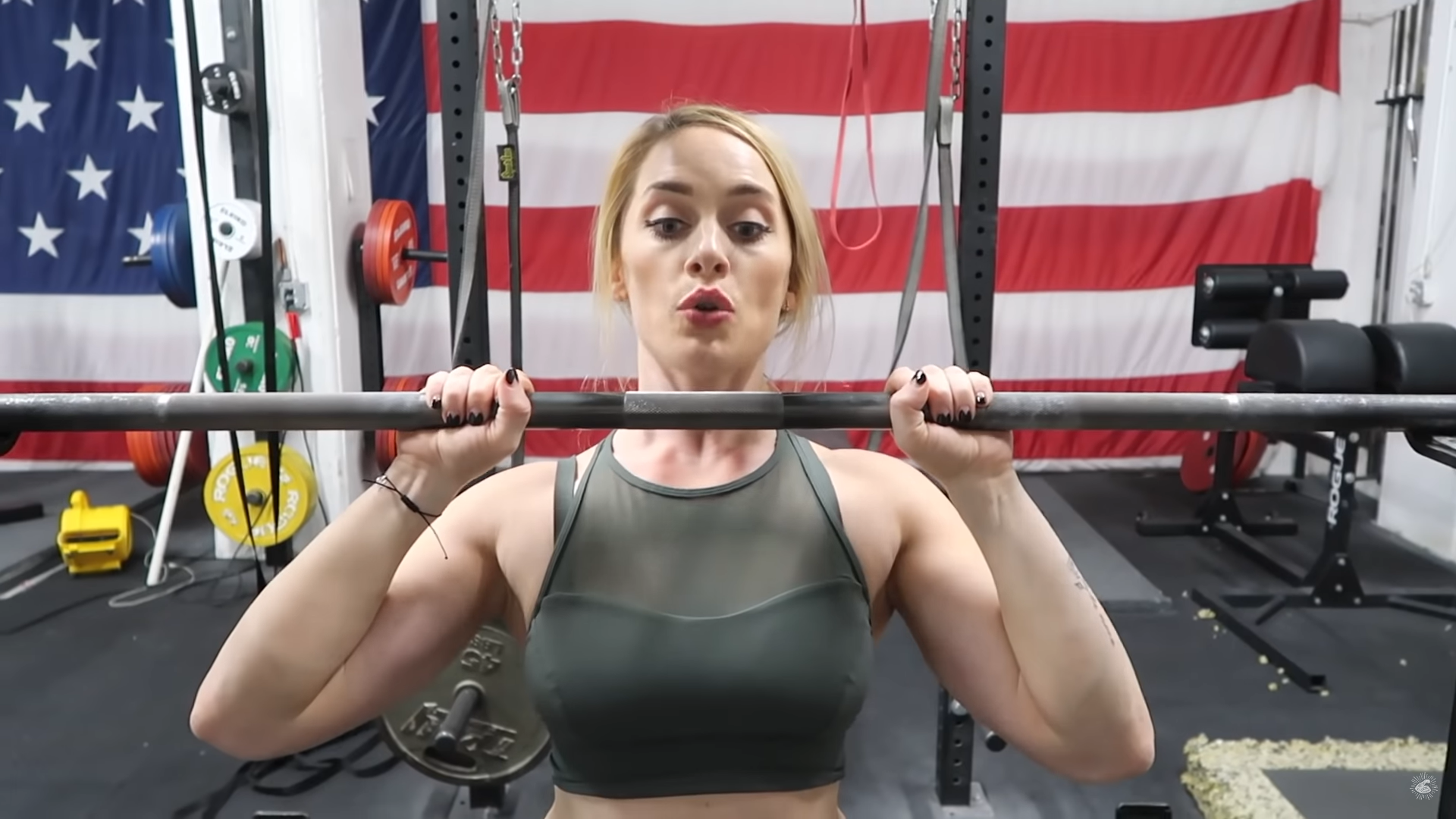
The bar starts in a rack position on the anterior deltoids (front of the shoulders), with the elbows positioned slightly in front of the bar rather than directly under it. The wrists should be stacked over the elbows in a straight line, not cocked backward. Wrist wraps significantly improve comfort and stability in this start position by maintaining wrist extension under load the wrist wraps specifically prevent the hyperextension that causes wrist pain during heavy overhead pressing.
The Press: Bar Path and Head Movement
The critical technique point that distinguishes efficient overhead pressers from inefficient ones: the bar should travel in a straight vertical line, and the head must move backward (not forward) to allow this vertical path. When athletes press with the head staying forward, the bar must travel forward around the head, creating a moment arm that exponentially increases the shoulder joint loading as the weight moves further from the base of support. The correct technique: as the bar leaves the rack position and passes the forehead, pull the head back slightly to let the bar travel straight up, then bring the head back under the bar once it passes overhead. This creates the mechanically efficient bar path where the bar is directly over the midfoot throughout the entire range.
Lockout Position
At the top of the press, the bar should be directly over the middle of the foot, the arms fully extended, and the shoulder blades shrugged upward toward the ears (full scapular elevation). This shrug at lockout is important: failing to elevate the scapula at lockout leaves the rotator cuff in an impingement-prone position and does not complete the full range of overhead shoulder motion that the press trains. Many athletes stop just short of full scapular elevation because it feels unfamiliar. Training this full lockout position develops the overhead stability that transfers to Olympic lifting, carries, and overhead work in general.
Common Faults and Corrections
Lower back hyperextension: The most common overhead press fault, caused by insufficient anterior core bracing or insufficient hip extension (tight hip flexors that anteriorly tilt the pelvis). The hyperextension makes it appear you are pressing more overhead than you actually are by leaning back rather than pushing the weight up. Correction: squeeze the glutes hard throughout the press (this automatically reduces anterior pelvic tilt), brace the core with a Valsalva before each rep, and consider adding a lifting belt for heavy pressing sessions to provide external bracing reference.
Bar drifting forward: Caused by insufficient head movement as the bar passes the forehead or insufficient upper back strength to maintain the upright torso. Correction: deliberately practice the head-back cue and include face pulls and rear delt work to strengthen the upper back that supports the press.
Elbows flaring too wide: Causes the bar to start in front of rather than on the deltoids, losing the mechanical advantage of the rack position. Correction: actively pull the elbows slightly under the bar in the start position, aiming for forearms as close to vertical as your shoulder mobility allows.
Wrist pain: Almost always caused by wrist extension under load. Use wrist wraps for pressing and ensure the bar is directly over the wrist joint (not at the base of the fingers). See the complete wrist wraps guide for pressing application.
Programming the Overhead Press
For strength: 4 to 5 sets of 3 to 6 reps at 80 to 90 percent of maximum, 2 to 3 minutes rest, 2 sessions per week. The overhead press responds well to frequent practice at moderate to high intensity because the movement is technical enough that skill development contributes meaningfully to strength improvement.
For hypertrophy: 3 to 4 sets of 8 to 15 reps at 65 to 75 percent of maximum, 60 to 90 seconds rest, 2 sessions per week. The anterior and lateral deltoids respond well to higher rep ranges and the moderate loads allow technique to be maintained across the full range of reps in each set.
Overhead press and bench press programming: The overhead press and bench press compete for recovery resources because both heavily load the shoulder joint and anterior deltoid. Programming them on alternate days or with adequate recovery between sessions prevents accumulated fatigue from reducing performance on both. A classic split places overhead press on Monday and bench press on Thursday with adequate rest between sessions.
Frequently Asked Questions
Is the Overhead Press Bad for Your Shoulders?
No, when performed with correct technique. The overhead press performed with proper scapular mechanics (full upward rotation and elevation at lockout), a vertical bar path, and appropriate loading is a shoulder-healthy movement that develops the strength needed to protect the shoulder joint. The overhead press becomes problematic when performed with impingement-producing technique: bar path forward of vertical, insufficient scapular elevation at lockout, or excessive load before technique is established. Athletes with existing shoulder impingement or rotator cuff injuries should consult a physiotherapist before overhead pressing.
What Is a Respectable Overhead Press for Natural Athletes?
Strength standards vary by bodyweight, but general benchmarks for natural male athletes: bodyweight overhead press is a solid intermediate standard, 1.25x bodyweight is advanced, and 1.5x bodyweight is elite. For female athletes: 0.65x bodyweight intermediate, 0.85x advanced, 1.0x elite. These standards assume full range of motion strict press with no leg drive. Athletes who primarily bench press and neglect overhead pressing often find their overhead press is disproportionately below these standards relative to their bench, which itself indicates the strength imbalance overhead pressing addresses.
How Is the Strict Press Different from the Push Press?
The strict press uses no leg drive: the legs remain static and the pressing force comes entirely from the upper body. The push press uses a leg dip and drive to initiate the bar’s upward momentum, allowing 20 to 30 percent more weight to be pressed than the strict press maximum. The push press is a power development exercise that trains the ability to transfer force from the lower body through the core to the upper body. The strict press is a pure upper body strength exercise. Both are valuable; most serious training programs include both variations across the training week.
Press More. Protect Your Wrists. Build Overhead Strength That Lasts.
Quality wrist wraps eliminate the limiting factor. A solid belt supports the full-body tension that heavy pressing demands.
Shop Wrist Wraps Shop Lifting BeltCertified strength and conditioning specialists with over 10 years of experience in powerlifting, nutrition, and evidence-based fitness content. Based in New York City.
SHOULDER GEAR THAT PREVENTS BREAKDOWN
Wrist wraps eliminate wrist deviation under load. Elbow sleeves keep the joint warm and supported every rep.
Elbow Sleeves