Booty Bands for Men: Why Male Athletes Should Use Hip Circle Bands
Hip circle bands are marketed almost exclusively toward women, which has created a widespread and inaccurate perception that they are not relevant for male athletes. The biomechanical problems hip circle bands address, gluteus medius weakness, knee valgus during squatting, hip abductor undertraining, and single-leg instability, are equally present in male athletes and equally addressed by systematic band training.
This perception gap is a marketing artifact, not a physiological one. The gluteus medius does not function differently in male anatomy. Hip abductor weakness causes the same knee tracking problems in a male powerlifter squatting 400 pounds that it causes in anyone else. This guide covers why male athletes benefit from hip circle bands, which specific problems they address in male-pattern training programs, and how to integrate them practically.
The Gluteus Medius Problem in Male Strength Programs
Programs centered on bilateral barbell lifting develop the gluteus maximus through hip extension very effectively. The gluteus medius, which controls hip abduction, pelvic stability during single-leg loading, and knee tracking during bilateral squat descent, receives minimal direct stimulus from squats, deadlifts, and hip thrusts regardless of how heavy those exercises are performed.
The consequence shows up in several ways that are common in male strength athletes. Knee valgus under heavy squat loads is the most visible: the knees collapse inward during the descent despite conscious effort to drive them out. This indicates the hip abductors are too weak relative to the adductor pull that occurs during squatting under load. Research in the NIH research database on lower limb biomechanics has consistently identified hip abductor weakness as a primary contributor to knee valgus during loaded squatting.
Hip circle band work, specifically lateral band walks and clamshells, develops the gluteus medius directly in the patterns where it is needed most. Two to three activation sets before heavy squatting produces immediate improvement in knee tracking for most athletes by pre-activating the hip abductors before loaded work begins. This is not a subtle effect. Most athletes notice better knee position on their first belted heavy squat set after a proper band warm-up compared to squatting cold.
Injury Prevention Benefits for Male Strength Athletes
Male powerlifters, Olympic weightlifters, strongman athletes, and general strength trainees face specific injury patterns that hip abductor weakness contributes to. Patellofemoral pain syndrome, IT band syndrome, hip flexor tendinopathy, and piriformis-related hip pain are all more common in athletes with undertrained lateral hip musculature.
The American Council on Exercise has identified hip strengthening as a primary intervention for treating and preventing these conditions. For competitive strength athletes who squat and deadlift at high intensities multiple times per week, the hip abductors are under significant repeated loading demand. Systematic development of the gluteus medius through band work reduces the likelihood of accumulation injuries developing during demanding training blocks.
Patellofemoral pain is particularly common in male powerlifters who train high-frequency squatting programs. The lateral hip weakness that allows the knee to drift inward creates asymmetrical loading on the patellofemoral joint that accumulates over hundreds of squat reps per week. Addressing this through consistent band activation work before each squat session is a lower time investment than dealing with the pain management and training modification that develops when the problem is ignored.
Specific Applications for Powerlifters
Powerlifters benefit from hip circle band work in two ways. Pre-session activation with bands before squatting directly improves knee tracking quality on working sets. The knee sleeves then maintain joint temperature and proprioceptive support through the loaded sets. Post-session isolation work after squatting addresses the hip abductors after they have already been challenged, providing additional direct stimulus when the muscles are primed.
For powerlifters on high-frequency programs with heavy squatting three to four times per week, placing two sets of lateral band walks and banded squats before every squat session is a minimal time investment, 5 to 8 minutes total, with a meaningful payoff in knee tracking quality and accumulated hip abductor volume across the training week.
The powerlifting leather belt for lumbar bracing, knee sleeves for joint support, and hip circle bands for abductor activation work together as a complete equipment setup for heavy powerlifting training sessions.
Specific Applications for Olympic Weightlifters
Olympic weightlifters need hip abductor strength for reasons specific to their sport. The squat clean and squat snatch both involve receiving the bar in a deep hip-dominant position where pelvic stability is essential. A gluteus medius that cannot hold the pelvis level during rapid descent and catch creates instability that either costs the lift or compromises lumbar position under load at maximal weights.
Band training for Olympic lifters focuses on activation before lifting sessions and isolation work on rest days or lower-intensity training days. The nylon lifting belt suits Olympic lifting better than stiff leather for the pull phase support it provides with greater hip mobility range.
Specific Applications for Athletic Performance
Athletes in team sports involving running, cutting, and direction changes benefit from hip abductor strength for reasons distinct from strength sport athletes. The gluteus medius stabilizes the pelvis during single-leg stance in running and controls knee position during lateral cutting movements. Weakness here contributes to ACL injury risk, IT band syndrome, and reduced cutting efficiency in direction changes.
For these athletes, hip circle band work is a standard component of injury prevention programming used by professional sports organizations. Three sessions per week of lateral band walks, clamshells, and single-leg stability work addresses the hip abductor demands of athletic movement. This application of band training is well-established in athletic training and sports medicine literature regardless of the gender of the athlete using it.
How to Integrate into a Male Strength Program
The most practical integration point is pre-session activation before lower body training days. A 5 to 10 minute protocol of two to three sets of lateral band walks, banded squats, and clamshells before squatting primes the hip abductors and establishes the knee outward drive pattern for the working sets.
For athletes wanting to build dedicated hip abductor strength beyond just activation, adding a 20-minute focused band session once per week on a non-primary training day develops the gluteus medius more systematically. Use the intermediate routine structure from the booty band workout routines framework, progressing through resistance levels as strength develops.
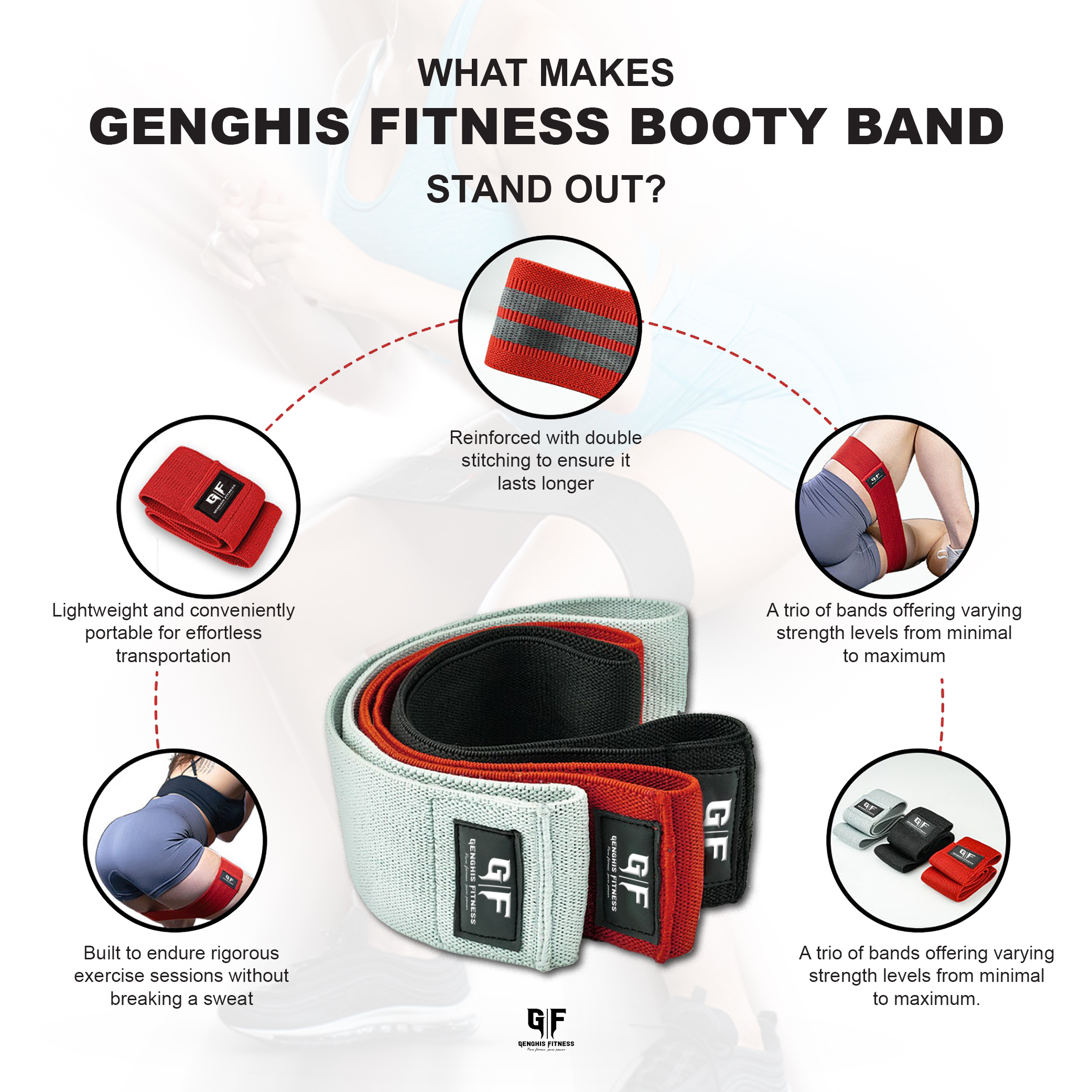
The hip circle bands provide the construction quality needed for this training to be effective across a male strength training context. Fabric construction stays flat during lateral movement exercises under the greater force output of a larger athlete. Multiple resistance levels allow systematic progression. The training principles are identical whether the athlete weighs 65 kilograms or 130 kilograms. Hip abductor weakness does not discriminate by size or gender, and neither does its solution.