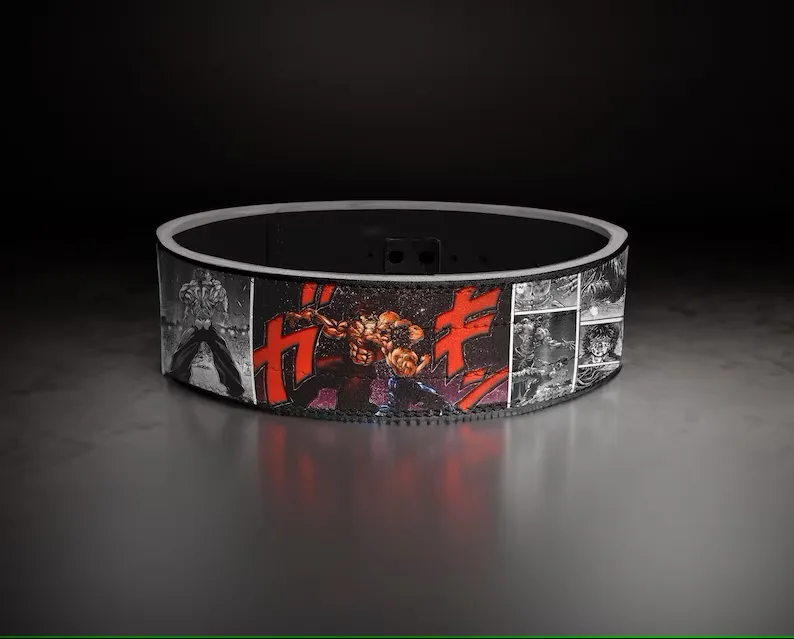
CUSTOM WEIGHT LIFTING BELT: WHY BUILT-TO-ORDER BEATS OFF-THE-SHELF EVERY TIME
Standard belt sizing is designed around averages. The average waist measurement, the average torso length, the average proportions of the athlete who lifts in commercial gyms across the US and Europe. If your body matches that average exactly, off-the-shelf gear fits well and performs as intended. Most serious athletes do not match that average exactly. They are wider through the hips than the waist measurement suggests, shorter or longer in the torso than standard sizing accounts for, or built in ways that make the belt that fits the buckle sit wrong across the lumbar spine. A custom weight lifting belt is built around your actual measurements, not a statistical average, and the performance difference is immediate and tangible from the first session you wear it.
THE PERFORMANCE CASE FOR A CUSTOM BELT
A belt that fits precisely distributes intra-abdominal pressure more uniformly around the full circumference of your midsection. When a belt is slightly too wide for your torso, the edges dig into your hip bones at the bottom or your ribs at the top, creating contact pressure that pulls your attention away from the lift and limits how tightly you can reasonably close the belt. When it is slightly too narrow, you lose the surface area coverage that makes the belt’s support most effective at the lumbar spine. A custom belt eliminates both failure modes by starting from your actual dimensions.
The lever hole positioning on a custom belt is calibrated specifically for your waist measurement, which means the lever closes in the center of its adjustment range rather than at an extreme position. A lever closing at the very edge of its range produces less consistent tension than one closing in the middle, and it means you have no room to adjust tighter when you want to squeeze the belt an extra increment on a max attempt. Custom sizing builds in that range on both sides so you always have room to fine-tune. Our custom-designed lifting belts are made from full-grain leather with stainless steel hardware to the same construction standards as our competition line.
WHO BENEFITS MOST FROM GOING CUSTOM
ATHLETES BETWEEN STANDARD SIZES
Belt manufacturers typically offer sizes in 2-inch increments. If your waist measurement falls between two standard sizes, you are choosing between a belt that is slightly too loose and one that is slightly too tight. Neither closes in its optimal range, and neither provides the consistent tension that makes a belt most effective. A custom order eliminates this problem entirely by cutting the belt to the exact measurement you provide.
WOMEN LIFTERS
Most powerlifting belts are designed around male proportions. Women often have a greater differential between waist and hip measurements, shorter torso length, and a different distribution of load across the midsection during bracing. A belt custom-fitted for a female lifter accounts for these proportional differences and produces a belt that supports the lumbar spine correctly without the edge pressure at the hips that standard male-default sizing creates for many women training seriously in strength sports.
COMPETITIVE ATHLETES AND TEAM PROGRAMS
Athletes competing in powerlifting, weightlifting, or strongman who train in competition gear from day one develop their technique and bracing habits in the equipment they will use on the platform. A custom belt that fits perfectly in training fits perfectly at a meet. There is no adjustment period, no difference in how the belt feels under a competition singlet versus training shorts, and no equipment variable that changes on the day your performance matters most. Teams ordering custom belts in matching specifications with gym branding or competition colors create a unified, professional presentation that reflects the seriousness of the program.
WHAT TO SPECIFY WHEN ORDERING A CUSTOM BELT
Provide your bare waist measurement at navel height. Measure after a normal exhale, not pulled in tightly and not after a large meal. This is the measurement the belt will be cut to and it needs to be accurate. Also specify your preferred belt width (4 inches for most powerlifting applications, 3 inches for more movement-heavy training or athletes with shorter torsos), thickness (10mm covers the majority of serious lifters, 13mm for elite competition use), and buckle type. Lever for competition-focused athletes, single prong for those who want adjustability across bodyweight changes.
Color, embossing, and finish are secondary specifications that customize the appearance without affecting the functional construction. Request a matte finish for maximum durability and minimal visible wear over time, or a polished finish for a cleaner competition presentation. Embossing of names or logos should be specified with placement outside the center-back spine contact area to preserve structural integrity at the highest-stress zone of the belt.
LEAD TIME AND LONG-TERM VALUE
Custom belts take two to four weeks from order to delivery depending on current production volumes. Plan your order around your training calendar so the belt arrives with time to break it in before your next competition or major training block. Full-grain leather custom belts maintained properly last decades. The premium over a standard belt amortizes to almost nothing over a ten-year training career, making a custom belt one of the highest-value per-year gear investments a serious lifter can make.
Round out your kit with accessories that match your training demands. Knee sleeves for squat support, wrist wraps for pressing stability, and lifting straps to keep grip from limiting your pulling work. Research on equipment fit and biomechanical efficiency in strength sports cited through PubMed consistently supports the principle that properly fitted support gear improves bracing mechanics and training consistency. A custom belt is the most direct application of that principle in your kit.
BREAKING IN AND MAINTAINING YOUR CUSTOM BELT
A custom full-grain leather belt arrives stiff and needs breaking in just like any quality leather belt. The break-in process for a custom belt is identical to a standard one: flex the belt repeatedly around a doorframe or post before early sessions, wear it from the first training day even at warm-up weights to begin the conforming process, and apply a light coating of leather conditioner to the outer surface before the first use to initiate the softening of the top fiber layer. Because the belt is cut to your exact dimensions, the break-in process produces a fit that no off-the-shelf belt can replicate. The leather does not have to stretch or compress to compensate for a mismatch between your measurements and the manufacturer’s standard sizing. It simply softens and conforms to the torso shape it was built for from the start.
After break-in, ongoing maintenance is straightforward. Wipe the belt down with a dry cloth after every training session to remove chalk, sweat, and gym floor residue. Apply leather conditioner every two to three months using a soft cloth, work it into the grain, allow full absorption, and buff off any excess. Check the mounting hardware on lever belts monthly and retighten any screws that have worked loose under the repetitive mechanical stress of training. Store the belt flat or hanging in a cool, low-humidity location away from direct sunlight. These habits require under ten minutes per month and extend the functional life of a custom leather belt from years into decades of reliable performance.
A custom weight lifting belt is not a luxury purchase for athletes who have already won everything. It is a practical investment for any serious lifter whose body proportions, training frequency, or competitive goals justify equipment that is built for them specifically rather than built for a statistical average that their body does not match. The performance benefit is immediate. The durability is indefinite. And the satisfaction of training in gear that was made to fit you, rather than gear you are making do with, is one of those training quality-of-life improvements that you notice every single session once you have experienced it.
Certified strength and conditioning specialists with over 10 years of experience in powerlifting, nutrition, and evidence-based fitness content. Based in New York City.
TRAIN WITH EQUIPMENT THAT MATCHES YOUR EFFORT
Serious strength training demands serious gear. A lever belt, quality straps, and knee sleeves are not accessories. They are tools.
10mm Lever BeltThis guide is part of the Genghis Fitness weightlifting belt guides, where 167 articles cover every belt type, training use case, and buying decision from beginner to competition level.