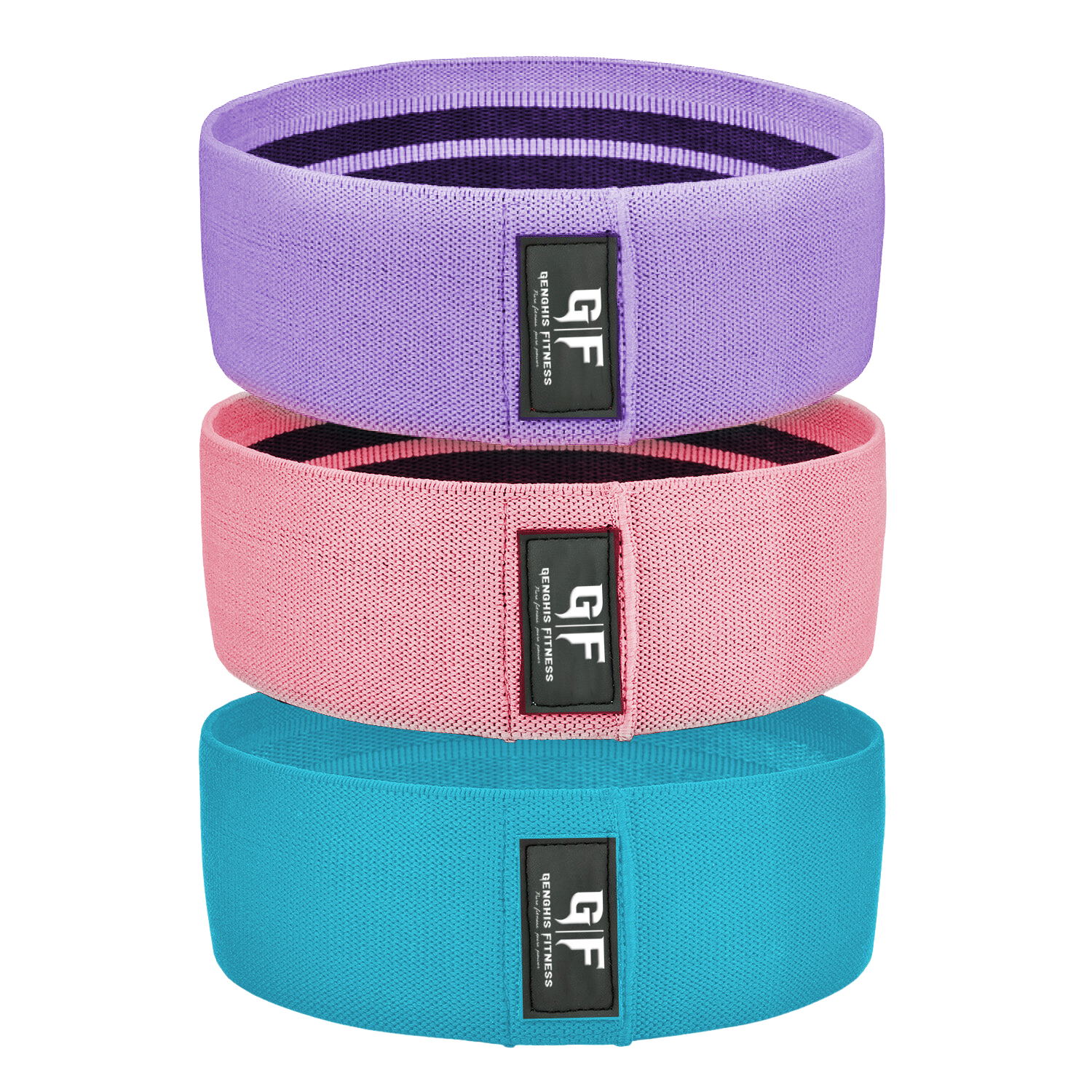
Booty Band: How to Use Hip Circle Bands to Actually Build Glute Strength
The booty band has a marketing problem. Because the product is frequently sold with lifestyle imagery and positioned as a tool for aesthetic goals, it is easy to assume the mechanics are superficial. They are not. A hip circle band placed above the knees during loaded squat variations creates genuine hip abductor activation that translates directly into better squat mechanics, stronger glute development, and reduced knee valgus under heavy loads.
This guide covers what the band actually does biomechanically, the exercises it is most useful for, how to choose the right resistance level, and how to program it effectively rather than just using it as a warm-up ritual with no structure.
What a Booty Band Does Biomechanically
A hip circle band, worn above the knees, creates a constant lateral resistance that the hip abductors must work against to maintain proper knee alignment. The primary muscles recruited are the gluteus medius, gluteus minimus, and tensor fasciae latae. These are the muscles responsible for keeping the knee tracking over the toes during squatting, lunging, and any loaded hip hinge movement.
In most athletes, these hip abductors are undertrained relative to the primary squat muscles. The quads, hamstrings, and glute maximus get significant training stimulus from squats and deadlifts. The hip abductors only receive direct stimulus when there is a lateral resistance to work against. The band provides exactly that resistance in a way that is perfectly positioned relative to the movement patterns that need it most.
Research published in the NIH research database on lower limb biomechanics consistently identifies hip abductor weakness as a contributor to knee valgus during squatting and landing movements, which is associated with increased ACL and patellar tendon injury risk. Training the hip abductors with banded resistance directly addresses this weakness.
The Best Exercises with a Booty Band
Banded Squat Warm-Up
Placing the band above the knees for 2 to 3 sets of 15 to 20 bodyweight squats before loading the bar is one of the most effective squat warm-up protocols available. The band forces the hip abductors to activate in the specific movement pattern they will be needed in during the working sets. Athletes who do this consistently report better knee tracking and more stable squat mechanics from their first working set onward.
Banded Lateral Walks
Step the band above the knees and take lateral steps in a quarter-squat position, maintaining tension on the band with each step. The lateral walk isolates the gluteus medius and minimus more directly than any other simple exercise. Three sets of 12 to 15 steps in each direction is a complete hip abductor warm-up. Add a mini band at the ankles simultaneously for greater gluteus medius activation.
Banded Glute Bridge and Hip Thrust
Adding a booty band above the knees during glute bridges and hip thrusts increases gluteus medius involvement alongside the primary hip thrust muscles. Push the knees out against the band throughout the movement. The combination of vertical hip extension and lateral knee resistance makes the banded hip thrust one of the most complete glute exercises available.
Banded Clamshells
Lying on the side with the band above the knees, open and close the top knee like a clamshell hinge. This directly isolates the gluteus medius through its primary function of hip external rotation. Three sets of 15 to 20 repetitions per side is a standard protocol for athletes addressing hip abductor weakness as part of knee rehabilitation or injury prevention work.
Banded Step-Ups and Lunges
Adding the booty band above the knees during step-ups and reverse lunges increases the demand on the hip stabilizers that prevent the knee from collapsing inward during single-leg loading. This is particularly useful for athletes who notice their knee tracks inward on single-leg movements even when it tracks correctly in bilateral squats.
Choosing the Right Resistance Level
Booty bands are typically available in light, medium, and heavy resistance options. The correct starting resistance allows you to maintain perfect knee-over-toe alignment throughout the movement without the band causing your form to break down. If the band pulls the knees inward on every rep, it is too heavy for that exercise at that stage of training.
A practical approach is to use light resistance for activation work and warm-up sets, medium resistance for banded movement work like lateral walks and clamshells, and heavy resistance for stationary exercises like hip thrusts and glute bridges where the range of motion is controlled and the band is a secondary stimulus rather than the primary resistance.
The Genghis Fitness hip circle bands are designed for exactly these applications. The hip circle design stays in position above the knees during dynamic movements better than flat resistance bands that tend to roll and bunch during lateral walks and squats.
Band Placement: Above the Knee vs Below the Knee
Placement above the knee, on the lower quad area, is the standard position for booty band work. It creates the most direct leverage for hip abductor activation during squats and lateral movements. The band is close enough to the joint to influence knee tracking without being so close that it contacts the sensitive tissue directly behind the knee.
Placement below the knee, just above the ankle, increases the moment arm for the hip abductors because the resistance point is farther from the hip. This makes the abductor activation harder for the same band resistance. It is a progression option for athletes who have maxed out the available resistance of their bands for above-knee work.
How to Program Booty Band Work
The most common mistake with booty bands is treating them as an informal warm-up ritual without structure. Picking up the band, doing a few steps, and putting it away does not constitute structured training. To get measurable results, apply the same progressive overload principles used for other exercises.
Start with 3 sets of 15 repetitions per exercise at light to medium resistance. When you can complete all sets with perfect knee tracking and the band no longer feels challenging, increase the resistance band or add another exercise to the circuit. Track which band you are using and how many reps you complete per session. Progress is measured the same way as in any resistance training context.
Pairing with Lifting Belts and Knee Sleeves
Hip circle warm-up work pairs directly with squatting sessions. After completing the banded activation sets, the Genghis Fitness knee sleeves go on for the loaded working sets. The band primes the hip abductors. The sleeves provide compression and warmth at the knee through the heavy sets. Together they address the two most common knee health issues in squatting: abductor activation and joint temperature.
For the barbell work itself, the Genghis Fitness powerlifting leather belt or nylon lifting belt addresses core bracing. The hip circle band, knee sleeves, and lifting belt together constitute a complete lower body and core preparation protocol for heavy squat sessions.
Common Mistakes
- Using the band so lightly that the knees are never actually challenged. The resistance should require deliberate effort to maintain knee alignment.
- Only using the band for warm-ups and never progressing the resistance or volume.
- Wearing the band during heavy barbell squats as a real-time cue rather than using it pre-session to activate the muscles. The band is most valuable as an activation tool before loading, not as a crutch during loading.
- Letting the knees cave inward against the band on every rep, which indicates the band is too heavy and the exercise is training the wrong pattern.
Summary
A booty band is an effective training tool when used with the same intentionality applied to other exercises. Structured activation work before squatting builds the hip abductor strength that keeps knees tracking correctly under load, reduces injury risk, and develops the gluteus medius that bodyweight squats and unassisted barbell work tend to underload. Use it deliberately, progress it systematically, and pair it with the right sleeve and belt equipment for the squatting sessions that follow.