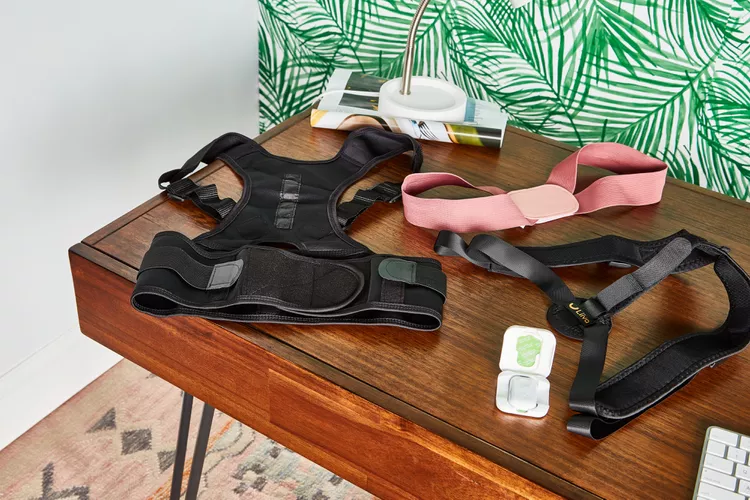
Gym Back Brace vs Lifting Belt: Which One Belongs in Your Gym Bag
Back braces and lifting belts are both worn around the torso. Both are associated with protecting the lower back. Both show up in gyms regularly. Beyond those surface similarities, they are entirely different tools designed for different purposes, and using one when you need the other is a real and common mistake.
This guide breaks down the purpose, design, and application of each device so you can decide which belongs in your training routine and under what circumstances.
The Core Difference in Purpose
A back brace is a medical or therapeutic device. It is designed to restrict spinal movement, offload compressive forces from injured or unstable vertebral segments, and support healing tissue. Most back braces include rigid panels, stays, or pneumatic chambers that limit the range of motion in the lumbar spine. They are prescribed by physicians and physical therapists for conditions including lumbar disc herniation, spondylolisthesis, vertebral fracture recovery, and post-surgical stabilization.
A lifting belt is a performance tool. It does not restrict spinal movement. It enhances intra-abdominal pressure by giving the core muscles a rigid surface to brace against during loaded exercise. The belt works with your active musculature to create a more stable and powerful bracing response. It assumes a functional spine and trained core musculature. It is not therapeutic and it is not appropriate as a substitute for medical treatment.
How Back Braces Work Mechanically
Most rigid back braces operate on the principle of three-point contact. The brace applies pressure at the front of the abdomen and at two points on the posterior spine, creating a mechanical fulcrum that limits flexion and extension in the lumbar region. Some braces add lateral panels to limit side bending as well.
Soft-shell back braces used in the gym are less restrictive. They apply compressive pressure around the lumbar region and sometimes include stays along the spine to discourage deep flexion. These are common in warehouse and logistics work as a reminder posture cue, though the National Strength and Conditioning Association and occupational health research both suggest their effectiveness for injury prevention in healthy workers is limited.
The therapeutic value of a back brace comes from limiting movement of a compromised structure while it heals. Once the structure is healed and movement is restored, continued dependence on the brace can delay the muscle strengthening and movement retraining that prevents re-injury.
How Lifting Belts Work Mechanically
Lifting belts work through the intra-abdominal pressure mechanism. When you take a full breath and brace your core against a stiff belt, the diaphragm pushes down, the transverse abdominis and obliques push outward, and the result is a pressurized cylinder of fluid and muscle that supports the lumbar spine from within. Research published in the NIH research database has confirmed that well-executed intra-abdominal bracing with a belt reduces net compressive and shear loading on the lumbar spine during heavy lifts.
This mechanism requires a functional spine and active core musculature. The athlete must generate the pressure. The belt simply makes that pressure generation more effective. An athlete with acute low back injury cannot and should not be belting up for heavy squats, because the problem is not that the bracing mechanism needs enhancement. The problem is tissue damage that requires rest and treatment.
When a Gym Back Brace Is Appropriate
Back braces are appropriate in a gym setting under specific conditions. An athlete returning to training after a diagnosed lumbar injury may be cleared by a physical therapist to begin light movement while wearing a supportive brace as a transitional measure. In this context, the brace is a bridge, not a permanent solution.
Some athletes wear soft-shell braces during warm-up sets because they help maintain conscious attention to lumbar position. This is a habit-based application rather than a structural one. If it helps you build a consistent neutral-spine motor pattern, it serves a purpose. Once the pattern is automatic, the brace should be phased out.
Athletes recovering from back surgery should follow their surgeon’s specific protocol, which may include a rigid brace for several months before any loaded training resumes. Disregarding these protocols in the gym can cause serious setbacks. The gym does not override the medical timeline.
When a Lifting Belt Is Appropriate
A lifting belt is appropriate for healthy athletes performing heavy compound lifts where spinal loading is significant. Squats, deadlifts, Romanian deadlifts, barbell rows, standing overhead presses, and cleans are the primary candidates. The belt becomes relevant when you are training at loads that genuinely challenge your bracing capacity, typically 80 percent of your one-rep max and above.
The Genghis Fitness powerlifting leather belt and 10mm lever belt are designed for exactly this application. They are not designed for rehabilitation and they should not be worn by athletes with active, undiagnosed, or untreated back injuries as a workaround for medical care.
If you have persistent back pain that does not resolve after 48 to 72 hours of rest, or pain that radiates into the glutes or legs, seek evaluation from a sports medicine physician or orthopedist before returning to heavy loaded training. Pain is information. Do not train through neurological symptoms.
The Grey Zone: Gym Back Brace as Belt Substitute
Some gym-goers wear rigid or semi-rigid back braces during strength training because they do not own a lifting belt or because they believe the brace provides more protection. This is a misapplication of the device and can create real problems.
Rigid back braces worn during heavy squats and deadlifts restrict the natural movement of the spine through the lift. This can shift load to the hips and hips flexors in undesirable ways or cause the athlete to compensate with forward lean to work around the restricted lumbar range. A lifting belt, by contrast, allows the spine to move normally while enhancing the internal bracing response.
If you are using a back brace as a belt because it is what you have available, consider replacing it with a purpose-built lifting belt. The mechanical difference is meaningful and the cost of a quality nylon or leather belt is not prohibitive.
Can You Use Both at the Same Time
Wearing both a back brace and a lifting belt simultaneously is not standard practice and is generally not recommended. The belt works by allowing your abdominal wall to push outward against resistance. Adding a rigid brace over or under the belt can interfere with that expansion and reduce the effectiveness of the bracing mechanism. You end up with two devices competing for the same space, neither functioning optimally.
If a physician has prescribed a brace for a specific structural reason and you are also cleared for loaded training, discuss with your physical therapist or sports medicine provider what the appropriate protocol looks like. Do not self-prescribe the combination.
What to Look for in a Gym Back Brace
If you are in a transitional phase after injury and a physical therapist has recommended a soft-shell brace for gym use, look for one with reinforced lumbar panels, adjustable compression, and breathable material. Avoid products that are so soft they provide no real positional feedback. The brace should be firm enough that you can feel when your lumbar moves out of neutral.
For a formal medical brace, follow the prescription. Do not substitute a consumer gym product for a prescribed orthotic device.
What to Look for in a Lifting Belt
For general gym training with heavy compound lifts, a 4-inch leather belt at 10mm thickness is a solid all-around choice. The Genghis Fitness 4-inch leather weightlifting belt fits this description and works across squats, deadlifts, rows, and pressing movements.
Athletes who want faster transitions between barbell work and bodyweight movements should consider the nylon lifting belt. Nylon closes faster and flexes more readily between movements.
Summary
Back braces and lifting belts are not interchangeable. A back brace restricts movement and supports healing tissue. A lifting belt enhances internal bracing in a healthy spine under heavy load. Use the right tool for the right situation. If you are healthy and training heavy, a quality lifting belt is the correct purchase. If you have a diagnosed back condition, follow medical guidance, treat the injury, and reintroduce the belt once you are cleared to train at intensity again.