10MM BELT BRAND COMPARISONS: HOW TO EVALUATE YOUR OPTIONS AND CHOOSE THE RIGHT ONE
The 10mm weightlifting belt market has more options than ever before, and the quality variation between brands at similar price points is wider than most athletes realize before making their first serious belt purchase. Some brands have built their reputations across decades of competition use and consistently deliver on their construction quality claims. Others are newer market entries that rely on marketing positioning rather than verified material and manufacturing standards. Knowing how to evaluate belt brands systematically, based on construction criteria that predict long-term performance rather than first-session feel or brand aesthetic, is the knowledge that protects both your training and your investment over a full career.
THE EVALUATION FRAMEWORK: WHAT ACTUALLY SEPARATES GOOD FROM GREAT
LEATHER QUALITY AS THE FOUNDATION
The most important construction variable in any 10mm leather belt is the grade of leather used. Full-grain leather, taken from the outermost layer of the hide, retains the natural fiber structure that provides maximum tensile strength and abrasion resistance. It maintains its rigidity across years of heavy training use when conditioned periodically. Split-grain leather, taken from lower layers of the hide, is softer initially and softens further with use, eventually losing the rigidity that makes a belt mechanically effective for heavy compound lifting. Research on belt rigidity and intra-abdominal pressure directly links belt stiffness to IAP generation, which means leather grade is not merely an aesthetic or longevity variable. It is a direct performance variable that affects how much spinal protection the belt delivers on every heavy rep.
LEVER MECHANISM QUALITY
For lever belts, the lever mechanism is the highest-stress component and the most likely point of failure over months of regular use. Quality lever mechanisms use heavy-gauge stainless steel or hardened steel hardware with a pivot pin that maintains its dimensional tolerance across thousands of open-close cycles. The lever should click firmly into its locked position without requiring excessive force and should release cleanly with a deliberate thumb press. Brands that source their lever hardware from quality suppliers produce mechanisms that perform identically after 500 sets as they did on the first use. Brands that cut corners on hardware gauge produce mechanisms that develop slop in the pivot, fail to click fully into position, or jam under heavy bracing force within months of regular heavy training use.
STITCHING AND EDGE FINISHING
The stitching that joins the leather layers and secures the buckle or lever attachment determines how well the belt holds up under the repeated tensile stress of heavy bracing across a training career. Double or triple stitching at all high-stress zones, particularly at the lever or buckle attachment point and along the belt edges, distributes bracing force across more thread contact and significantly reduces the risk of seam failure. Edge finishing that is burnished smooth rather than left raw reduces the abrasion against the lifter’s skin and clothing that causes premature edge wear over time. Brands that pay attention to these construction details in their products generally also pay attention to material sourcing and hardware quality throughout the manufacturing process.
PRICE TIERS AND WHAT THEY DELIVER
UNDER $60: ENTRY LEVEL
Belts priced under sixty dollars typically use split-grain leather that feels adequate initially but softens within months of heavy use, stamped hardware rather than machined components, and single-line stitching at attachment points. They serve athletes in their first year of barbell training who do not yet need competition-quality equipment. They are not appropriate for athletes training at the intensities and frequencies of competitive powerlifting or serious strength sports where the belt’s rigidity is a primary performance variable.
$60 TO $120: THE PERFORMANCE TIER
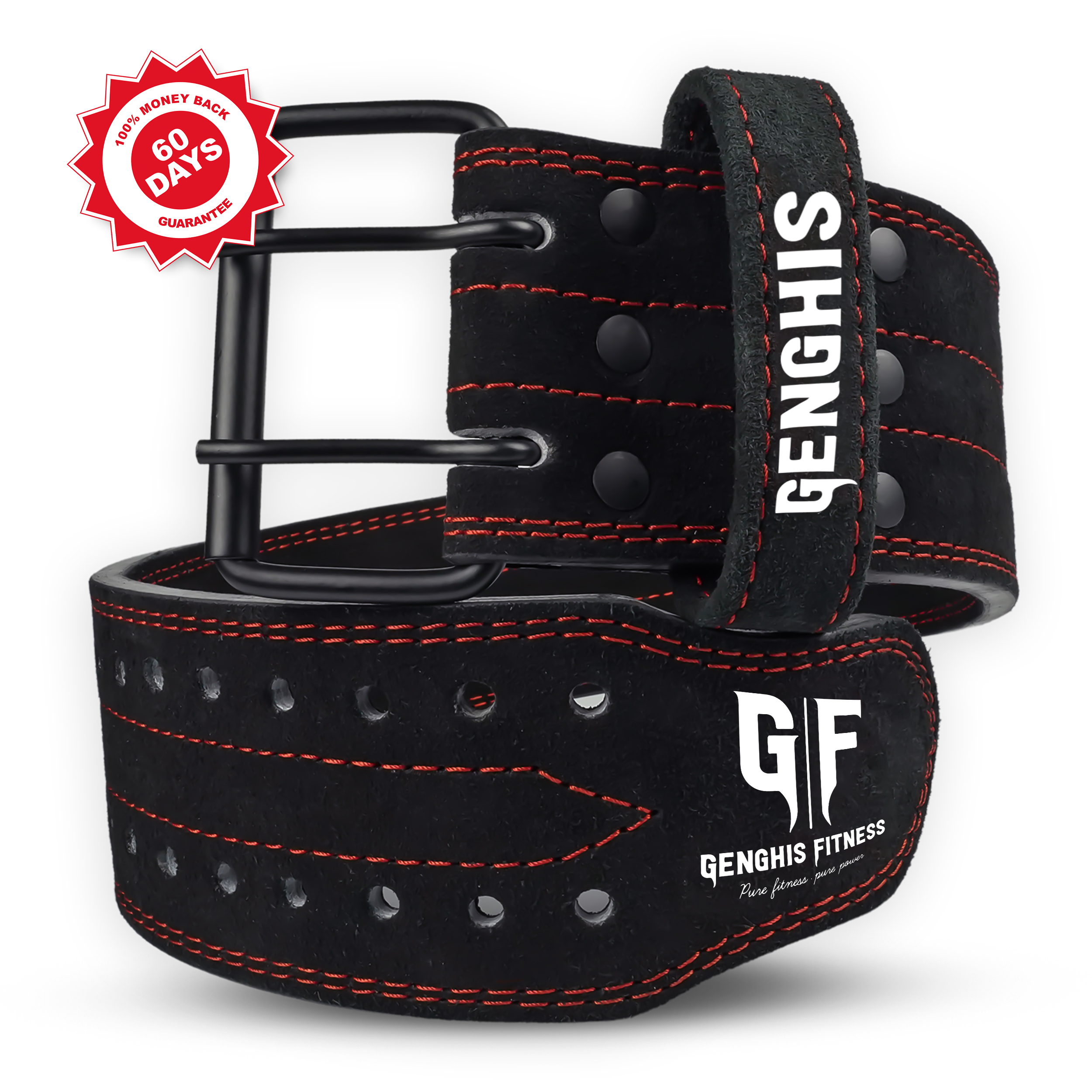
This range contains the most reliable options for serious training athletes who are not yet at the level of elite competition preparation. The Genghis Fitness 10mm lever belt and 4-inch leather weightlifting belt operate in this tier, delivering full-grain leather construction, quality lever or prong hardware, and stitching standards appropriate for athletes training heavy multiple times per week across full annual training cycles. For the majority of serious athletes, this tier delivers everything a 10mm belt needs to do at a price that reflects honest construction quality rather than brand premium.
$120 TO $200: COMPETITION GRADE
True competition-grade belts from established powerlifting specialty brands operate in this range. These products are typically IPF-approved, built to the precise tolerance specifications that competition rules require, and manufactured with quality control processes that ensure batch consistency. They are appropriate for athletes competing at national and international level whose equipment is a meaningful variable in their competitive results. For recreational and serious training athletes who are not competing at this level, the performance gap over the performance tier does not justify the price difference in pure training utility.
ABOVE $200: CUSTOM AND SPECIALTY
Custom belts, available through specialty manufacturers and through services like the Genghis Fitness custom-designed lifting belts program, allow athletes to specify materials, dimensions, hardware, and aesthetic details to their exact preferences. Custom belts are appropriate for athletes who have trained long enough to know precisely what construction specifications work best for their specific body and training style, and who are prepared to invest at the level of a professional training tool used across many years of serious competition-focused training.
HOW TO EVALUATE A BRAND BEFORE PURCHASING
Look for extended-use reviews from actual competitive powerlifters rather than first-session impressions from general fitness audiences. Competitive lifters have precise standards for equipment performance and report failures honestly because their training and competition outcomes depend on their gear working correctly under maximum loading. Check whether the brand lists specific leather grade, hardware specifications, and stitching standards in their product materials. Brands confident in their construction quality publish these details because they know their products hold up to objective comparison. Brands that describe their products only in general quality terms without technical specifics are typically avoiding comparisons they would not win on objective construction criteria.
Return and warranty policies are also informative signals about brand confidence in product quality. Brands that stand behind their leather quality offer meaningful warranty coverage on manufacturing defects because they know their products will hold up to scrutiny. Brands using lower-quality materials that are more likely to develop early failures often have more restrictive return policies that protect the brand rather than the customer.
THE GENGHIS FITNESS 10MM BELT LINEUP
The 10mm lever belt is built for serious training athletes who value speed and consistency in their belt application across multiple heavy sets per session. The full-grain leather maintains its rigidity and shape across years of heavy use with periodic conditioning. The lever mechanism uses hardware grade appropriate for the tensile loads that competition-frequency training creates across thousands of loading cycles. The powerlifting leather belt provides the same full-grain leather rigidity in a prong configuration for athletes who prefer the flexibility to adjust tension between squat and deadlift work within a single session. Pair either with knee sleeves and lifting straps for a complete heavy training support system that covers every major joint under load.
FINAL WORDS
Evaluating 10mm belt brands comes down to asking the right questions about construction rather than accepting marketing language at face value. What grade of leather? What hardware specification and material grade? What stitching technique and thread specification? What do competitive lifters who have trained with the same belt for a full year say about its performance at that point? Brands that answer these questions confidently and transparently earn the trust that their products deserve. The Genghis Fitness 10mm lever belt is built to these standards and priced to reflect construction quality rather than brand markup. Choose the right belt based on honest construction criteria, maintain it properly, and use it consistently on your heaviest training days for years of reliable spinal support.
Certified strength and conditioning specialists with over 10 years of experience in powerlifting, nutrition, and evidence-based fitness content. Based in New York City.
The complete weightlifting belt guides answers every belt question in one place: which type suits your training, how to size correctly, how to break in leather, and how to brace with a belt for maximum intra-abdominal pressure.