10MM BELT MATERIAL OPTIONS: HOW EACH MATERIAL PERFORMS AND WHICH TO CHOOSE
The 10mm specification in a weightlifting belt refers to thickness, which is one construction variable. The material the 10mm belt is made from determines the other critical performance properties: rigidity, durability, maintenance requirements, immediate comfort, and how the belt performs under the specific loading conditions of your training. 10mm belts are available in full-grain leather, split-grain leather, nylon, and neoprene, and each material delivers meaningfully different performance across these variables. Understanding what each material provides at 10mm thickness is the basis for making the belt purchase that serves your training context correctly.
FULL-GRAIN LEATHER AT 10MM: THE COMPETITION STANDARD AND WHY
Full-grain leather at 10mm is the competition-standard material for powerlifting belts at the international level, and this standard exists for specific performance reasons. Research on belt stiffness and intra-abdominal pressure confirms a direct relationship between belt rigidity and IAP generation at equivalent bracing effort. Full-grain leather provides the highest rigidity at 10mm thickness of any material used in belt construction. This rigidity, combined with the natural fiber structure of full-grain hide that maintains its stiffness across years of heavy training use when conditioned properly, makes full-grain leather the performance-maximizing material choice for athletes who train or compete at near-maximum loading.
THE FULL-GRAIN LEATHER BREAK-IN AND PERSONALIZATION PROCESS
The performance of full-grain leather at 10mm is not equally distributed across its service life. A new full-grain leather belt starts stiff and requires a four to six week break-in period before the leather conforms to the body and becomes comfortable for sustained session use. During this period, the belt is fully functional but may create edge pressure at the iliac crest and lower ribs until the leather softens and molds to the specific torso geometry of the individual athlete. After break-in, full-grain leather provides a personalized fit that no synthetic material replicates because it has physically adapted to the individual’s anatomy. This personalized fit improves with every training session across the belt’s multi-year service life.
SPLIT-GRAIN LEATHER: WHAT IT PROVIDES AND WHERE IT FALLS SHORT
Split-grain leather at 10mm is frequently marketed using the same general language as full-grain leather, described as genuine leather or premium leather without specifying the grade explicitly. Split-grain is softer initially and softens further with use, which makes it immediately more comfortable than full-grain but produces progressively declining rigidity over months of heavy training as the processed fiber structure cannot maintain stiffness under sustained high-loading cycles. A 10mm split-grain belt that feels adequate in its first month may feel meaningfully softer at month six, reducing its IAP generation capacity below what the 10mm thickness and full-grain marketing imply. Always verify the specific leather grade before purchasing a leather belt.
NYLON AT 10MM: IMMEDIATE COMFORT AND PRACTICAL CONVENIENCE
Nylon at 10mm belt width provides meaningful rigidity through high-denier webbing construction and a wide contact surface that creates effective bracing resistance for the core during heavy compound lifting. The nylon lifting belt is available at a consistent 4-inch width that contacts the full circumference of the torso rather than tapering at the front as some leather belt designs do, providing broad anterior abdominal support alongside lumbar coverage. Nylon is immediately comfortable with no break-in period, moisture-resistant, packable, and maintenance-free beyond rinsing and air drying. Its rigidity is less than full-grain leather at equivalent thickness, but for training intensities below near-maximum effort, the practical IAP difference is less significant than the comfort and convenience advantages.
NEOPRENE AT 10MM: FLEXIBILITY AND THERMAL RETENTION
Neoprene at 10mm provides the most flexibility and the softest feel of any 10mm belt material, with thermal retention properties that keep the lumbar region warm throughout the training session. The neoprene weightlifting belt is appropriate for athletes whose training spans a range of intensities within the same session, including functional fitness and CrossFit athletes where the belt must accommodate both heavy compound loading and dynamic movement patterns that leather stiffness would restrict. Neoprene is the most forgiving material at 10mm for range of motion, making it the practical choice for athletes who need a belt that does not interfere with movement quality across the full spectrum of exercises in their training programs.
THE 10MM LEVER BELT: FULL-GRAIN LEATHER WITH SPEED AND CONSISTENCY
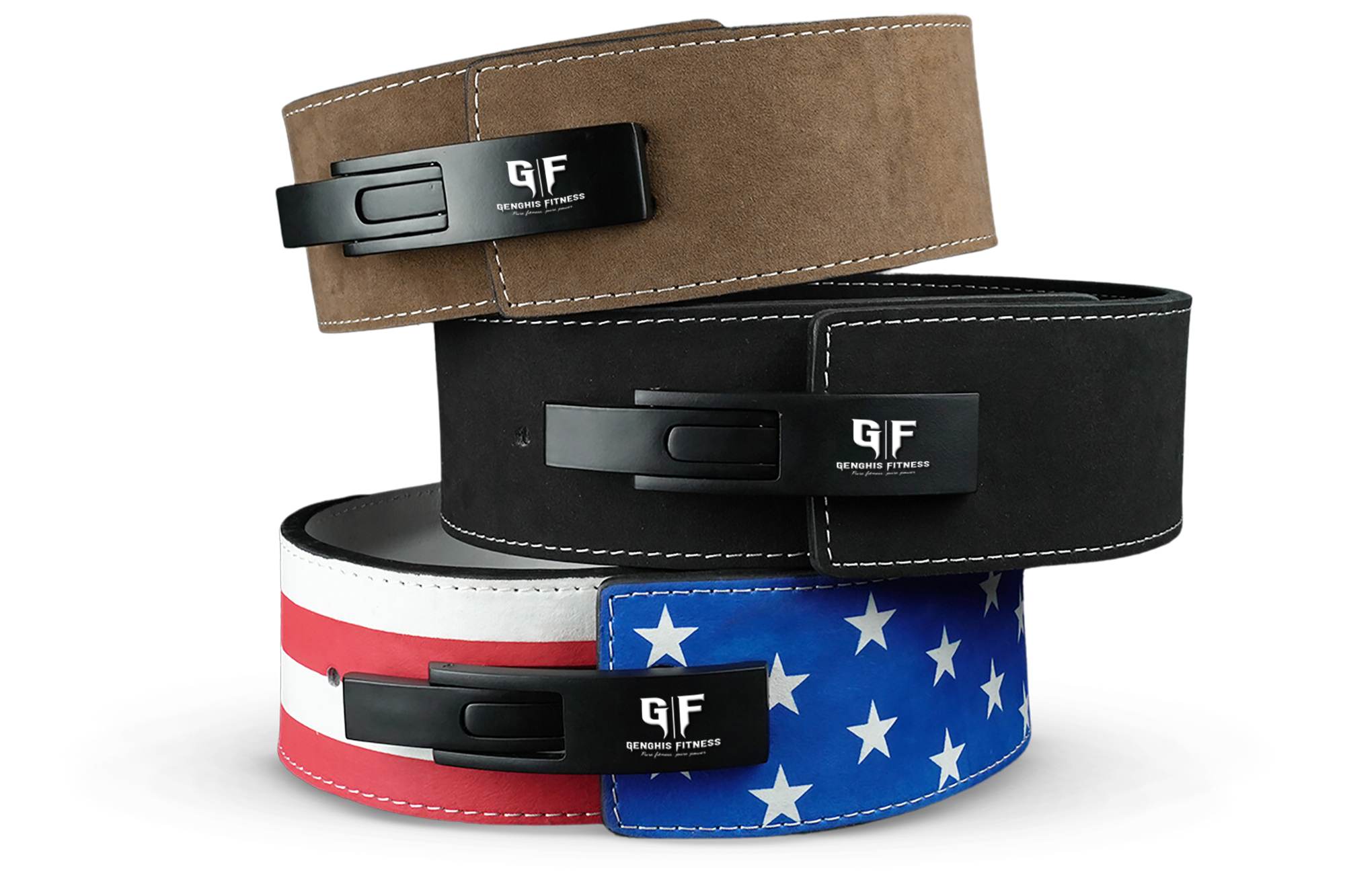
The 10mm lever belt represents the practical combination of full-grain leather rigidity and lever closure convenience for athletes who want the performance-maximizing material with the fastest application speed between sets. The Genghis Fitness 10mm lever belt uses full-grain leather construction at 10mm thickness with a lever mechanism that closes in five seconds and releases as quickly. For athletes who do multiple heavy sets per session and value consistent tension on every application without the threading time of a prong belt, the lever closure in full-grain leather is the optimal combination of material performance and practical usability.
WHY 10MM IS THE CORRECT THICKNESS FOR MOST ATHLETES
The 10mm specification is the competition standard at the major powerlifting federations because it represents the optimal balance of IAP-generating rigidity and range-of-motion comfort. Thicker belts at 13mm provide marginally more rigidity but are less comfortable during deep squat movements and extended training sessions. Thinner belts below 10mm provide less rigidity and correspondingly lower IAP support at equivalent bracing effort. For most athletes across most training contexts, 10mm is the correct thickness specification regardless of which material they choose, as it maximizes the rigidity-to-comfort trade-off in a way that both thicker and thinner options fail to match.
MATCHING MATERIAL TO TRAINING CONTEXT
Material selection for a 10mm belt should be driven by training context and practical lifestyle factors rather than by categorical claims about which material is superior. Full-grain leather for competitive powerlifting and maximum effort training where maximum rigidity is the priority. Quality nylon for packability, moisture resistance, and immediate comfort across a wide range of training intensities. Neoprene for functional fitness training where flexibility across exercise types matters as much as support during the heaviest compound movements. Lever closure for athletes who value consistent application speed across multiple heavy sets per session. Many serious athletes who have trained across multiple years own both a leather belt and a nylon or neoprene belt and use each strategically: the leather belt for the heaviest sessions and competition preparation, and the synthetic belt for volume training days and everyday heavy work where the comfort advantages of nylon or neoprene translate into better training quality across the full session. This dual-material approach is more expensive upfront but produces the best outcomes across the complete range of training contexts that a full annual training cycle includes. Pair your belt with knee sleeves and lifting straps for a complete support system.
FINAL WORDS
A 10mm belt from any material delivers its full IAP benefit only when sized correctly, positioned correctly on the torso, and actively braced against with deliberate maximum core engagement on every heavy rep. The material determines the rigidity ceiling, the maintenance requirements, the comfort profile across the break-in period and service life, and the range-of-motion flexibility. The Genghis Fitness 10mm lever belt and powerlifting leather belt deliver full-grain leather performance at the 10mm standard. The nylon belt and neoprene belt deliver synthetic material advantages at the same thickness specification. Choose based on your training context, use correctly, and maintain according to the material requirements of whichever option best matches your training needs.
Certified strength and conditioning specialists with over 10 years of experience in powerlifting, nutrition, and evidence-based fitness content. Based in New York City.
The complete weightlifting belt guides answers every belt question in one place: which type suits your training, how to size correctly, how to break in leather, and how to brace with a belt for maximum intra-abdominal pressure.