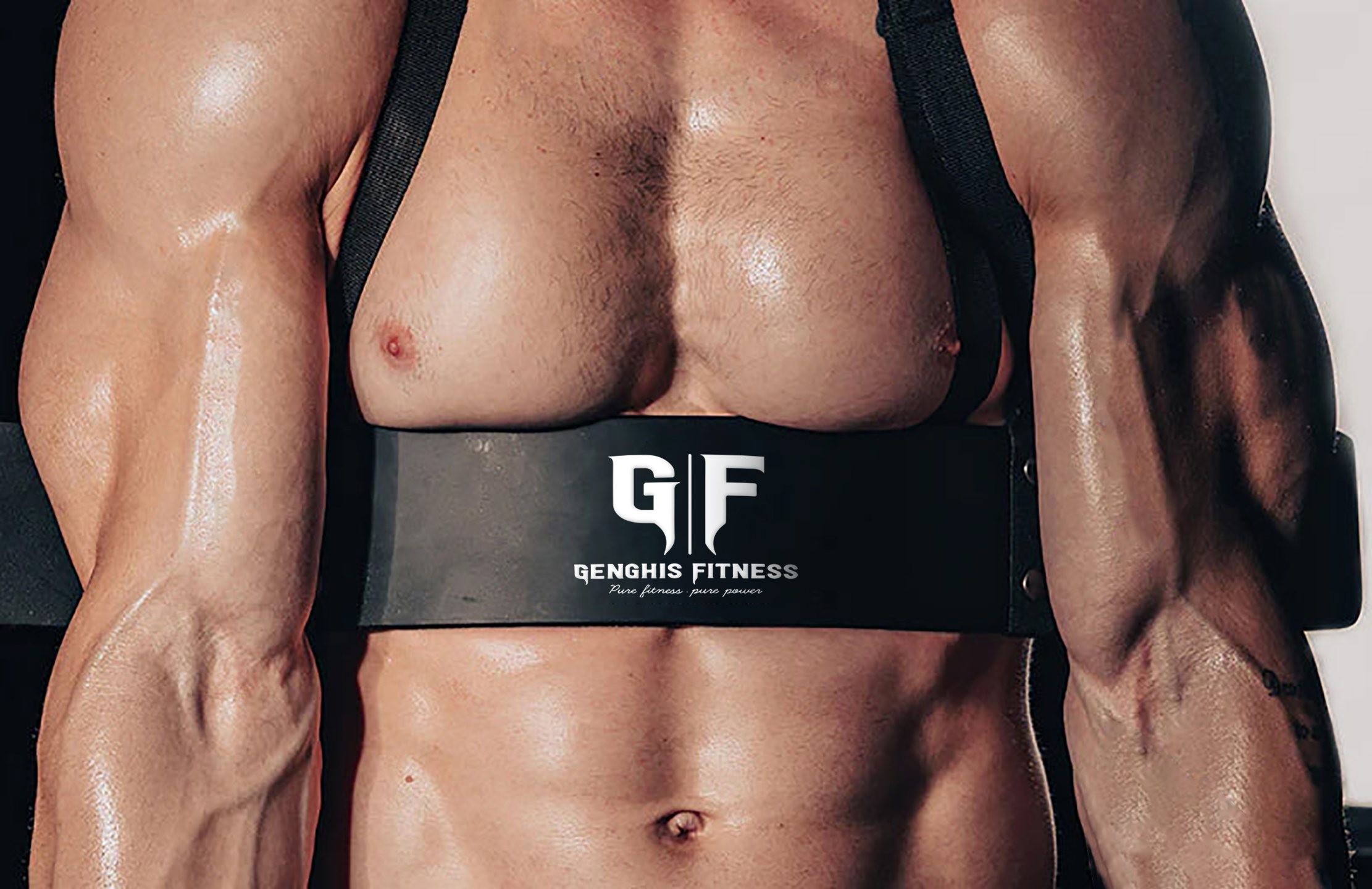
BEST ARM BLASTERS IN 2025: WHAT TO LOOK FOR AND WHY QUALITY SEPARATES RESULTS
The arm blaster market looks deceptively simple from the outside. A curved piece of metal, a neck strap, and a waist bar. How much can the quality really vary? The answer is: significantly. The difference between a well-engineered arm blaster and a cheap imitation shows up in the first heavy set, where a thin stamped-metal plate bends under load, a poorly padded strap digs into the neck, or an undersized D-ring jams against the carabiner. This guide covers what to look for in the best arm blasters available, how to evaluate them objectively, and why the Genghis Fitness arm blaster belongs on any serious shortlist.
WHAT MAKES AN ARM BLASTER WORTH BUYING
PLATE GAUGE AND MATERIAL INTEGRITY
The arm support plate is the structural core of the device. It needs to be rigid under the downward force of a loaded barbell curl without flexing, bending, or creaking. Quality arm blasters use heavy-gauge aluminum, typically 3mm or thicker, that maintains its shape across thousands of reps at the weights serious athletes use. Sub-standard units use thin stamped aluminum or mild steel that begins deforming within weeks of regular use at loads above 80 to 90 pounds. Check reviews specifically for mentions of bending or flexing under load. If those complaints appear consistently, the plate gauge is insufficient for training use.
CURVATURE RADIUS AND ARM FIT
The curvature of the arm support plate determines how well the device fits the natural resting position of the upper arm against the torso during standing curls. A plate that is too flat does not cradle the arms adequately and allows elbow drift at the edges. A plate that is too aggressively curved pushes the elbows unnaturally forward, which reduces the biomechanical advantage the device is supposed to create. The ideal curvature matches the natural angle of the upper arm at the torso when standing relaxed, which is slightly angled outward from the body. EMG research on bicep activation during restricted elbow curl variations confirms that elbow position is the primary variable determining the proportion of bicep versus anterior deltoid recruitment, making plate curvature a direct performance variable rather than a comfort variable.
NECK STRAP QUALITY AND ADJUSTABILITY
The neck strap carries the weight of the arm blaster plus the reactive downward force generated during curls. An unpadded or thinly padded strap becomes genuinely painful within a single working set and will cause you to limit your training session length to manage discomfort rather than to manage fatigue. Quality straps use wide, densely padded webbing with an adjustable buckle that allows precise positioning of the arm support plate at the correct anatomical location, which is just below the solar plexus for most athletes. The adjustability matters because torso length varies significantly across athletes, and a one-size-fits-all strap length places the plate at the correct height for some athletes and completely wrong for others.
WAIST STABILIZER CONSTRUCTION
The lower stabilizer bar rests across the abdomen and prevents the arm blaster from swinging forward during the curl. This component needs to sit comfortably against the torso without digging in during the effort phase of each rep. Contoured waist bars with padding or rubber coating on the contact surface are more comfortable than bare metal bars of equivalent structural integrity. The connection points between the waist bar and the arm plate are high-stress zones that should be welded or mechanically fastened with hardware rated for repeated dynamic loading rather than adhesive bonding or press-fit assembly.
THE GENGHIS FITNESS ARM BLASTER: WHAT SETS IT APART
The Genghis Fitness arm blaster for bicep and tricep training was designed around the specific requirements of lifters who actually train heavy and train consistently. The heavy-gauge aluminum plate maintains its shape under sustained loading without the flex or creaking that indicates structural fatigue in thinner units. The contoured plate radius reflects the natural upper arm geometry during standing curls, which means the elbows are supported correctly without forcing an unnatural position. The padded neck strap handles extended sessions without creating discomfort that interrupts training, and the adjustable length accommodates the full range of athletic torso proportions.
The device also functions effectively for tricep isolation, specifically for overhead tricep extensions where the arm blaster prevents the elbows from flaring outward under load. This dual-function capability gives athletes two isolation tools from a single piece of equipment, making the per-exercise cost case even stronger. It packs flat into any gym bag alongside wrist wraps and lifting straps without taking meaningful space.
HOW TO EVALUATE ARM BLASTERS AT DIFFERENT PRICE POINTS
UNDER $20: PROCEED WITH CAUTION
Budget arm blasters in this range typically use the thinnest aluminum available, minimal or no neck strap padding, and the lowest-cost hardware throughout. They may function adequately for very light curl work with beginners, but they are not appropriate tools for athletes curling 70 pounds or more. The structural integrity simply is not there, and the comfort issues will limit your ability to use the device consistently enough to produce results.
$25 TO $50: THE QUALITY SWEET SPOT
This price range contains the most functionally appropriate arm blasters for serious training. Brands in this range typically use genuine aluminum with adequate gauge, padded neck straps with adjustable buckles, and hardware that handles regular heavy use. The Genghis Fitness arm blaster operates in this range and delivers the construction quality that the price point makes possible when a manufacturer prioritizes function over packaging.
ABOVE $60: EVALUATING THE PREMIUM CASE
Arm blasters priced above sixty dollars are often making a branding argument rather than a functional quality argument. The mechanical requirements of an arm blaster are not complex enough to justify price points in the eighty to one hundred dollar range based on engineering alone. If a product in this range appeals to you, verify that the premium is tied to specific construction features you can identify and evaluate rather than to marketing positioning.
HOW TO GET THE MOST FROM YOUR ARM BLASTER
The arm blaster produces its best results when you commit to using it as your primary tool for all barbell and EZ bar curl variations rather than as an occasional addition to free-form curling. The adaptation that produces the isolated bicep strength and visual peak development comes from consistent, session-after-session training with the elbow-locked position. Expect to drop weight 20 to 30 percent from your standard curl weight in the first week. Expect to build that weight back over the following four to six weeks as isolated bicep strength develops. Pair your arm blaster sessions with elbow sleeves for joint warmth during the working sets to keep the elbow joint healthy through the increased isolation loading that the device imposes.
FINAL WORDS
The best arm blaster is not the most expensive one or the one with the most features on the spec sheet. It is the one built from adequate plate gauge, with a neck strap that lets you train through a full session without discomfort, and a curvature radius that actually fits the human upper arm geometry during a standing curl. Those qualities are present in the Genghis Fitness arm blaster, built and priced for athletes who want a tool that performs rather than a product that looks the part on a shelf. Get it, use it consistently, and let the bicep isolation do what free-form curling never fully could.
Certified strength and conditioning specialists with over 10 years of experience in powerlifting, nutrition, and evidence-based fitness content. Based in New York City.
The full gym accessories guides covers how to load a dip belt, use an arm blaster correctly, and how hip circle bands fit into a lower body warm-up.