Genghis Fitness · Equipment Buying Guide
Weight Lifting Straps Price Guide: What You Get at Each Price Point, Why Cheap Straps Fail, and How to Find the Best Value
Updated 2026 | By Team Genghis Fitness | 22 min read
Lifting strap prices span from 4 USD for budget cotton alternatives to 60 USD for premium leather options, with meaningful quality differences across the full range that are not always obvious from product descriptions and marketing. The price point at which strap quality becomes adequate for serious training loads, the price at which the quality plateau is reached and additional cost adds only brand premium, and the specific construction shortcuts that budget products take to hit low price points all have direct implications for training safety and strap longevity. This guide maps the strap market honestly by price tier.
Under 10 USD: Budget Tier Analysis
Straps in the under 10 USD range almost universally use one or more of the following construction shortcuts: thin cotton fabric at the strap body that thins rapidly under bar friction, minimal stitching at the wrist loop attachment (often a single thread line through unstrapped cotton), and no reinforcement at the most common failure points. For casual gym use at light loads (deadlifts under 80 kg, occasional use), these straps may last several months without significant problems. For regular serious training at moderate to heavy loads, budget straps fail at the wrist loop attachment within 4 to 8 weeks in most cases, creating both a training interruption and a potential safety concern if the failure occurs during a loaded exercise. Budget straps are not recommended for any athlete who trains with heavy loads more than twice per week, regardless of the short-term cost savings.
10 to 25 USD: The Mid-Range Quality Zone
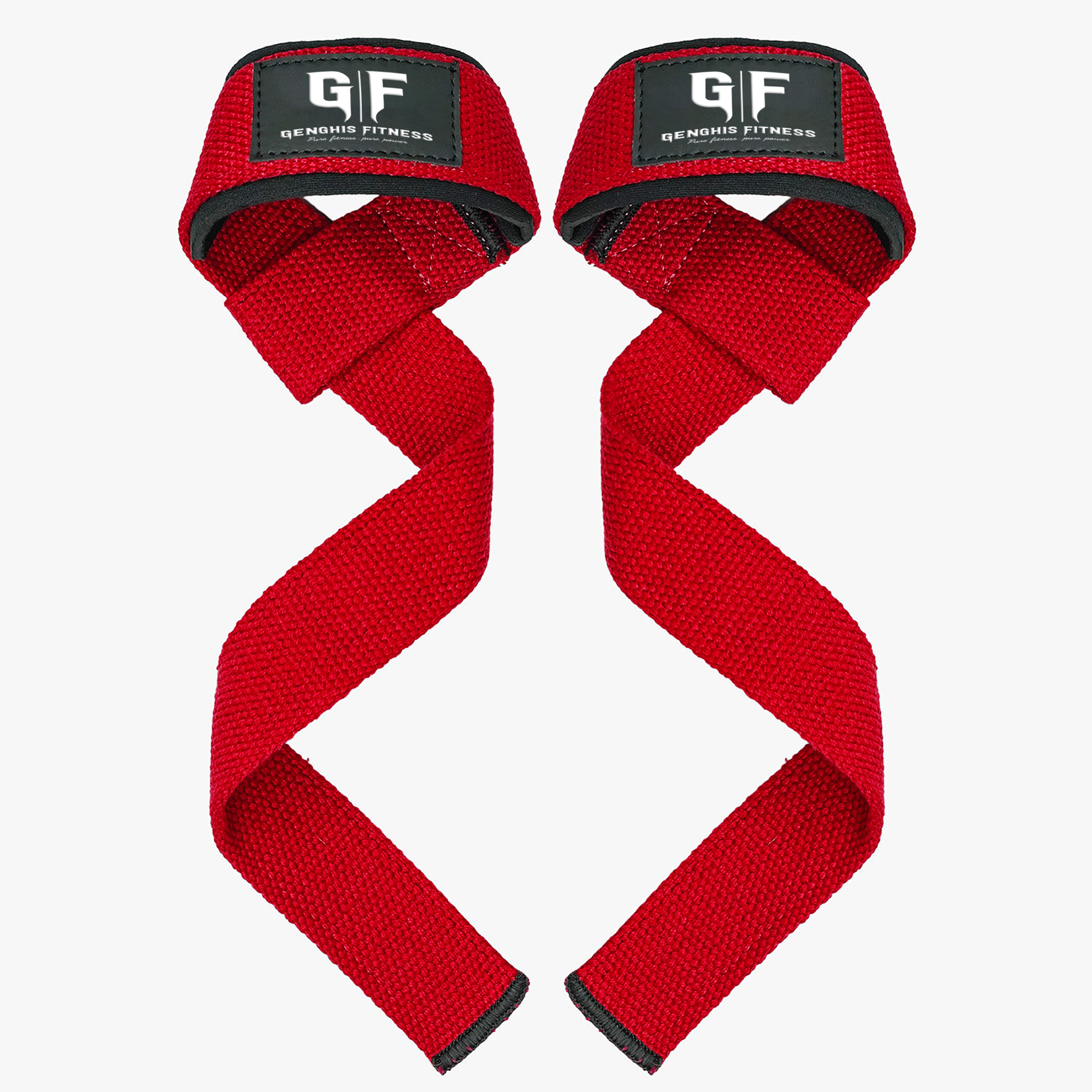
The 10 to 25 USD range contains the best value options for most serious training athletes. Products in this range typically use heavier cotton or nylon construction with reinforced loop attachments and adequate strap body thickness for loads up to 150 to 180 kg. Research on load-bearing textile construction standards referenced in the Journal of Strength and Conditioning Research supports the correlation between material density and connection point construction quality with load capacity in grip assistance tools. The Genghis Fitness standard lifting straps represent the mid-range option with the construction quality appropriate for serious training at these loads. Most serious training athletes training below 180 kg on pulling exercises find this price tier provides all the strap performance they need without the premium of leather options.
25 to 45 USD: Premium Construction and Leather
The 25 to 45 USD range is where quality leather straps and premium nylon options become available. Leather straps in this range offer the low-elasticity bar connection that provides the most locked-in feel at heavy loads, the superior durability over cotton and standard nylon, and the progressive improvement through break-in that makes leather the optimal long-term value despite the higher purchase price. For athletes who regularly deadlift above 160 to 180 kg, the performance and durability advantage of leather makes products in this range the best long-term investment rather than a luxury. The Genghis Fitness leather lifting straps offer full-grain leather construction at the price point where leather becomes genuinely cost-effective for frequent heavy training. Figure-8 straps for maximum-load deadlifts are also available in this range; the Genghis Fitness figure-8 lifting straps provide the mechanical lock design for athletes pulling at loads where this specialist design is most appropriate.
Above 45 USD: Brand Premium vs Performance
Products priced above 45 USD for standard loop straps typically provide minimal performance improvement over quality mid-range leather options and are primarily selling brand recognition and aesthetic premium. Custom leather straps in this range are an exception: custom sizing for athletes with non-standard wrist dimensions, personalised embossing, or custom colour provides genuine value that justifies the premium for the specific athletes who need it. For standard loop strap performance, the quality plateau is reached at approximately 35 to 45 USD for premium leather construction, and additional cost above this level does not meaningfully improve training performance. The complete guide to matching strap price and quality to training demands is in our best weight lifting straps guide.
Building a Cost-Effective Long-Term Strap Strategy
A cost-effective long-term strap strategy begins with matching the price tier to the actual training demands rather than defaulting to either the cheapest available option or the most expensive. For athletes in the first 6 to 12 months of training with deadlift loads below 120 kg and training frequency of 2 to 3 sessions per week, mid-range cotton or nylon straps at 12 to 20 USD provide all the performance needed at the most economical price. As training loads increase above 150 kg and frequency increases to 4 or more sessions per week, upgrading to leather straps at 25 to 40 USD provides the performance improvement that justifies the cost increase while simultaneously becoming the more economical option on a cost-per-session basis over the following 12 to 24 months. Adding figure-8 straps as a specialist tool for maximum-load deadlifts above 200 kg adds a third tool that covers the specific application where their mechanical lock outperforms loop straps. This staged investment approach, starting with mid-range cotton, upgrading to leather as loads increase, and adding figure-8 as a specialist supplement, delivers the right tool at each stage of training development without overpaying for performance that the current training loads do not yet demand. The complete equipment integration guide for pulling sessions is in our strap technique guide. A powerlifting belt for the heaviest pulling sets completes the core pulling equipment stack.
Frequently Asked Questions
Is the Cost Difference Between Cotton and Leather Worth It?
For athletes training with deadlift loads above 150 kg at 3 or more sessions per week, leather straps at approximately 3 times the purchase price of cotton alternatives become the lower-cost option within 12 to 18 months because they do not require the 3 to 4 cotton replacements that the same period demands. At that training frequency and load, the total cost of cotton over 24 months exceeds the one-time leather purchase significantly. For athletes training less frequently or at lower loads, cotton straps last longer between replacements and the cost calculation may not favour leather as clearly. The break-even calculation: leather strap cost divided by cotton strap cost equals the number of cotton pairs that need to be replaced before leather becomes the better value.
Do Cheap Straps Create Safety Risks?
Yes, specifically at the wrist loop attachment failure mode. A strap that fails at the loop attachment during a maximum-effort deadlift drops the bar unexpectedly while the athlete is in the loaded hip-hinge position. The sudden load release can cause rapid backward movement that creates fall risk and lumbar strain from the abrupt postural change. This specific failure mode is most common in budget straps with inadequate loop stitching and is essentially eliminated by quality straps with reinforced loop construction. Inspecting the loop attachment of any strap for stitching quality before purchase and replacing straps that show loop wear during monthly inspection removes this risk from training practice.
Right Price. Right Construction. Right Training.
Strap quality matched to the loads you actually lift.
Shop Lifting StrapsShop Leather StrapsCertified strength and conditioning specialists with over 10 years of experience in powerlifting, nutrition, and evidence-based fitness content. Based in New York City.