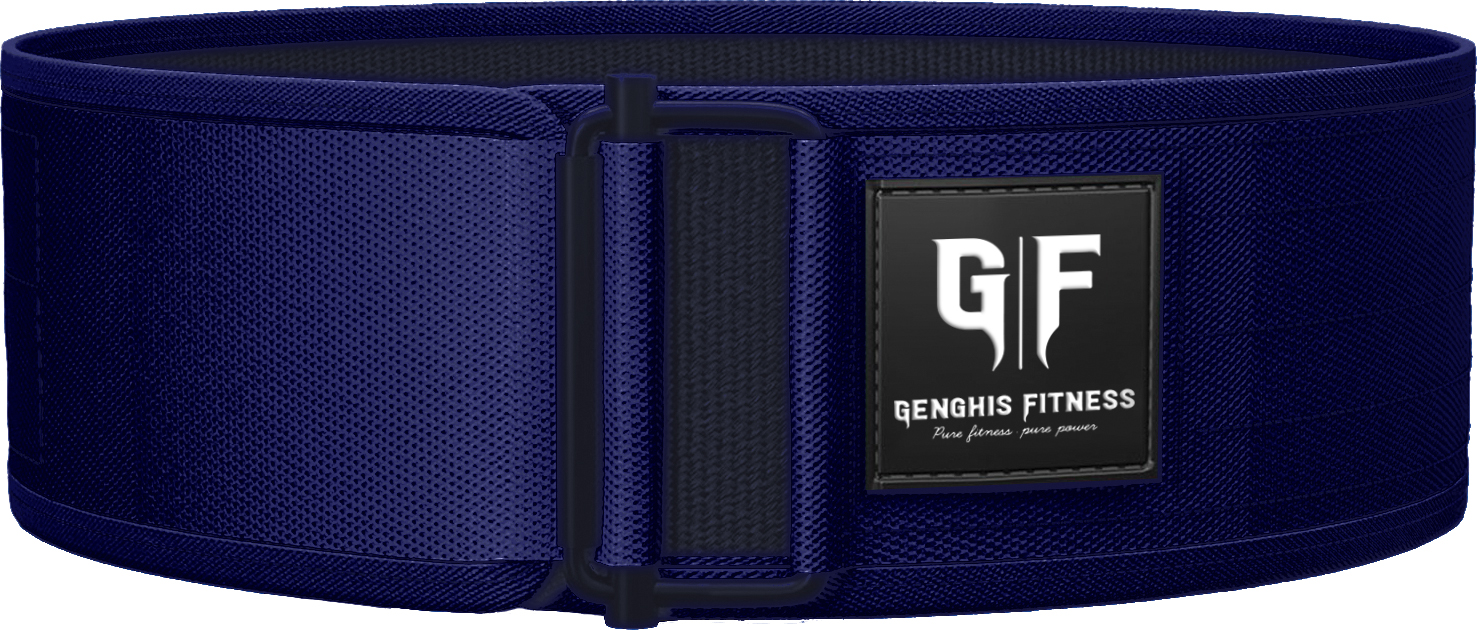
HOW TO USE A WEIGHT LIFTING BELT: THE FOUR-STEP SEQUENCE FOR MAXIMUM BENEFIT
How to use a weight lifting belt correctly is a skill with a specific sequence that must be executed on every heavy set to produce the spinal protection and performance benefits the tool is designed to deliver. A belt that is worn incorrectly provides only a small fraction of its available benefit: a loose belt that is never actively braced against provides only passive circumferential contact, a belt positioned at the wrong height on the torso provides inadequate lumbar coverage, and a belt used without deliberate belly breathing and active core bracing generates none of the intra-abdominal pressure increase that makes belt use genuinely protective and performance-enhancing.
STEP 1: POSITION THE BELT AT THE ILIAC CREST
Step one is positioning the belt at the correct height on the torso. The belt belongs at or just above the iliac crest, not at the natural waist where clothing size measurements are taken. The iliac crest is the bony prominence at the top of the pelvis, typically two to four inches lower than the natural waist and two to six inches larger in circumference. At this position, the belt covers the lumbar vertebrae posteriorly where compressive forces are highest during heavy lifting, and contacts the lower abdomen anteriorly where active bracing generates the pressure against the belt that produces the protective IAP effect. Research on intra-abdominal pressure and belt positioning confirms that iliac crest level positioning produces the highest IAP amplification compared to higher torso belt positions.
STEP 2: SET THE CORRECT TENSION
Step two is setting the correct tension. The belt should be snug enough that the core cannot brace outward against it without resistance, but loose enough that a full breath into the belly is possible with the belt closed. The practical tension test: take a full belly breath with the belt on at the intended training tension. The belly should push outward against the belt and the belt should clearly resist this expansion without completely preventing it. Now brace the abs outward with maximum force. You should feel firm, clear resistance from the full belt circumference. If there is no meaningful resistance at maximum tightness, the belt is too large or too loose. If a full belly breath is not possible, the belt is too tight.
STEP 3: EXECUTE THE BRACING SEQUENCE BEFORE EVERY HEAVY REP
Step three is the bracing sequence before every heavy rep. Take a maximum breath into the belly, not the chest. The abdomen should visibly push outward on the inhale, with minimal chest movement. Once the belly is fully expanded against the belt, brace the abdominal muscles outward with maximum deliberate force as if bracing to absorb a punch to the stomach. This is the active bracing contraction that generates the IAP increase. Hold this brace from the first movement of the bar through the completion of the rep. This three-element sequence, belly breath, outward brace, sustained hold, is what generates the IAP that makes the belt mechanically beneficial.
HOW TO PRACTICE BELLY BREATHING BEFORE ADDING THE BELT
Belly breathing requires separate practice before it becomes automatic under the cognitive load of near-maximum lifting. Lie on the back with a hand on the lower abdomen. Breathe so the hand rises without chest movement. This diaphragmatic pattern, practiced daily for two to three minutes, automates belly breathing within two weeks. Without this automation, athletes attempting belly breathing for the first time under heavy loading find the unfamiliar pattern difficult to execute correctly, reducing the IAP benefit below what practiced belly breathing produces. Invest the practice time before adding the belt to heavy training sessions so the bracing executes automatically on the sets where it matters most. Athletes who skip this practice phase frequently report that belt use provides no benefit, which is an accurate assessment of their experience because the IAP mechanism that makes belt use beneficial was never activated through the bracing pattern the device requires.
WHEN TO WEAR THE BELT AND WHEN TO TRAIN WITHOUT IT
Apply the belt for sets at 80 percent of training maximum and above on compound lifts where significant spinal loading occurs: squats, deadlifts, good mornings, heavy barbell rows, and overhead press. Remove it for lighter warm-up and accessory work to preserve the intrinsic core development that makes belted training most effective. This intensity-based protocol, rather than wearing the belt on every set regardless of loading, produces better long-term outcomes for both performance and spinal health than either always belting or never belting across a training career.
APPLICATION SEQUENCE FOR EACH BELT TYPE
For lever belts like the Genghis Fitness 10mm lever belt: open the lever, wrap the belt around the torso at the iliac crest position, close the lever until the click confirms secure closure, verify the click before the bracing breath. For prong belts like the powerlifting leather belt: thread the tail through the buckle, engage the prong in the correct hole, confirm the prong is seated. For nylon buckle belts: tighten to the correct tension and verify secure closure. For neoprene velcro belts: press firmly across the full velcro contact area and verify before adding the bracing breath.
PRACTICE THE SEQUENCE ON EVERY WARM-UP SET
Practice the complete belt use sequence on every warm-up set, even at 50 percent of maximum where the spinal protection benefit is marginal. The goal of warm-up practice is not protection at light weights. It is to automate the positioning, tension-setting, belly breathing, and active bracing sequence so it executes reflexively when the working sets are heavy enough to demand full cognitive attention on the lift itself. Athletes who reserve belt use only for working sets frequently find the bracing quality on those sets inconsistent because the pattern was not rehearsed in the preceding sets. The two-minute investment of applying the belt and executing the full sequence on every warm-up set pays compound returns across every working set of every heavy session in a training career, and is the single practice change most responsible for the difference between athletes who credit the belt with meaningful benefit and those who find it neutral.
COMPLETE TRAINING SUPPORT SYSTEM AROUND THE BELT
Pair correct belt use with the other support equipment that addresses every major joint and limiting variable in a heavy training session. Knee sleeves for lower body joint warmth and proprioception. Knee wraps for maximum effort squat days. Lifting straps for heavy pulling sets where grip would limit posterior chain training volume. The belt addresses the lumbar spine. The sleeves address the knee joint. The straps address grip. Together they create the complete support environment for heavy compound training that individual tools in isolation cannot provide.
FINAL WORDS
Using a weight lifting belt correctly is a four-step skill: position at the iliac crest, set correct tension, belly breathe before every rep, brace the abs outward for the full duration of each heavy lift. The lever belt, powerlifting leather belt, nylon belt, and neoprene belt all deliver the IAP benefit that makes belt use valuable, but only when this four-step sequence is correctly and consistently executed. Learn the sequence thoroughly, practice on every warm-up set, use at the correct intensities, and let the consistent execution compound into the spinal protection and performance enhancement that makes belt use one of the most evidence-supported tools in strength training.
Certified strength and conditioning specialists with over 10 years of experience in powerlifting, nutrition, and evidence-based fitness content. Based in New York City.
The complete weightlifting belt guides answers every belt question in one place: which type suits your training, how to size correctly, how to break in leather, and how to brace with a belt for maximum intra-abdominal pressure.