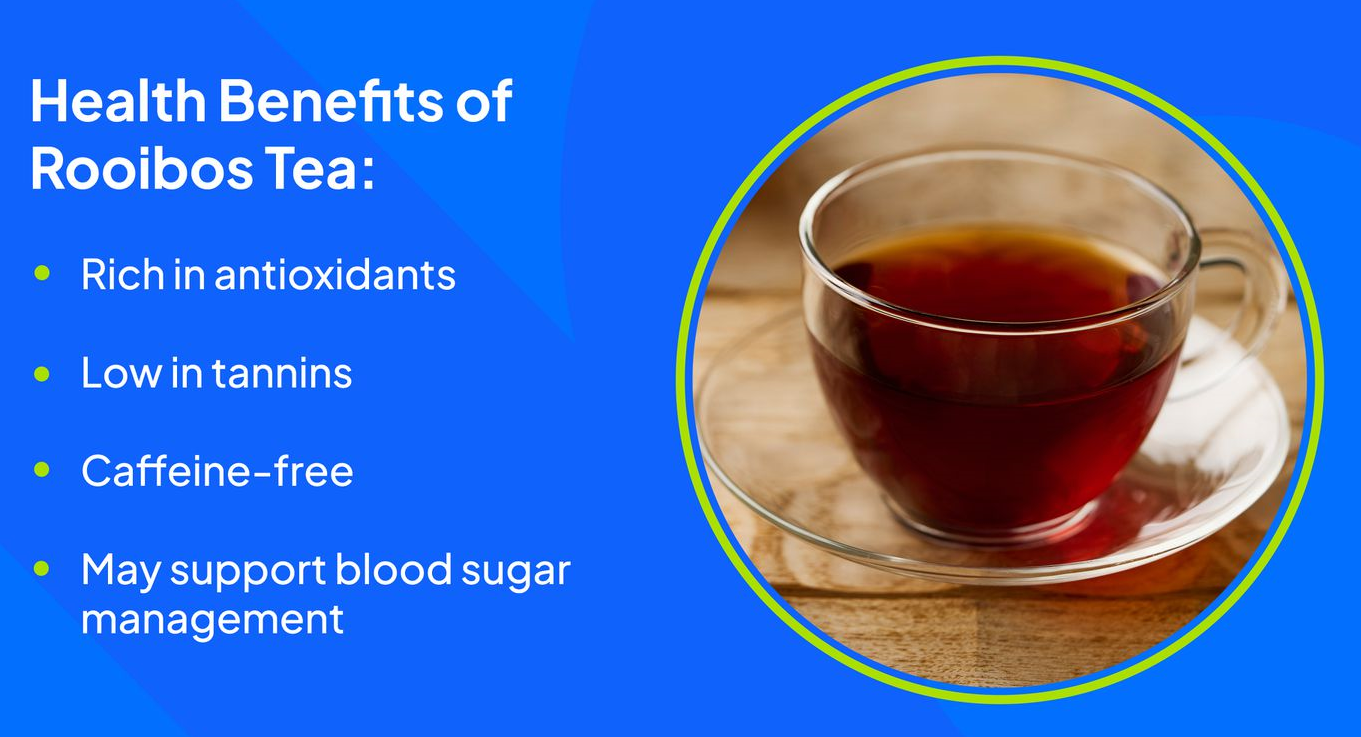
HEALTH BENEFITS OF ROOIBOS TEA: THE CAFFEINE-FREE SOUTH AFRICAN HERB WITH REAL SCIENCE BEHIND IT
Rooibos, the needle-like leaves of Aspalathus linearis, is a plant that grows exclusively in the Cederberg mountain region of South Africa’s Western Cape province. Rooibos tea, made from these leaves either in their natural green form or after an oxidation and fermentation process that produces the characteristic red color of most commercially available rooibos, has been consumed by indigenous South African communities for centuries and has grown into one of the best-selling herbal teas in Europe, the US, and globally. The scientific research on rooibos has expanded significantly in the past two decades, and several of its health effects now have enough clinical and mechanistic support to be presented as genuine rather than speculative.
THE UNIQUE COMPOUND PROFILE OF ROOIBOS
Rooibos contains a distinctive set of polyphenols that are not found in significant quantities in any other plant. Aspalathin, a dihydrochalcone unique to rooibos, is the most studied compound and has demonstrated cardiovascular, anti-diabetic, and stress-hormone-regulating effects in laboratory and animal studies. Nothofagin, another dihydrochalcone exclusive to rooibos, contributes additional antioxidant activity. Quercetin, isoquercitrin, luteolin, and orientin are present in the flavonoid fraction and contribute well-characterized antioxidant and anti-inflammatory effects. Rooibos is naturally caffeine-free, which distinguishes it from all true teas and most other herbal options with comparable polyphenol content. The antioxidant capacity of rooibos, while lower than green tea, is higher than most other caffeine-free herbal beverage options and compares favorably to many fruit juices in standardized assays. Studies indexed through PubMed have characterized the bioavailability of rooibos polyphenols in human subjects, confirming systemic absorption at realistic consumption levels.
CARDIOVASCULAR HEALTH: THE STRONGEST CLINICAL EVIDENCE
Rooibos has the most robust clinical evidence for cardiovascular benefits among the less-well-known herbal teas. A 2010 clinical trial published in the European Journal of Nutrition found that six cups of rooibos tea daily for six weeks significantly reduced LDL cholesterol and triglycerides while increasing HDL cholesterol in adults with elevated cardiovascular risk markers. The same study found improvements in markers of lipid oxidation, suggesting that rooibos reduced the oxidative modification of LDL particles that initiates atherosclerotic plaque formation. A separate trial found that rooibos consumption reduced angiotensin-converting enzyme activity, which lowers blood pressure through a mechanism similar to but weaker than ACE inhibitor medications. These cardiovascular findings are specific, clinically meaningful, and based on well-designed human trials rather than extrapolations from animal data or in vitro studies.
ANTI-DIABETIC AND BLOOD SUGAR EFFECTS
Aspalathin, rooibos’s unique dihydrochalcone, has demonstrated insulin-like effects in multiple studies, stimulating glucose uptake in peripheral tissues and enhancing insulin secretion from pancreatic beta cells. Animal studies have consistently found that aspalathin reduces fasting blood glucose and improves insulin resistance markers in diabetic rodent models. Human clinical evidence is more limited, but a study in healthy volunteers found that rooibos consumption improved postprandial insulin secretion response, suggesting a potential benefit for glycemic control after meals. The anti-diabetic mechanism of aspalathin works through pathways that complement rather than duplicate the blood sugar effects of other herbal compounds like EGCG from green tea, making rooibos and green tea a potentially complementary pairing for individuals focused on metabolic health.
ANTI-INFLAMMATORY EFFECTS AND EXERCISE RECOVERY
Rooibos polyphenols, particularly quercetin, luteolin, and orientin, demonstrate anti-inflammatory activity through inhibition of pro-inflammatory cytokine production and reduction of NF-kB pathway activation. For athletes, the most directly relevant application is post-exercise inflammation management. A study in athletes found that rooibos consumption reduced markers of exercise-induced oxidative stress compared to water after a bout of high-intensity exercise. The caffeine-free profile of rooibos makes it particularly suitable as a post-training beverage when additional caffeine intake is not desired and when the training session has already created sufficient physiological stimulation. Consuming two to three cups of rooibos in the hours following an intense training session contributes antioxidant and anti-inflammatory compounds during the period when the body’s recovery processes are most active.
BONE HEALTH AND MINERAL CONTENT
Rooibos contains calcium, manganese, and fluoride at low but meaningful concentrations, and several of its polyphenol compounds have been investigated for effects on bone metabolism. In vitro studies have found that rooibos inhibits osteoclast activity, which breaks down bone tissue, while promoting osteoblast function, which builds new bone. Animal studies have found improvements in bone density and bone quality markers with rooibos supplementation. While the evidence for meaningful bone health effects from drinking rooibos tea in humans is not yet established through large clinical trials, the compound profile is mechanistically consistent with bone support and the mineral content, though modest, adds a nutritional contribution that pure water and most other herbal teas do not provide.
PRACTICAL CONSUMPTION AND PREPARATION
Rooibos can be steeped in water at any temperature from cold to boiling without the bitterness and astringency that high-temperature steeping produces in green tea. Five to seven minutes of steeping in boiling water produces a robust, slightly sweet, naturally nutty flavor that many people find more approachable than other herbal teas. Rooibos pairs particularly well with milk and is widely consumed in South Africa as a red bush milk tea preparation that resembles a mild, slightly sweet chai. Cold-brewed rooibos prepared overnight in the refrigerator produces a lighter, more floral flavor profile suitable for summer consumption. As a caffeine-free beverage with a pleasant flavor and a genuine bioactive profile, rooibos is one of the most versatile herbal teas for building into a daily routine across all times of day including before sleep, during training recovery, and with meals where caffeine would be inappropriate or unwanted.
ROOIBOS TEA IN DAILY PRACTICE: TIMING AND CONSUMPTION STRATEGIES
One of rooibos’s most practical advantages is its complete caffeine freedom, which makes it suitable for consumption at any time without sleep disruption. An evening cup of rooibos after training or with dinner provides the cardiovascular and anti-inflammatory compound contribution at a time when caffeinated beverages would interfere with sleep quality. For athletes who want to maximize their antioxidant intake across the full day including post-training and pre-sleep windows where green tea and caffeinated options are inappropriate, rooibos fills a practical gap in the beverage rotation. Three to six cups daily is a reasonable consumption range that several of the clinical trials have used effectively, though two to three cups daily provides a meaningful bioactive contribution without any risk of overconsumption at current safety data thresholds.
The flavor versatility of rooibos also contributes to its practical usefulness for daily habit formation. It can be consumed as a straightforward hot tea, used as the base for a caffeine-free chai blend with cinnamon, ginger, and cardamom, served cold over ice with a squeeze of lemon for a refreshing training hydration option, or combined with fruit and mint for summer infusions. Unlike green tea, rooibos does not become bitter or unpleasant when over-steeped, which makes it more forgiving for casual preparation. Building a daily rooibos habit is simpler than with more demanding teas and is sustainable over months and years in a way that more intensive preparation requirements undermine. For a beverage with genuine clinical evidence behind its cardiovascular and metabolic effects, that ease of integration is a meaningful practical advantage.
For athletes dealing with the cumulative joint and muscle inflammation of heavy training over months and years, rooibos provides a low-cost and practically convenient daily anti-inflammatory beverage contribution that complements the other recovery strategies of sleep, protein intake, and training volume management. The clinical evidence for specific joint health benefits from rooibos is less direct than for rosehip tea, which has more explicit joint inflammation trial data, but the anti-inflammatory mechanisms of rooibos polyphenols are well-characterized and the cardiovascular and metabolic benefits provide additional reasons to make rooibos a regular part of the daily routine. A beverage that provides genuine cardiovascular protection, blood sugar modulation, antioxidant activity, and pleasant flavor at any time of day is difficult to replace with any single alternative, and rooibos fills this role without the caffeine limitations that restrict green tea’s applicability across the full day.
Certified strength and conditioning specialists with over 10 years of combined experience in powerlifting, nutrition coaching, and evidence-based fitness content. Based in New York City, the Genghis Fitness team tests every protocol in the gym before writing about it.
If you are exploring herbal teas for health benefits, also see our guides on green tea benefits and peppermint tea — both have strong evidence bases for daily wellness use.
COMPLETE YOUR TRAINING TOOLKIT
Your health routine starts with what you drink. Your training gains start with the right equipment. Lifting straps keep grip from limiting your heaviest pulling work.
Shop Lifting Straps