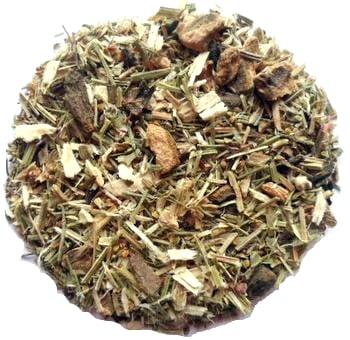
ESSIAC TEA: BENEFITS, RISKS, AND WHAT THE EVIDENCE ACTUALLY SHOWS
Essiac tea is one of the most discussed and most misunderstood herbal preparations in alternative health circles. The formula, developed in the 1920s by Canadian nurse Rene Caisse based on a recipe she attributed to an Ojibwe healer, typically contains burdock root, sheep sorrel, slippery elm bark, and Indian rhubarb root. It became widely known in North America as a proposed cancer treatment and has maintained a significant following ever since. Evaluating Essiac tea honestly requires separating what the research actually shows from what decades of anecdotal promotion have claimed, and the picture that emerges is considerably more nuanced than either its strongest advocates or its most dismissive critics tend to acknowledge.
WHAT ESSIAC TEA CONTAINS
Burdock root contributes inulin, mucilage, and sesquiterpene lactones including arctiopicrin, which has demonstrated anti-inflammatory and mild antimicrobial properties in laboratory models. It also provides lignans and caffeic acid derivatives with antioxidant activity. Sheep sorrel, the herb Caisse considered the most active component, contains anthraquinones, oxalic acid, and various flavonoids. Slippery elm bark provides mucilaginous polysaccharides that coat and soothe gastrointestinal mucosa and have been used medicinally for inflammation of the digestive tract for centuries. Indian rhubarb root contributes emodin and other anthraquinones with laxative effects and some antimicrobial activity. Studies indexed through PubMed have identified bioactive compounds in all four ingredients, though the clinical evidence for the blend specifically is limited in scope and quality.
WHAT THE RESEARCH ACTUALLY SHOWS
The honest assessment of Essiac’s research record is that the clinical evidence for anticancer effects is weak. Several in vitro laboratory studies have found that individual Essiac ingredients or the blend itself inhibit cancer cell proliferation in cell cultures under laboratory conditions. This is true of many compounds including basic table salt at sufficient concentrations, and in vitro cell death in a petri dish does not translate reliably to human cancer treatment. The few human clinical studies that have been conducted on Essiac, primarily in patients with prostate cancer and breast cancer, have generally shown no evidence of therapeutic anticancer benefit when used alongside or instead of standard treatment. No randomized controlled trial has demonstrated that Essiac tea extends survival or reduces tumor burden in any cancer type. The scientific and medical consensus is that Essiac should not be used as a cancer treatment or as a substitute for evidence-based oncological care.
POTENTIAL BENEFITS WITH BETTER EVIDENCE
Where Essiac’s evidence base is more defensible is in the areas of immune modulation and antioxidant activity. A study published in the Journal of Ethnopharmacology found that Essiac demonstrated immunostimulatory effects in human immune cell cultures, increasing the oxidative burst activity of granulocytes and natural killer cell cytotoxicity. These immune-stimulating effects may have relevance for general immune support in healthy individuals outside a cancer context. The antioxidant activity of the blend’s constituent herbs is well-documented individually, and the combination likely provides meaningful total antioxidant capacity. The burdock root and slippery elm components have genuine digestive and mucosa-supportive applications that are separate from any cancer-related claims and are supported by their individual compound profiles and traditional use documentation.
RISKS AND SAFETY CONSIDERATIONS
Essiac tea carries more safety considerations than most herbal teas. The oxalic acid in sheep sorrel can contribute to kidney stone formation in predisposed individuals and is contraindicated for people with a history of kidney stones or kidney disease. The anthraquinones from Indian rhubarb root have laxative effects that can cause diarrhea and electrolyte imbalance with regular consumption or at higher doses. Slippery elm may slow the absorption of oral medications and should be consumed separated from pharmaceutical doses. Burdock root is generally safe at food-level consumption but carries potential interactions with anticoagulant medications. People currently undergoing cancer treatment should inform their oncologist before using Essiac tea, as immune stimulation could theoretically interfere with certain treatment protocols and the oxalate and anthraquinone content could affect treatment tolerance.
HOW TO APPROACH ESSIAC TEA RESPONSIBLY
Essiac tea is a complex herbal preparation with a contentious reputation and a compound profile that deserves more measured evaluation than it typically receives. The anti-cancer claims that have driven its popularity for a century are not supported by the current evidence and should not be relied upon for any cancer management decision. The immune support, antioxidant, and digestive applications are more defensible and may be relevant for healthy individuals interested in general wellness applications. If you choose to consume Essiac tea, use a standardized commercial preparation with known ingredient ratios rather than making it from scratch with variable ingredients. Limit consumption to two cups daily, monitor for signs of gastrointestinal distress, and do not use it as a primary intervention for any serious health condition without medical guidance. The beverage is not dangerous for most healthy adults at moderate consumption but is also not the breakthrough treatment its historical promoters claimed.
THE BOTTOM LINE ON ESSIAC
Essiac tea occupies an unusual space in the herbal beverage landscape: a preparation with genuine bioactive content and legitimate traditional roots that became so over-associated with extraordinary cancer cure claims that its more modest and defensible applications are rarely discussed on their own terms. The immune-modulating and antioxidant properties of its ingredient blend are real and documented at the compound level. The digestive and mucosa-supportive effects of slippery elm and burdock root are well-characterized in the herbal medicine literature. The anticancer claims are not supported by clinical evidence. Understanding these distinctions allows for an evidence-consistent approach to Essiac tea that neither dismisses it entirely nor relies on it for purposes beyond what the current science supports.
ESSIAC AND ATHLETIC RECOVERY: AN HONEST ASSESSMENT
For athletes and active individuals outside a cancer context, Essiac tea’s most relevant potential contributions are its immune-modulating and antioxidant properties. The burdock root component’s inulin content provides prebiotic support for gut microbiome health. Slippery elm’s mucilaginous polysaccharides support gastrointestinal lining integrity, which is directly relevant for athletes who experience gut permeability issues during and after intense training. The overall antioxidant contribution from the blend’s polyphenol content adds to the dietary antioxidant load that supports recovery from training-induced oxidative stress. None of these applications require the extraordinary cancer cure claims that have historically defined Essiac’s marketing. They are modest, defensible benefits from a blend of herbs with individually documented bioactive properties. Approaching Essiac as a functional herbal tea with these specific moderate benefits rather than as a medicinal treatment for any specific disease represents the most evidence-consistent use of the available research.
Practically speaking, Essiac tea is available in pre-formulated bags and liquid concentrates from health food stores across the US, Canada, and Europe. Commercial preparations provide more consistent ingredient ratios than home preparation from raw herbs and are the appropriate choice for consumers who want a standardized product. Consume at one to two cups daily at most, separate from pharmaceutical medications by at least two hours to minimize any absorption interference from the slippery elm mucilage. Do not treat any Essiac product as a medical intervention regardless of the health claims on its packaging. Use it as a functional herbal tea with a complex polyphenol and prebiotic profile if you find its flavor and properties appealing, and maintain appropriate expectations about what it can realistically contribute to health at typical dietary consumption levels.
Certified strength and conditioning specialists with over 10 years of combined experience in powerlifting, nutrition coaching, and evidence-based fitness content. Based in New York City, the Genghis Fitness team tests every protocol in the gym before writing about it.
If you are exploring herbal teas for health benefits, also see our guides on green tea benefits and peppermint tea — both have strong evidence bases for daily wellness use.
COMPLETE YOUR TRAINING TOOLKIT
Your health routine starts with what you drink. Your training gains start with the right equipment. Lifting straps keep grip from limiting your heaviest pulling work.
Shop Lifting Straps