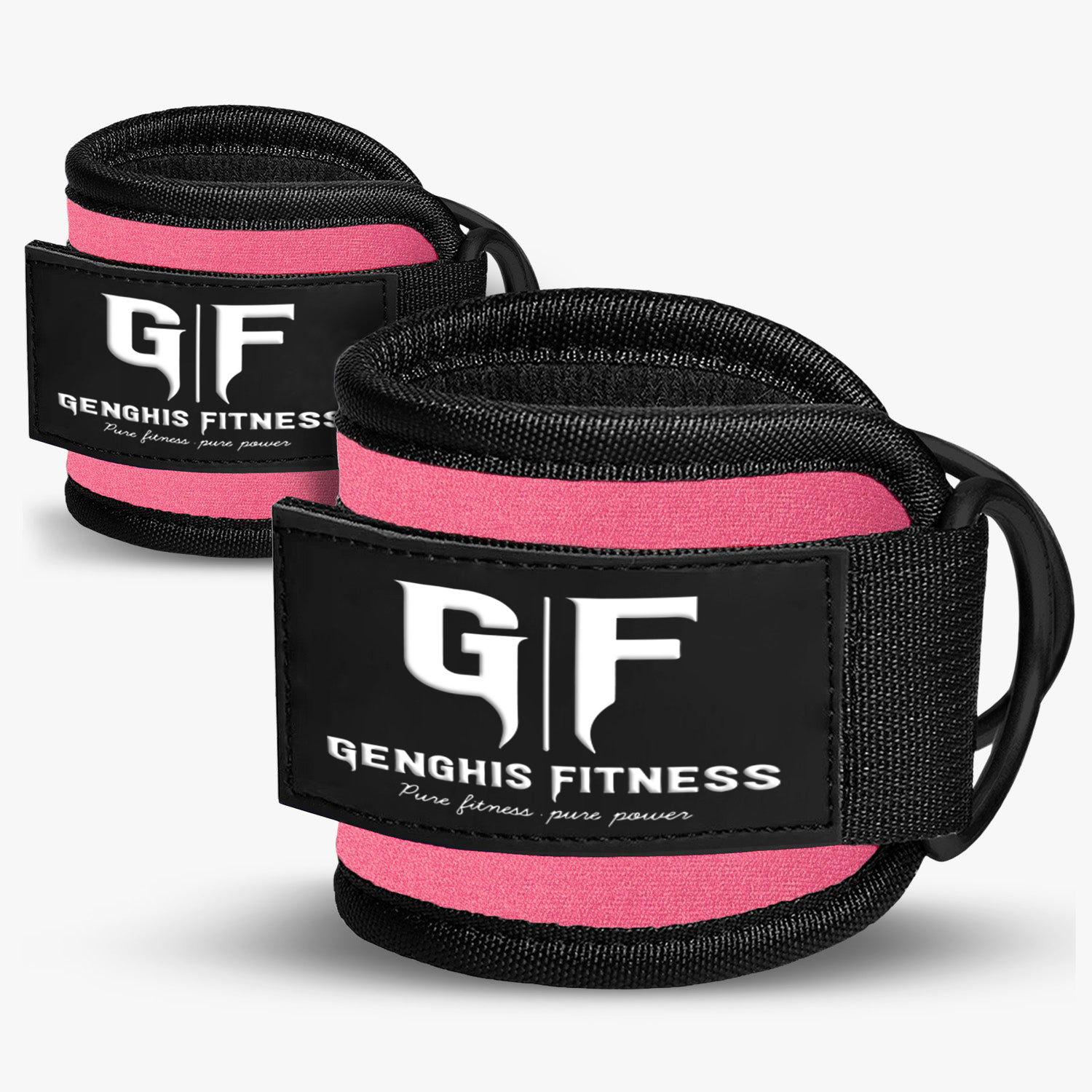
Ankle Strap Accessories: What Pairs With Your Straps and Why It Matters
Ankle straps for cable machines do not exist in isolation in a well-equipped training kit. They work best as part of a coordinated lower-body accessory system alongside other tools that activate, support, and protect the muscles and joints you are training. Understanding which accessories pair naturally with ankle straps, how they complement each other in a session, and what order to use them in makes your lower-body training meaningfully more productive than treating each tool as an independent item.
This guide covers the accessories that work best alongside cable machine ankle straps, from warm-up activation bands to joint support sleeves, and explains the specific value each adds to a cable-focused lower-body training block.
Hip Circle Bands: The Essential Activation Pair
The natural first accessory to use alongside ankle straps is a hip circle band. Before any cable work with ankle straps, the hip abductors and glute medius need to be activated. These muscles are responsible for controlling the alignment of the knee over the foot during cable kickbacks, hip abductions, and pull-throughs. Without activation, they tend to underfire during the cable exercises themselves, reducing the training stimulus and increasing the risk of compensatory patterns that load the knee and lower back inappropriately.
A five to eight minute activation sequence with the hip circle band before cable work includes clamshells, monster walks, and banded glute bridges. This sequence fires the glute medius, hip external rotators, and hip abductors so they are ready to work as primary movers during the cable exercises rather than waiting to be recruited mid-set. Research indexed on PubMed on pre-activation protocols confirms that targeted activation before resistance training increases muscle activity in the target muscle during subsequent loaded work.
Knee Sleeves: Joint Support for Heavy Cable Work
As cable weights increase for exercises like cable leg curls, cable squats, and heavy kickback variations, the knee joint absorbs meaningful mechanical stress. Knee sleeves provide compression that improves proprioception around the joint, supports the patellar tendon and surrounding structures during loading, and keeps the joint warm through a session. They do not replace the strength and stability that proper movement patterns and adequate training provide, but they create a supportive environment that reduces injury risk under load.
Wear knee sleeves on cable sessions where you are working with heavier loads or doing high-rep volume on knee-dominant cable exercises. Rolled down between sets and on lighter activation work, pulled up for working sets, is the standard approach. This keeps the joint from becoming overly compressed during rest periods while providing support exactly when it is needed.
Wrist Wraps for Upper-Body Cable Days
Ankle straps are a lower-body tool, but the cable machine they attach to also serves upper-body training. On sessions where you alternate between lower-body ankle strap work and upper-body cable exercises like face pulls, cable curls, tricep pushdowns, and straight-arm pulldowns, wrist wraps protect the wrist joints during heavy cable pressing and pulling movements.
Carrying both ankle straps and wrist wraps to a cable session allows you to do complete upper and lower body cable work in a single station with appropriate joint support for both regions. This is particularly efficient for athletes who use cables as their primary accessory training tool and want to maximize what they get from a single piece of equipment.
A Carabiner or Gear Ring for Organization
A practical accessory that is not a training tool but significantly improves how your cable accessories travel and stay organized is a large carabiner or gear ring. Clip your ankle straps, wrist wraps, and any other strap accessories onto a single carabiner that attaches to your gym bag strap. Everything stays together, nothing gets buried inside the bag, and swapping between accessories during a session takes seconds rather than minutes of rummaging.
A locking carabiner used in a locker room setting prevents accidental loss if the bag is bumped. Non-locking aluminum carabiners from outdoor gear retailers are lightweight, inexpensive, and available everywhere. This is a two-dollar solution to an organization problem that genuinely improves training consistency by removing the friction of equipment management.
Lifting Straps for Accessory Pull Work
While ankle straps handle the foot-to-cable connection for lower-body work, lifting straps handle the hand-to-bar connection for upper-body cable pulling movements. On sessions where you are doing both cable kickbacks with ankle straps and cable rows or pulldowns, having lifting straps in your bag eliminates grip as a limiting factor on the pulling exercises.
This combination allows a single cable session to cover both the glute and hamstring work done with ankle straps and the back and bicep work done with lifting straps, without grip fatigue interfering with either. The two tools serve different functions and different body regions but belong in the same training bag for the same type of session. Having both available gives you flexibility to program efficiently without unnecessary compromises.
The Order of Use in a Lower-Body Cable Session
The optimal sequence for a lower-body cable session with ankle straps and accessories: Start with five to eight minutes of hip circle band activation (clamshells, monster walks, banded glute bridges). Attach ankle straps and do your first cable exercise (typically hip abductions or kickbacks) at moderate weight for two warm-up sets. Pull on knee sleeves before the first working set. Complete all lower-body cable work with the straps and sleeves in place. Remove ankle straps for any standing upper-body cable work; put on wrist wraps if doing heavy pressing or pulling. Finish the session and air out all accessories before packing them away.
This sequence ensures the right tool is being used at the right time without unnecessary transitions that interrupt training flow. Each accessory has its moment and its purpose. The ankle straps, hip circle bands, and knee sleeves from Genghis Fitness are built as a coordinated system for exactly this kind of training structure.
Chalk and Grip Management
On cable exercises where your hands grip attachment handles or bars directly, chalk prevents slipping during high-rep sets and reduces the friction on the palm that leads to callus tearing. Liquid chalk is the most practical option in commercial gyms because it does not create dust and is allowed in most facilities that prohibit powder chalk. A small amount on the palms before your working sets handles the grip side of cable training cleanly.
For exercises where the ankle strap is the primary contact point and your hands grip attachment handles only lightly, chalk is less critical. Focus chalk use on the grip-intensive cable movements: single-arm cable rows, cable face pulls, straight-arm pulldowns, and similar exercises where hand-to-handle friction matters. Keep a small container of liquid chalk in the same gear pouch as your ankle straps for convenient access without needing to go to a separate chalk station.
FINAL WORDS
Ankle straps are most effective as part of a coordinated accessory system that includes hip activation bands, joint support sleeves, and proper organizational tools. Using each accessory at the right moment in the right sequence extracts maximum value from every cable session. The hip circle band fires the right muscles before loading. The knee sleeves support the joint under load. The wrist wraps protect on upper-body cable work. The carabiner keeps it all together. Build your system, use it consistently, and your cable training will produce results that isolated equipment use cannot match.
Certified strength and conditioning specialists with over 10 years of experience in powerlifting, nutrition, and evidence-based fitness content. Based in New York City.
More accessory guides are in the gym accessories guides, organized by equipment type for fast reference.