ANKLE STRAPS FOR CABLE MACHINES REVIEWED: FINDING THE BEST OPTION FOR YOUR TRAINING
There are more ankle strap options on the market than ever before, and the quality gap between the best and worst options is enormous. A great ankle strap stays secure through 20 reps of standing cable abductions without shifting a millimeter. A bad one slides down your ankle halfway through your second set, digs into the bone, and leaves you adjusting gear instead of training. This review-focused guide breaks down exactly what separates quality ankle straps from cheap ones, what real users across gyms in the US and Europe report after extended use, and why the right choice matters more than most people expect.
WHY THE ANKLE STRAP MARKET IS WORTH PAYING ATTENTION TO
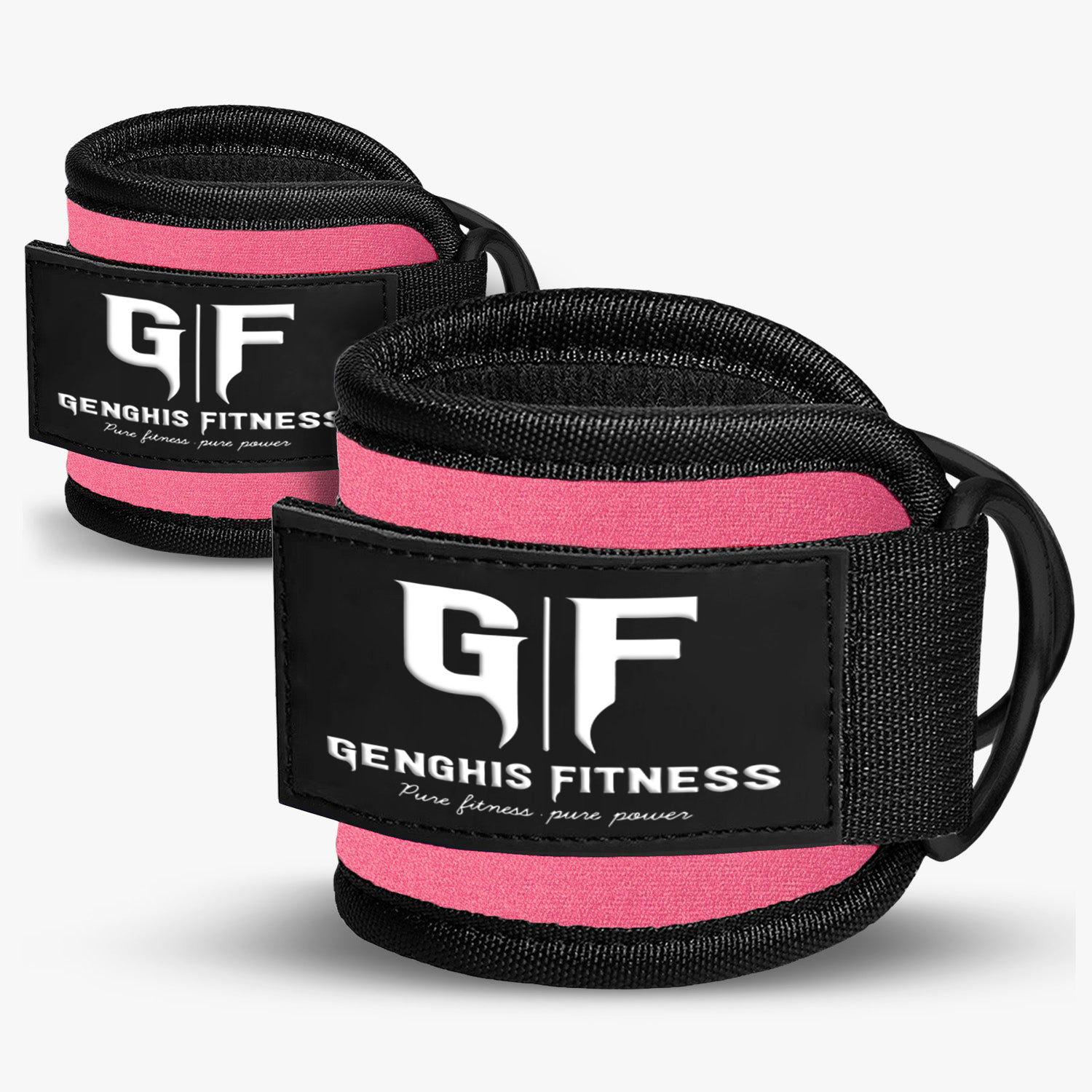
Cable machine training has expanded massively in popularity over the past decade. What used to be equipment reserved for bodybuilders and physio clinics is now a staple in commercial gyms, home setups, and CrossFit boxes. Ankle straps are the key that unlocks the lower body applications of the cable stack: glute kickbacks, standing abductions, cable hip extensions, hip flexor pulls, and lying hamstring curls. The Genghis Fitness ankle straps for cable machines were built specifically for this kind of high-rep, varied-angle training where both comfort and hardware durability are tested every session.
The problem is that the market is full of products that look identical in product photos but perform completely differently under real training conditions. Understanding the variables that separate them saves you time, money, and the frustration of mid-set equipment failure.
THE FIVE PERFORMANCE FACTORS THAT MATTER MOST
FACTOR 1: CLOSURE SECURITY UNDER DYNAMIC LOAD
Every ankle strap uses some form of Velcro closure, but not all Velcro is equal. Hook-and-loop fastener quality varies significantly between manufacturers. Budget straps use thin, low-density Velcro that loses its grip strength within weeks of regular use, particularly when it gets wet from sweat during training. Quality straps use heavy-duty, wide-surface Velcro rated for thousands of open-close cycles. Dual-closure designs that create two independent contact zones are substantially more secure than single-closure designs, especially during lateral movement patterns like cable abductions where the strap experiences multi-directional forces simultaneously.
FACTOR 2: PADDING DENSITY AND COMFORT
The padding between the strap and your skin has two jobs: comfort during the session and protection of the bony prominences of the ankle (primarily the medial and lateral malleoli). Thin foam padding that compresses completely under even light closure pressure offers neither. Look for a strap where the padding maintains meaningful thickness when compressed. Neoprene is superior to basic foam for ankle strap applications because it has better compression memory and retains its shape through repeated use. It also dries faster after sweating, which matters for hygiene and material longevity. Research on resistance training at the ankle confirms that secure, comfortable attachment is essential for consistent force application through the exercise range of motion.
FACTOR 3: D-RING CONSTRUCTION
The D-ring is the structural link between the strap and the cable machine carabiner. This small piece of hardware handles significant tension during loaded movements. Welded D-rings hold their circular shape indefinitely under load. Stamped rings, which are flat metal pressed into a D shape rather than formed in the round, flex and deform under repeated loading, which causes the carabiner to bind and creates uneven force distribution on the strap attachment point. If you are doing cable kickbacks with any meaningful resistance, a stamped ring will show deformation within a few months of consistent training. Always check whether a strap uses welded hardware before purchasing.
FACTOR 4: STRAP WIDTH AND LOAD DISTRIBUTION
Wider straps distribute the cable resistance over a larger surface area of the ankle, which reduces the sensation of the strap cutting in during high-rep sets. Narrow straps concentrate the load into a smaller zone and become uncomfortable quickly, which causes athletes to rush through sets or reduce their range of motion to manage discomfort rather than for any performance reason. A minimum strap width of two inches is recommended for cable machine ankle work. Wider is generally better up to about three inches, beyond which the strap becomes bulky and limits full range of motion during extension-type movements.
FACTOR 5: ATTACHMENT POINT POSITIONING
The D-ring should sit at the bottom of the strap, centered on the anterior (front) surface of the ankle. This positioning ensures that during kickback and extension movements, the cable pull vector is aligned with the direction of intended force. Straps where the attachment point sits to the side or is not centered create rotational forces that pull the strap out of position mid-set, defeating the purpose of the secure closure. Well-designed straps have the attachment point stitched and reinforced at the optimal position rather than placed based on manufacturing convenience.
WHAT LONG-TERM USERS REPORT AFTER MONTHS OF TRAINING
Athletes who have used the Genghis Fitness ankle straps consistently report that the padded neoprene lining holds up through months of regular training without the delamination or cracking common in budget alternatives. The dual Velcro closure system stays secure through extended sets of 15 to 25 reps without requiring adjustment between sets. The welded D-ring shows no deformation even after heavy cable work at loads that put significant tension on the hardware. The reversible design means there is no inside-out orientation to manage when strapping in during training, which sounds like a minor detail but matters during the setup of a demanding superset.
Common feedback from athletes who switched from cheaper alternatives centers on two things: reduced mid-set slippage and elimination of the ankle soreness caused by thin, inadequately padded straps. Both translate directly to better training. If your ankle strap is not a distraction during a set, you can focus entirely on the muscle you are trying to work. That is the whole point of good equipment.
HOW ANKLE STRAPS COMPARE TO OTHER CABLE ACCESSORIES
Ankle straps occupy a specific niche in the cable machine accessory ecosystem. They are distinct from hand grip attachments like single cable handles or rope attachments, and they serve a completely different function from ankle weights, which provide fixed resistance rather than adjustable cable tension. The cable machine with ankle straps gives you infinitely adjustable resistance across the full range of a lower body isolation exercise, something ankle weights simply cannot do. For anyone serious about building the posterior chain and hip stabilizers, ankle straps represent a far superior training tool to alternative options. Stack them in your bag alongside lifting straps for pulling days and wrist wraps for pressing days and you have a complete accessory kit for every major training pattern.
EXERCISES TO GET THE MOST OUT OF YOUR ANKLE STRAPS
Cable glute kickbacks should be your cornerstone movement. Stand facing the cable tower, strap the working leg, grip the frame for support, and extend the leg directly backward. Keep your pelvis neutral and your lumbar spine from hyperextending at the top. Use a weight that allows you to feel a strong glute contraction throughout the movement rather than momentum driving the leg. Standing cable abductions hit the gluteus medius: stand side-on to the cable, strap the outside leg, and lift directly sideways against the resistance. Add these to your leg day warm-up or finisher rotation and the cumulative impact on hip stability and glute development is significant. Pair abduction work with hip circle bands for warm-up activation to prime the pattern before loading it with cable tension.
For athletes focused on athletic performance, cable hip flexor marches are underused and highly effective. Face away from the cable machine, strap the working leg, and drive the knee up against the resistance. This directly strengthens the hip flexor complex in its active shortened position, which transfers to sprint mechanics and jumping performance in ways that passive hip flexor stretching alone cannot achieve. Finish leg sessions with three sets of this on each side and you will notice the hip drive difference within a few weeks.
FINAL WORDS
Not all ankle straps are worth your money or your training time. The ones that earn a permanent place in your gym bag are built with welded hardware, genuine neoprene padding, dual Velcro closures rated for real training loads, and an attachment point positioned for correct force transfer. The Genghis Fitness ankle straps hit every one of those marks. Get a pair, add cable abductions and kickbacks to your program consistently, and build the glutes and hip stabilizers that make everything else in your training stronger. The cable machine has been sitting in your gym doing less than it could for too long.
Certified strength and conditioning specialists with over 10 years of experience in powerlifting, nutrition, and evidence-based fitness content. Based in New York City.
Browse all related guides in the gym accessories guides for how-to guides, buying recommendations, and training applications across every gym accessory.