ARM BLASTER: THE COMPLETE GUIDE TO THE ORIGINAL BICEP ISOLATION TOOL
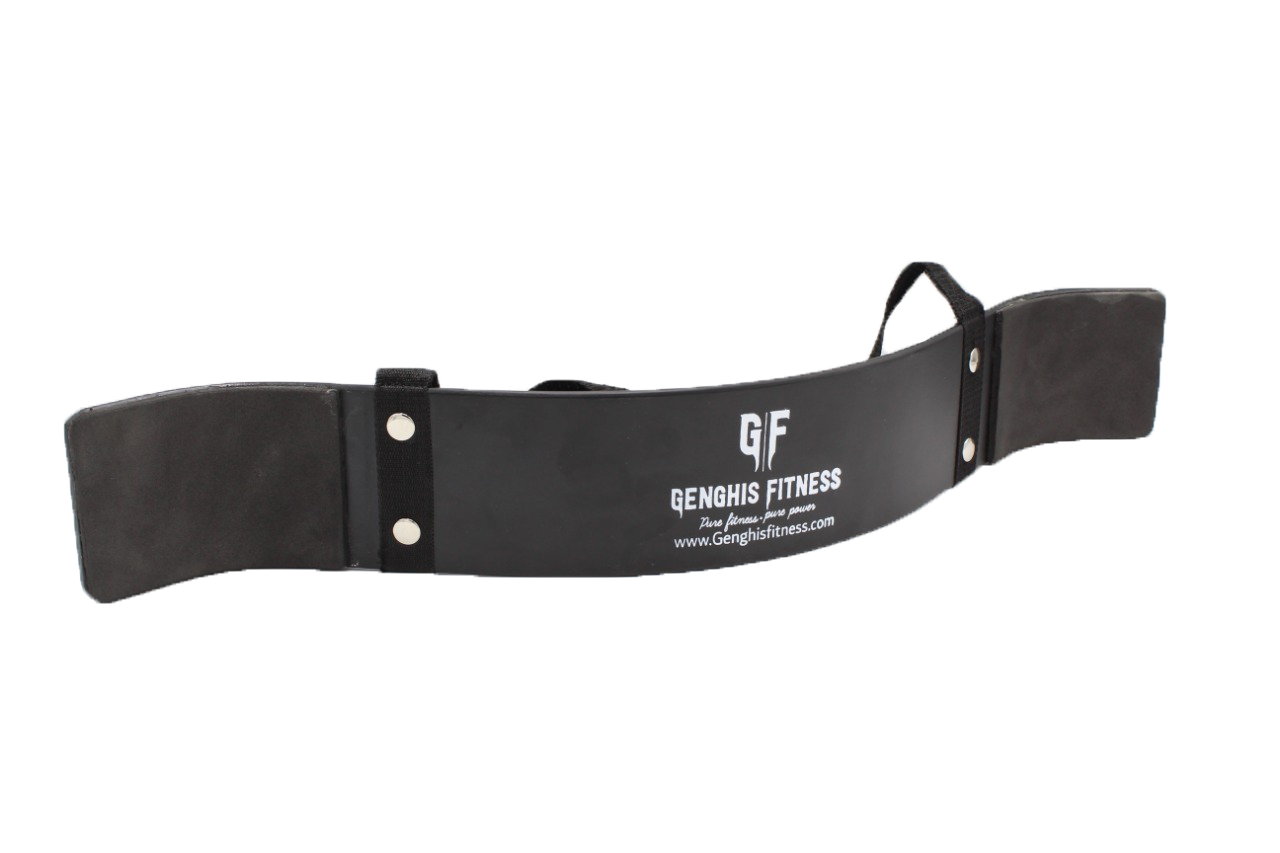
The arm blaster is a bicep isolation device with a straightforward design and a well-documented training effect. A curved aluminum plate worn on an adjustable neck strap rests against the lower abdomen and provides a fixed surface that the upper arms brace against during curl movements, preventing the elbow drift and anterior deltoid assistance that freestanding curling allows as weights increase and technique degrades under loading pressure. The device has been a standard tool in serious arm training since the 1960s and continues to earn its place in training programs because the mechanism it provides, strict elbow isolation, produces bicep activation levels that freestanding curling cannot consistently replicate at equivalent loads.
THE SCIENCE: WHY FIXED ELBOWS PRODUCE HIGHER BICEP ACTIVATION
EMG research on elbow flexor activation with and without elbow restriction confirms that fixed elbow position during curling produces significantly higher bicep activation compared to freestanding curls at equivalent loading. The mechanism is the elimination of anterior deltoid contribution: when elbows can drift forward and upward during the curl, the shoulder joint assists the movement and reduces the force the biceps must produce to complete each rep. When the elbows are braced against the arm blaster plate and cannot move, the bicep produces essentially all the force required for each rep. This activation difference produces better isolated bicep development from the same curl volume compared to freestanding alternatives at equivalent loads.
CORRECT SETUP: PLATE POSITION AND STRAP HEIGHT
The most important setup step for effective arm blaster use is positioning the plate at the correct height on the torso. Stand with the neck strap adjusted so the plate sits at the lower abdomen, approximately at the waistline. Let the upper arms hang naturally against the plate surface. The elbows should be at or near the lower edge of the plate in this hanging position, not elevated above the plate or pressed against the middle of the plate. If the plate is too high, it digs into the upper abdomen and creates discomfort during the curl that distracts from training. If it is too low, the elbows lose contact with the plate at the start of the curl and the isolation is not established before the movement begins.
THE CORRECT WORKING WEIGHT FOR ARM BLASTER CURLS
The correct working weight for arm blaster curls is 25 to 40 percent below the freestanding barbell curl maximum. This is the most counterintuitive aspect of arm blaster training for athletes who begin using it expecting to curl their usual weight with added isolation quality. The freestanding curl weight includes the anterior deltoid contribution that the arm blaster eliminates. Attempting the freestanding curl weight on the arm blaster produces elbow drift against the plate, excessive elbow pressure, and partial range reps that reduce the isolation quality the device is designed to create. Starting at the appropriate working weight produces genuine full-range strict reps that deliver the activation advantage the arm blaster is designed to provide.
BAR SELECTION AND WRIST PROTECTION FOR HEAVY SESSIONS
The EZ-curl bar is preferred over the straight barbell for most athletes using the arm blaster because the angled grip reduces the wrist and elbow stress that the fully supinated straight bar grip creates at heavy loading across multiple sets. The EZ-curl bar angled grip does not significantly reduce bicep activation compared to the straight bar for most athletes. Use wrist wraps on the heaviest arm blaster sets regardless of bar choice, as the extended wrist position under heavy curl loading creates posterior wrist stress that accumulates across multiple sets of arm blaster work. This is especially relevant when the arm blaster weight has been progressively increased to meaningful intensity levels across several training blocks.
PRE-ACTIVATION PRACTICE BEFORE LOADING
Pre-activation practice before loading is the training technique that most improves first-session arm blaster results. Before loading the bar, perform two sets of unweighted or very-light arm blaster curls focused entirely on feeling the elbows bracing against the plate and the bicep activating without shoulder assistance. This primes the specific motor pattern the arm blaster trains before loading pressure makes anterior deltoid compensation the path of least resistance. Athletes who skip this step and immediately attempt weighted arm blaster curls at their warm-up weight frequently find the first several reps involve some elbow drift before the isolation pattern establishes. Pre-activation practice eliminates this drift from the first rep of the first working set.
BICEP AND TRICEP APPLICATIONS FOR THE ARM BLASTER
The arm blaster works for both bicep and tricep isolation applications. For the bicep application, the standard supinated and hammer curl variations produce targeted elbow flexor volume with strict elbow positioning. For the tricep application, the arm blaster can be used during overhead tricep extension variations where the plate fixes the upper arms in the overhead position, preventing the elbow flare that reduces long head isolation during freestanding overhead extensions. The combined arm blaster approach, bicep curls followed by overhead tricep extensions with the blaster, constitutes a complete upper arm isolation session that addresses both the elbow flexors and extensors with the strict positioning that both muscle groups benefit from.
PROGRESSIVE OVERLOAD: STRICT TECHNIQUE OVER WEIGHT CHASING
Research on progressive overload and bicep hypertrophy confirms that systematic load progression in elbow flexion exercises drives bicep development. For arm blaster curls, this means tracking the exact working weight, rep count, and technique quality for every set of every arm session, and adding the smallest available weight increment when the top of the target rep range is achieved with correct technique on all working sets. The activation advantage of the arm blaster means the progressive overload stimulus from a smaller increment at strict technique produces better development than a larger increment that requires elbow drift to complete. Precision overload within the strict range is more effective than weight chasing with degraded technique.
JOINT SUPPORT AND COMPLETE UPPER ARM TRAINING INTEGRATION
Support the elbow and wrist joints across arm blaster sessions with elbow sleeves worn throughout every arm training session and wrist wraps on the heaviest sets. The concentrated isolation loading that arm blaster work creates, with the elbow bearing the full force of the curl without shoulder assistance across multiple sets, produces sustained elbow joint stress that consistent thermal support from sleeves significantly reduces. Pair arm blaster bicep work with compound tricep training from the dip belt for a complete upper arm session that addresses both muscle groups with the appropriate tools and sequencing.
FINAL WORDS
The Genghis Fitness arm blaster is built from alloy plate at the thickness required for rigidity under heavy curl loading, with an adjustable neck strap and adequate padding at contact points for comfortable extended session use. It serves the role that its design has always served in serious arm training: providing the fixed elbow brace that turns every curl variation into a genuinely isolated bicep movement rather than a compound curl that dilutes the target muscle loading with anterior deltoid contribution. Use it with correct working weight, pre-activation practice, deliberate tempo and peak contraction, and the joint support tools that allow arm training to be pushed to genuine intensity without discomfort becoming the limiting factor. The device works exactly as well as the technique applied to it, which means the athletes who extract the most from arm blaster training are those who accept the working weight reduction it requires, commit to the pre-activation practice that establishes the isolated pattern, and apply consistent progressive overload within the strict range that the device enforces.
Certified strength and conditioning specialists with over 10 years of experience in powerlifting, nutrition, and evidence-based fitness content. Based in New York City.
This guide is part of the Genghis Fitness gym accessories guides, where 80 articles cover dip belts, arm blasters, lifting hooks, ankle straps, and hip circle bands.