Benefits of Booty Bands: What the Research and Practice Show About Hip Circle Training
Booty bands, or hip circle bands, have accumulated a reputation as a tool primarily for aesthetic training goals. The reputation undersells them. The biomechanical benefits of consistent hip circle band training extend well beyond aesthetics into squat mechanics, injury prevention, single-leg stability, and posterior chain development that transfers directly to athletic performance.
This guide covers the documented benefits of booty band training, the mechanisms behind each benefit, and the evidence supporting their use in programs ranging from rehabilitation to competitive strength training.
Benefit 1: Direct Gluteus Medius Activation
The gluteus medius is responsible for hip abduction and pelvic stability during single-leg loading. It is consistently undertrained in athletes whose programs focus primarily on barbell squats, deadlifts, and hip thrusts, all of which load the gluteus maximus as the primary mover. The gluteus medius requires lateral resistance to be directly challenged, and a hip circle band above the knees during lateral walks, clamshells, and standing hip abduction exercises provides exactly this.
Research published in the NIH research database on hip muscle activation during resistance band exercises has documented that lateral band walks and clamshell variations produce high levels of gluteus medius activation, comparable to weighted isolation exercises performed on cable machines. For athletes without cable machine access, hip circle bands are the most effective available tool for this specific training need.
Benefit 2: Improved Knee Tracking and Reduced Valgus
Knee valgus, the inward collapse of the knee during squatting and landing movements, is one of the most common technical errors in loaded lower body training and one of the primary mechanical contributors to knee injury risk. The root cause of knee valgus is typically inadequate hip abductor strength relative to the adductor pull that occurs during loading.
Using a hip circle band during squat warm-up sets provides two simultaneous benefits for knee tracking. First, the band activates the gluteus medius and hip external rotators before the heavy loading begins, priming these muscles to contribute actively to knee alignment during working sets. Second, the band provides real-time feedback: if the knee collapses inward during the movement, the band is not being resisted. This sensory feedback improves movement pattern quality immediately rather than requiring post-session analysis.
The American Council on Exercise has noted that hip strengthening exercises addressing the gluteus medius and hip external rotators are among the most evidence-supported interventions for improving knee mechanics during loaded lower body movements.
Benefit 3: Enhanced Glute Development Across All Three Heads
The three gluteal muscles, the gluteus maximus, gluteus medius, and gluteus minimus, require different loading vectors for complete development. The gluteus maximus is best trained through hip extension (squats, hip thrusts, deadlifts). The gluteus medius and minimus are best trained through hip abduction and external rotation. Band-based lateral and rotational exercises are the most accessible way to address the medius and minimus directly.
Athletes who train only the gluteus maximus through compound lifts develop the largest muscle but miss the lateral fullness of the hip that comes from well-developed gluteus medius. A complete training program addresses all three heads, and hip circle bands provide the most practical method for the medius and minimus work.
Benefit 4: Injury Prevention Through Hip Strengthening
Hip abductor weakness has been associated in multiple studies in the NIH research database with increased risk of patellofemoral pain, IT band syndrome, ACL injury, and lower back pain. Each of these conditions involves a loading distribution problem at the knee or lumbar region that is worsened by insufficient lateral hip strength.
Systematic hip abductor training through band exercises addresses the weakness that underlies these injury risk factors. Athletes who include regular hip circle band work in their programs report fewer knee issues during squatting and running movements. Rehabilitation protocols for these conditions routinely include clamshells, lateral band walks, and hip abduction exercises as primary therapeutic interventions precisely because hip abductor strengthening is well-established as both treatment and prevention.
Benefit 5: Improved Single-Leg Stability
Single-leg movements, including lunges, split squats, Bulgarian split squats, and single-leg deadlifts, require the hip abductors of the stance leg to prevent pelvic drop on the non-stance side. Inadequate gluteus medius strength on the stance side causes the pelvis to drop toward the free leg, a compensation known as Trendelenburg sign, which shifts load distribution at the knee and hip in ways that accelerate joint wear.
Band-based hip abductor training directly builds the capacity needed for stable single-leg movements. Athletes who have worked through a progressive hip circle band program consistently demonstrate more controlled pelvic position during single-leg exercises than those who have trained bilateral movements exclusively.
Benefit 6: Versatility Across Training Contexts
Hip circle bands require no gym membership, no equipment rack, and no setup time. They can be used for effective glute and hip training anywhere: at home, while traveling, as a warm-up before a gym session, or as a standalone training tool when heavier equipment is not available.
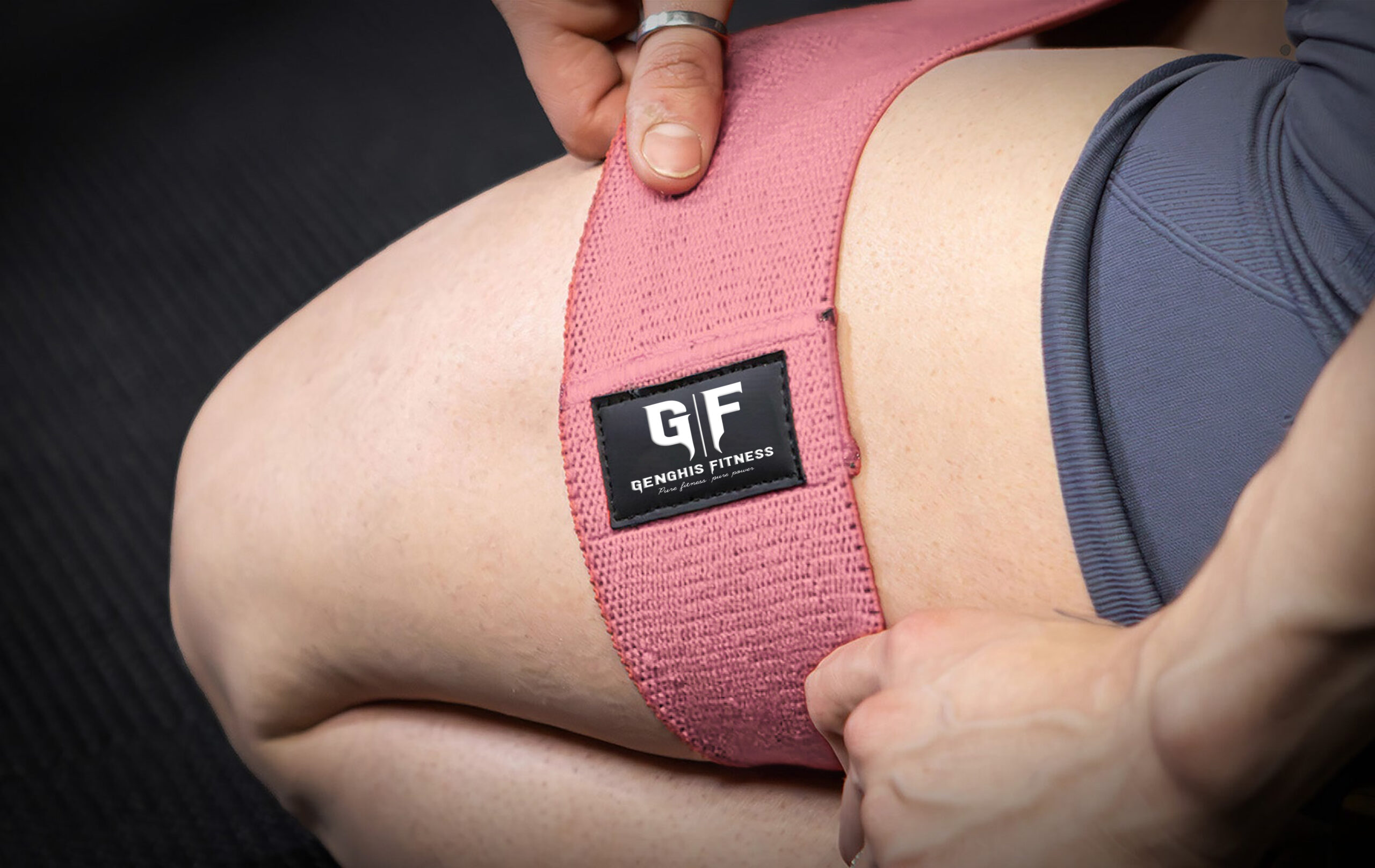
The hip circle bands are designed to stay in position above the knees during dynamic movements without the rolling and bunching that affects flat resistance bands. This design quality directly affects training effectiveness because a band that migrates during a lateral walk cannot deliver consistent resistance through the full range of the exercise.
How to Capture These Benefits Consistently
The benefits described above require structured, progressive use of hip circle bands, not casual warm-up sets that are done differently every session. Apply specific exercises, sets, and rep targets. Progress the resistance level when the target muscles are no longer challenged by the prescribed rep range. Track what you are doing the same way you track barbell lifts. The adaptation response from band training follows the same principles as adaptation from any other resistance training: it requires progressive overload applied consistently over time.
Pairing hip circle band activation work before squatting sessions with knee sleeves during the loaded sets creates a complete lower body preparation protocol that addresses hip abductor activation, knee joint compression and proprioception, and lumbar bracing through a powerlifting leather belt or nylon lifting belt for the heaviest working sets.