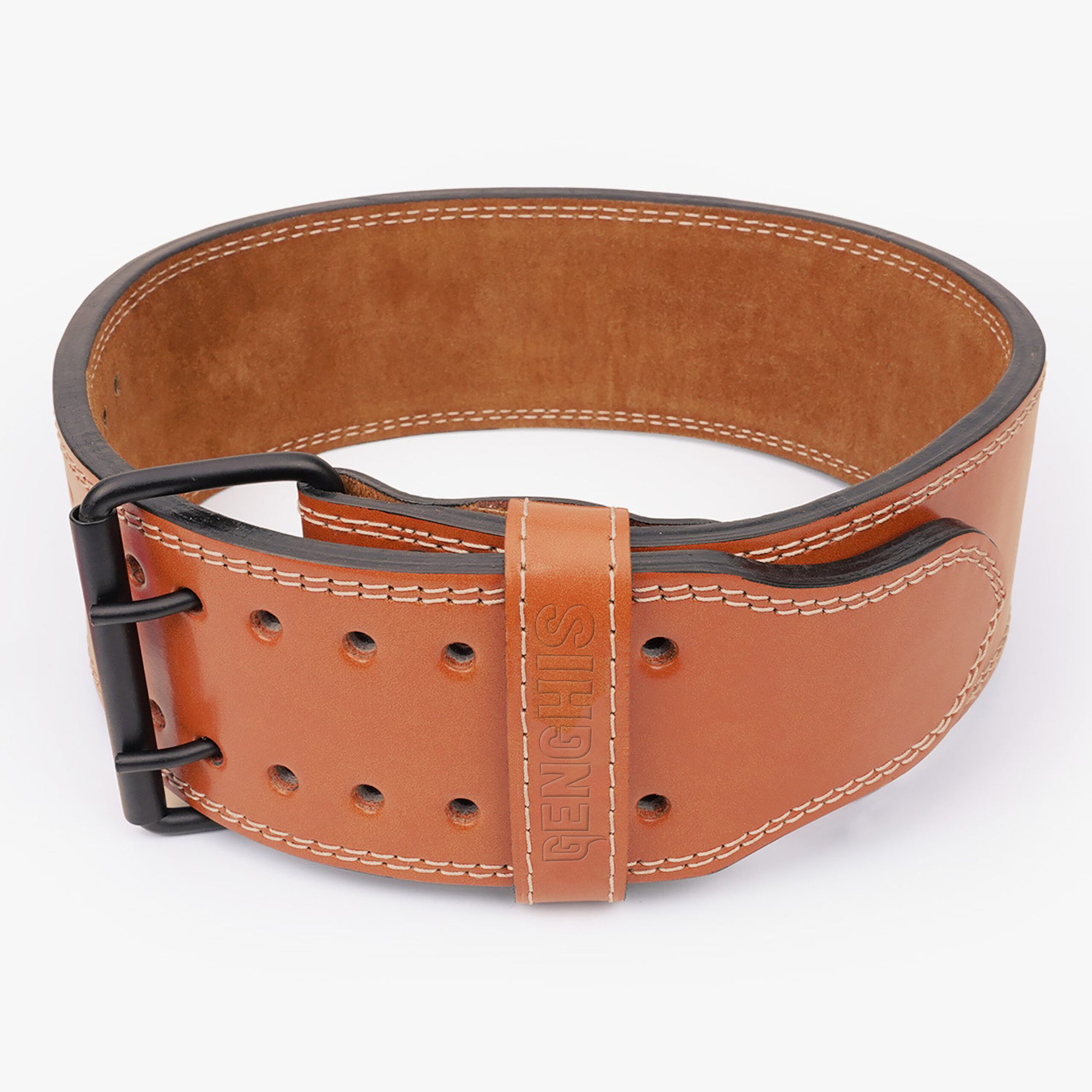
BENEFITS OF WEARING A WEIGHTLIFTING BELT: THE COMPLETE EVIDENCE-BASED GUIDE
The benefits of wearing a weightlifting belt are specific, measurable, and directly connected to the mechanism through which belts work. Understanding this mechanism and how each benefit flows from it is what separates athletes who use belts intelligently, extracting maximum benefit at the intensities where belts help most, from those who either wear a belt on every set regardless of intensity or avoid belts entirely based on misconceptions about their effects on core strength development. The research on belt use is clear: worn correctly at appropriate intensities, a weightlifting belt provides substantial spinal protection and measurable performance improvement that no other training accessory replicates.
THE PRIMARY MECHANISM: INTRA-ABDOMINAL PRESSURE AMPLIFICATION
The primary mechanism of a weightlifting belt is the amplification of intra-abdominal pressure. When the core musculature actively braces outward against the rigid circumferential surface of the belt, the resulting increase in pressure inside the abdominal cavity acts as a hydraulic cushion that reduces the compressive force on the lumbar discs and facet joints during heavy lifting. Research on intra-abdominal pressure and belt mechanics consistently measures IAP increases of 30 to 40 percent with a properly fitted, actively braced belt compared to unbelted lifting at equivalent loads. This IAP increase directly reduces the forces acting on lumbar structures on every heavy rep, which is the primary mechanism of both acute injury prevention and the reduction of cumulative spinal loading that causes degenerative changes over years of heavy training.
PERFORMANCE BENEFIT 1: INCREASED FORCE TRANSMISSION
The IAP mechanism produces a measurable performance benefit alongside the protective benefit. Higher IAP creates a more stable spinal environment that allows the prime movers of the squat and deadlift, the quadriceps, hamstrings, and glutes, to produce more force against a more rigid spinal column. Unstable spines absorb energy during heavy compound movements that a stable spine transmits directly to the bar. This is why most athletes can use five to ten percent more weight on the squat and deadlift with a correctly used belt versus without, not because the belt supports the spine directly but because the improved spinal stability allows more complete force transmission from the lower extremity musculature to the bar.
PERFORMANCE BENEFIT 2: PROPRIOCEPTIVE FEEDBACK DURING HEAVY LIFTS
A second performance benefit is the proprioceptive feedback the belt provides about torso position during the lift. A properly fitted belt maintains contact with the torso throughout the bracing pattern, providing tactile feedback about the position and engagement of the lower back and abdominal musculature during the movement. Athletes who train with a belt consistently report that they are more aware of their lower back position during heavy lifts when wearing the belt, which contributes to more consistent technique across working sets as fatigue accumulates and the tendency toward lower back rounding increases. The belt does not correct technique errors, but it does make the athlete more aware of position deviations that need correction.
THE CORE STRENGTH QUESTION: DOES A BELT WEAKEN THE CORE
The belt does not weaken the core when used correctly within the intensity-based protocol that research and experienced coaches recommend. Research on core muscle activation during belted versus unbelted lifting confirms that the abdominal muscles remain highly active during belted lifting and are actively contracting outward against the belt to generate the IAP that provides the primary benefit. The belt does not allow the core to relax during heavy sets. It provides a surface against which the core can generate more force than is possible without the external brace point. Training without the belt at sub-maximal intensities, as recommended by the 80 percent threshold protocol, preserves intrinsic core development alongside the belted performance at maximum intensities.
CONFIDENCE BENEFIT: FULL COMMITMENT ON NEAR-MAXIMUM ATTEMPTS
The confidence benefit of correctly used belt training is real and extends beyond psychology. When an athlete knows their spinal protection is maximized on near-maximum attempts, they can commit fully to the lift with maximum neural drive rather than holding back a protective fraction of effort due to spinal safety concerns. This full commitment produces better performance outcomes on heavy training days and in competition, and it is the practical expression of the IAP mechanism’s spinal protection benefit: the athlete can train harder because they know the spine is protected. This performance confidence benefit compounds across training years as athletes consistently push harder on belted sets than they would be comfortable doing without the belt.
LONG-TERM BENEFIT: REDUCED CUMULATIVE SPINAL LOADING
The belt’s protective benefit against cumulative spinal loading is perhaps the most significant but least immediately visible benefit of consistent belt use across a training career. Each heavy set without a belt subjects the lumbar vertebrae to compressive forces that, accumulated across thousands of heavy sets over years of training, contribute to the degenerative disc and facet joint changes that limit many long-term strength athletes. Reducing those compressive forces by 30 to 40 percent on every heavy set through consistent belted training at appropriate intensities meaningfully reduces the total cumulative spinal loading exposure across a full training career, which translates into better long-term spinal health and extended training longevity that sustains performance into decades of training.
ACCESSING THE FULL BENEFITS: CORRECT TECHNIQUE IS REQUIRED
The benefits of a weightlifting belt are fully accessible only when the belt is correctly sized, correctly positioned at the iliac crest, tensioned appropriately for full belly breathing, and actively braced against with maximum core engagement on every heavy rep. A belt that is worn loosely, positioned at the wrong torso height, or never actively braced against provides only a small fraction of the IAP amplification that the mechanism can produce. The difference between wearing a belt and using a belt correctly is the difference between having protection gear in the gym bag and actually using it as designed on every rep that warrants it.
CHOOSING THE RIGHT BELT FOR YOUR TRAINING CONTEXT
The Genghis Fitness 10mm lever belt and powerlifting leather belt deliver maximum IAP generation through full-grain leather rigidity. The nylon lifting belt and neoprene belt deliver reliable IAP support with immediate comfort and packability. Pair any belt with knee sleeves for lower body joint support throughout every session, knee wraps for maximum effort squatting, and lifting straps for heavy pulling work to create the complete mechanical environment that allows heavy training to continue safely and productively across years of progressive loading.
FINAL WORDS
The benefits of wearing a weightlifting belt are not about external support or weakness compensation. They are about amplifying what the core musculature already does during heavy lifting to a level that active bracing alone cannot achieve, providing the IAP that reduces spinal loading by a measurable fraction on every heavy rep, and allowing the full effort commitment on maximum attempts that spinal protection concerns would otherwise prevent. Use the belt at 80 percent of maximum and above on compound lifts. Brace actively on every rep. Choose the material and closure type that best serves your training context. The benefits accrue on every correctly executed heavy rep across the full length of a training career. Athletes who develop the habit of deliberate, active bracing against the belt on every heavy rep from the beginning of their training career accumulate the compound protective benefit across every session in a way that athletes who use belts passively never access, making correct belt technique a long-term investment with returns that grow with every year of consistent heavy training.
Certified strength and conditioning specialists with over 10 years of experience in powerlifting, nutrition, and evidence-based fitness content. Based in New York City.
Related guides and comparisons are collected in the weightlifting belt guides, covering all belt materials, thicknesses, closure systems, and sport-specific recommendations in one location.