Genghis Fitness · Equipment Buying Guide
Best Weight Lifting Hooks 2025: What to Look For, Construction Quality Indicators, Load Ratings, and How to Evaluate Any Hook Before Buying
Updated 2026 | By Team Genghis Fitness | 22 min read
Lifting hooks vary from adequate tools for moderate training loads to structurally questionable products that bend or fail under the heavy loads serious athletes apply. The quality difference is identifiable through specific construction and material characteristics, and understanding these characteristics allows athletes to evaluate any hook product before purchase rather than discovering its limitations under load. This guide covers the evaluation framework for lifting hooks, what separates quality from inferior construction, and how to match hook selection to your specific training loads and exercise applications.
Hook Material and Construction Quality
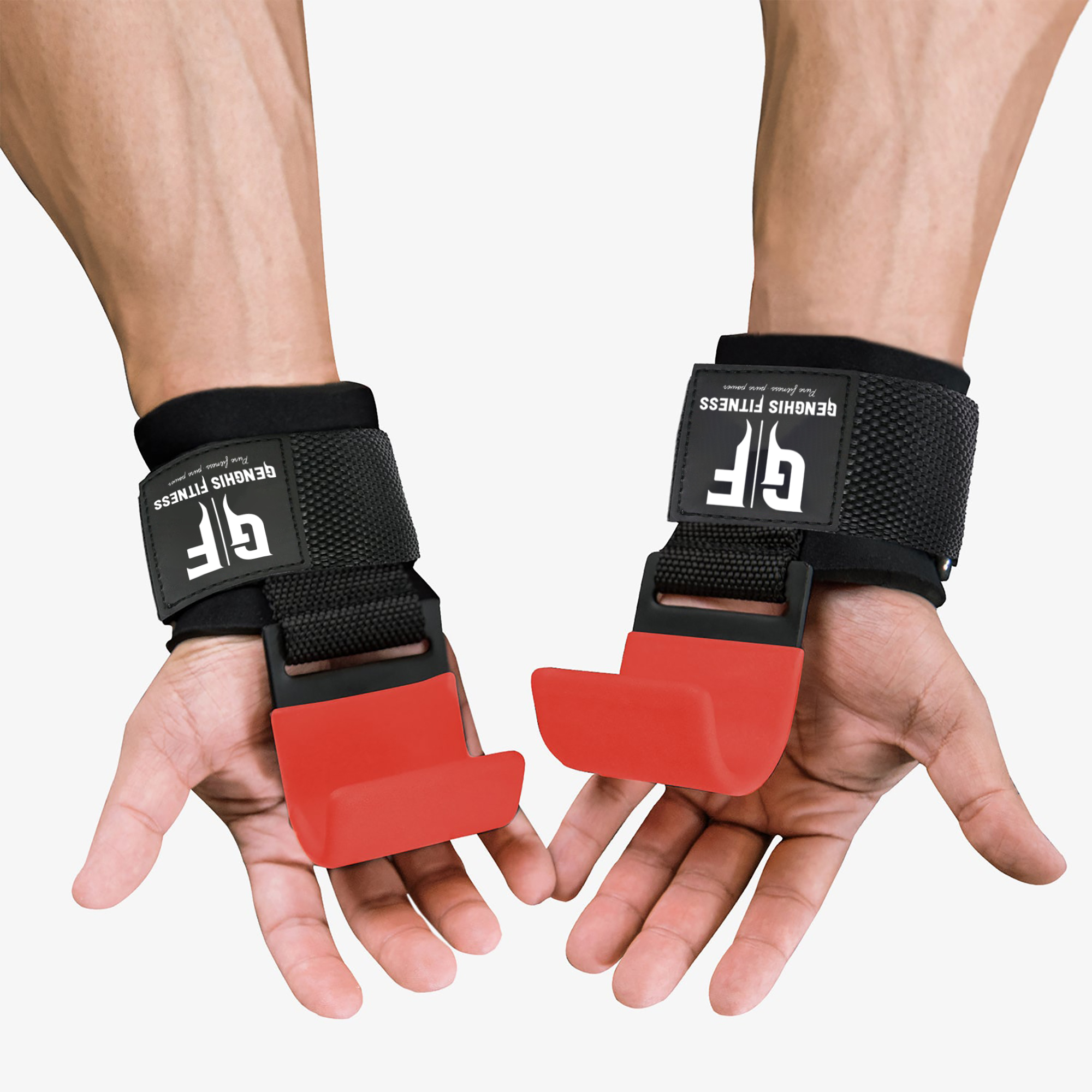
The hook component (the metal piece that contacts the bar) is the most structurally critical part of a lifting hook assembly. Quality hooks use forged or cast steel or zinc alloy with a wall thickness and geometry that resists the bending force that occurs when heavy loads are applied. The failure mode for poor-quality hooks at heavy loads is hook straightening, where the hook curves open under load rather than maintaining its shape. This is a genuine safety concern that results in sudden load release during an exercise. Evaluate hook quality by inspecting the wall thickness at the thinnest point of the hook curve (thicker is stronger), the surface finish consistency (quality casting or forging produces smooth, even surfaces; cheap products show porosity or unevenness indicating poor material quality), and the hook-to-wrist-strap connection method (welded or bolted connections are stronger than simple glued attachments). Research on metal component fatigue in sports equipment published in the Journal of Strength and Conditioning Research confirms that material geometry and wall thickness are primary predictors of load capacity in metal grip assistance tools. The Genghis Fitness weight lifting hooks use heavy-duty zinc alloy construction with the hook-to-strap connection geometry designed for sustained heavy loading.
Wrist Strap Quality and Padding
The wrist strap component must secure the hook to the wrist through the forces of heavy pulling without cutting into the wrist bones or slipping during the exercise. Quality wrist straps for hooks use thick neoprene or padded nylon that distributes the load across the wrist surface rather than concentrating it at the strap edges. The closure mechanism (typically velcro) must be strong enough to hold under the lateral forces that develop when the loaded hook pulls the strap away from the wrist during heavy exercises. Test velcro closure strength by pressing the fastened strap apart with moderate force perpendicular to the strap direction: quality velcro resists this firmly, inferior velcro opens with minimal resistance. The padding at the dorsal wrist surface (the back of the wrist, directly over the wrist bones) should be sufficiently thick that the hook hardware does not press painfully against the wrist under heavy loads.
Load Rating and Testing
Most quality lifting hooks are rated for 200 to 400 kg working load limits, which exceeds the loads any athlete will apply during pulling exercises. The relevant consideration is not the absolute load rating but the quality of construction that determines how the hook behaves when loaded repeatedly across hundreds of training sessions. Hooks with inadequate wall thickness at the curve may remain within their load rating for the first few sessions but develop progressive deformation over time as the metal fatigues at the stress concentration point of the curve. Inspect hooks after each month of heavy use for any visible deformation at the hook curve. Hooks that show progressive straightening under loads significantly below their rated capacity were either rated inaccurately or manufactured with material defects. Replacing hooks at the first sign of permanent deformation rather than continuing to use deformed hooks at heavy loads is the appropriate safety practice. The complete safety guide for lifting hooks is in our lifting hooks safety guide.
Matching Hooks to Your Training Loads
Hook selection should be matched to the specific exercises and loads where grip assistance is needed. For lat pulldowns and cable rows at moderate training loads, almost any quality hook with adequate velcro closure is sufficient. For heavy rack pulls and deadlifts above 150 kg, hook construction quality becomes more relevant and heavier-duty hook designs with greater wall thickness provide more reliable performance under sustained heavy loading. For athletes who primarily use hooks for machine-based back training rather than free weight pulling, the load demands are typically lower and a wider range of products perform adequately. For athletes who use hooks for the heaviest free weight pulling exercises in their programme, selecting hooks from the upper end of the quality spectrum with verifiable load ratings and solid construction at the hook curve is a worthwhile investment in safety and training continuity. The hooks vs straps comparison for specific exercises is in our hooks vs straps guide.
Frequently Asked Questions
How Long Do Lifting Hooks Last?
Quality lifting hooks used regularly for heavy back training should last 2 to 5 years before either the velcro closure degrades or the hook itself shows deformation. The velcro typically fails before the hook hardware in quality products because velcro is subject to more rapid wear from repeated opening and closing than the metal hook is from loading. Athletes who wash their hook straps regularly (hand wash, air dry) to remove chalk and sweat accumulation extend velcro life significantly. Monthly hook inspection for deformation at the curve, and immediate replacement at the first sign of permanent deformation regardless of velcro condition, is the correct safety practice.
Should You Use Hooks or Straps for Heavy Deadlifts?
For conventional deadlifts, straps are generally the better tool because they accommodate the natural wrist position and slight bar rotation that occurs during the deadlift more naturally than the fixed hook position. Hooks work best for fixed-path pulling exercises (lat pulldowns, cable rows, rack pulls) where bar movement is constrained. For Romanian deadlifts and conventional deadlifts at all loads, the lifting straps provide a more natural movement feel and better safety margins than hooks for these specific exercises.
Train the Back. Every Set. Every Rep. Without Grip Holding You Back.
Heavy-duty hooks for the athletes who train heavy.
Shop Lifting HooksShoBuilding the Complete Back Training Equipment Setup Around Hooks
Hooks produce their greatest training benefit when used as part of a complete back training equipment setup. For fixed-path cable exercises like lat pulldowns and cable rows, hooks provide the complete grip elimination that allows lats and rhomboids to be trained without grip fatigue limiting session quality or requiring early set termination. For conventional deadlifts and Romanian deadlifts where the natural bar rotation requires flexible wrist positioning, lifting straps provide better movement accommodation than the fixed hook position. For the heaviest rack pulls and partial deadlifts where maximum bar load and total grip security are the priorities simultaneously, the hook provides the most complete load transfer available. Using hooks for machine-based and fixed-path pulling exercises while using straps for free weight pulling covers both exercise categories with the appropriate grip assistance tool for each movement pattern. A powerlifting leather belt for the heaviest pulling sets provides the intra-abdominal pressure support that protects the spine during maximum-effort back training. The complete hooks versus straps comparison with exercise-specific recommendations is in our hooks vs straps guide.
p Lifting StrapsCertified strength and conditioning specialists with over 10 years of experience in powerlifting, nutrition, and evidence-based fitness content. Based in New York City.
The full gym accessories guides covers how to load a dip belt, use an arm blaster correctly, and how hip circle bands fit into a lower body warm-up.