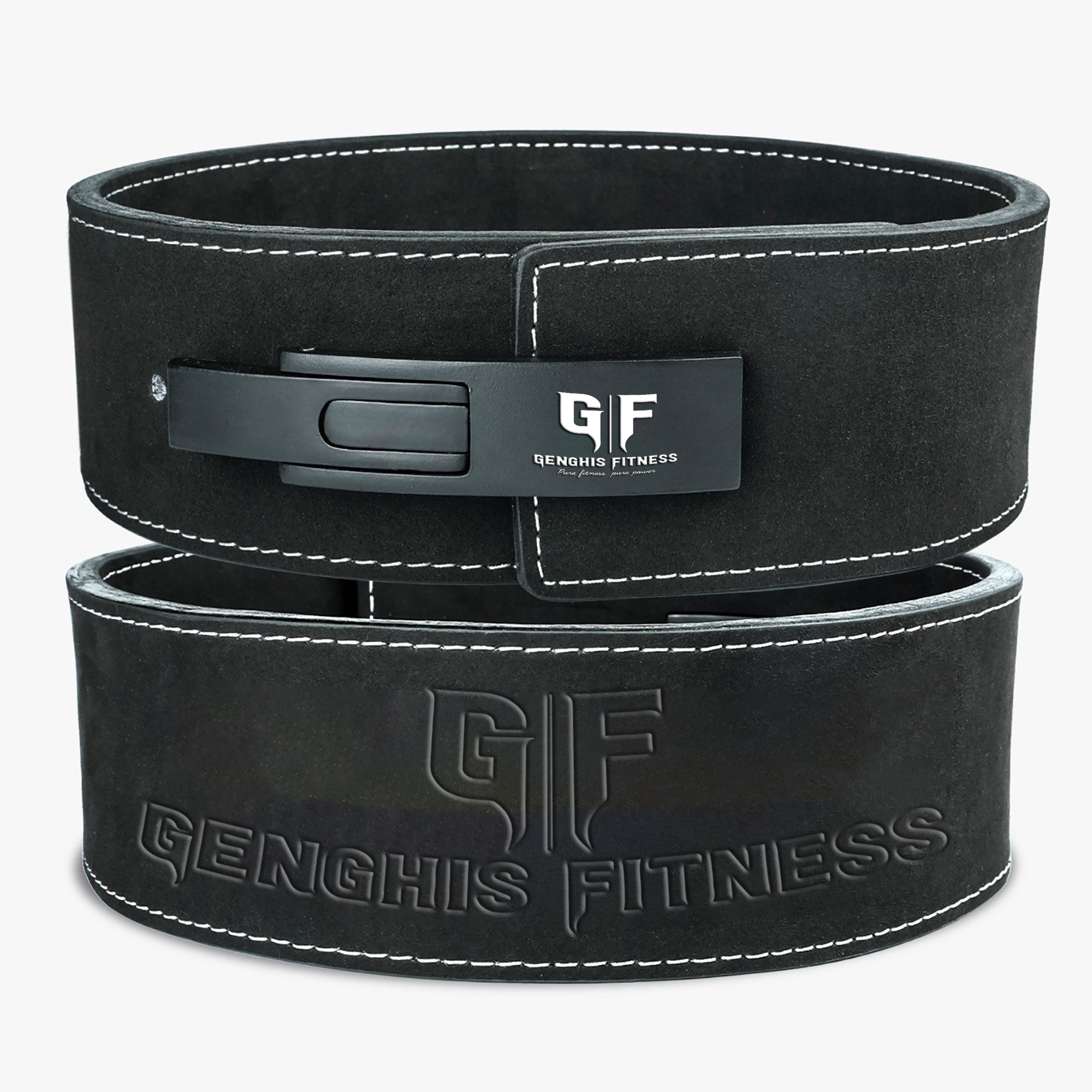
BLACK LEVER BELT: THE STANDARD FOR SERIOUS POWERLIFTERS EVERYWHERE
Black is not a default. It is a choice. Walk into any serious powerlifting facility in the US, Germany, Australia, or the UK and the platform is dominated by black lever belts. There is a reason the color became the standard in strength sports and it has nothing to do with fashion. Black leather is the most forgiving finish to maintain, hides chalk and minor scuffs, and pairs with every singlet and gym kit you will ever own. The lever mechanism eliminates adjustment guesswork. Together, these properties make the black lever belt the single most versatile and reliable piece of training equipment a competitive lifter can own.
WHY THE LEVER MECHANISM IS THE COMPETITION STANDARD
The lever buckle operates on an over-center locking principle. A hinged metal plate catches on a fixed bar sewn into the belt and, when closed, passes slightly past the mechanical center point to create a self-locking position. The belt cannot spring open under load unless you physically lift the lever with your fingers. This means every set you perform produces identical intra-abdominal pressure because the tension is identical every time. No hunting for the right hole, no variation based on how your hands are shaking after a near-max attempt, no inconsistency. You set it once per session and train with certainty.
Between attempts at a meet or between heavy sets in training, the lever opens in under two seconds and the belt comes off completely. At the start of the next set it goes back on and locks at precisely the same tightness. For powerlifters who train five or more days per week on the competition lifts, this mechanical reliability compounds across hundreds of working sets into a consistency advantage that a prong buckle cannot match. Our 10mm lever belt is built with this exact mechanism and the full-grain leather construction that serious lifting demands.
BLACK LEATHER CARE: LOWER MAINTENANCE, LONGER LIFE
Black-dyed full-grain leather is considerably more forgiving than natural or white finishes. Chalk marks wipe off cleanly without leaving visible residue. Minor surface scuffs blend into the finish rather than standing out. The dye process for black leather uses penetrating dyes that go deep into the grain rather than sitting on the surface, which means the color remains consistent even as the leather surface develops the natural patina that comes with years of heavy use.
Maintenance is straightforward. After sessions wipe the belt down with a dry cloth to remove chalk and sweat from the surface. Every two to three months apply a quality leather conditioner using a soft cloth, work it into the grain in circular motions, allow it to absorb fully, and buff off any excess. Keep the belt away from direct sunlight during storage, which dries out even well-conditioned leather over extended exposure. Store it flat or hanging rather than tightly folded. Done consistently, this routine takes under ten minutes per session and extends the functional life of the belt from years into decades.
THICKNESS SELECTION FOR BLACK LEVER BELTS: 10MM VS 13MM
Black lever belts are available in both 10mm and 13mm thickness. The 10mm option is the correct choice for the overwhelming majority of competitive and serious recreational lifters. It provides full competition-grade stiffness, meets IPF, USAPL, and USPA equipment standards, and breaks in to a comfortable level of flexibility within the first month of training. The rigidity is sufficient to generate maximum intra-abdominal pressure on any squat or deadlift load that a non-elite athlete will encounter.
The 13mm option adds another 3 millimeters of leather, which translates to noticeably more stiffness and a longer, more demanding break-in period. Elite powerlifters competing at national and international level choose 13mm when they are working with loads where every marginal unit of spinal support is a meaningful performance variable. For athletes squatting and deadlifting below elite competition totals, the added stiffness of 13mm creates discomfort during the break-in period without a proportional performance return over 10mm. Start with 10mm, master it, and upgrade if your performance level genuinely demands it.
ADJUSTING YOUR BLACK LEVER BELT FOR PERFECT FIT
The lever plate mounts to the leather via two screws. Loosening these screws with the included Allen key allows you to slide the plate forward for a looser fit or backward for tighter. Move one hole position at a time, retest, and retighten when you find the position where the lever closes with firm but manageable effort. The target is a belt that you can slide two fingers under when closed at rest, but that creates hard resistance when you brace fully into it.
Check the mounting screws every few weeks of heavy training. The repetitive mechanical stress of opening and closing the lever under load can work screws loose over time, creating play in the plate that undermines consistent tension. A 30-second check and tighten keeps the mechanism performing as designed indefinitely.
BUILDING A COMPLETE KIT AROUND YOUR BLACK LEVER BELT
The black lever belt anchors your competition kit. Add the accessories that complete it. Knee wraps give your squat the elastic carryout of the hole that experienced equipped lifters rely on. Wrist wraps keep your joints stacked and stable through heavy bench attempts. On pulling days where your grip limits performance before your back does, leather lifting straps remove that ceiling entirely so you train the movement, not your grip endurance.
Research on equipment use in competitive powerlifting, including analyses cited through PubMed, consistently shows that athletes who train with competition-spec equipment from early in their development transition to competition settings more efficiently than those who switch gear at meet time. A black lever belt worn on every qualifying working set is not just a safety tool. It is a performance investment that pays out every time you step to the bar.
BREAKING IN A NEW BLACK LEVER BELT THE RIGHT WAY
New full-grain leather at 10mm thickness is stiff enough that the first few sessions can feel uncomfortable before the material begins to conform to your torso. There are two common methods experienced lifters use to accelerate the break-in process without damaging the leather. The first is the door method: wrap the belt around a doorknob or post and pull the two ends in opposite directions repeatedly, working across the full width of the belt to begin softening the fiber structure. Do this for five to ten minutes before each of your first few training sessions. The second method is to simply wear the belt during warm-up sets from day one, even at light loads, to begin the conforming process immediately under actual training conditions.
Applying a small amount of leather conditioner before the first use can also speed the process slightly by softening the outermost fiber layer. Use a conditioner sparingly on a new belt and allow it to absorb fully before training. Too much conditioner applied too early can over-soften the leather before the structural break-in has occurred, which changes the feel of the belt in ways that some lifters find unfavorable. A light initial application is the right approach: enough to initiate the process, not enough to saturate the leather before it has found its shape against your body.
After two to four weeks of regular training the belt will have conformed noticeably to your torso shape and the stiffness that felt like a liability on day one becomes the performance asset it was always designed to be. That rigid, personalized fit is what separates a broken-in quality lever belt from anything a softer material can provide, and it is why lifters who own one for years consistently describe it as the piece of gear they would replace before any other if it were lost or damaged.
Certified strength and conditioning specialists with over 10 years of experience in powerlifting, nutrition, and evidence-based fitness content. Based in New York City.
Explore the full weightlifting belt guides for lever belt comparisons, leather belt reviews, neoprene belt recommendations, sizing guides, and sport-specific belt selection across powerlifting, CrossFit, and Olympic lifting.