Booty Bands for Beginners: How to Start Hip Circle Training the Right Way
Starting with hip circle bands is straightforward when you understand what the exercises are meant to accomplish. The hip abductors, primarily the gluteus medius, are muscles that most beginners have never directly trained. The first few sessions will feel awkward and may produce soreness in places that squats and lunges have never reached. This is expected. It means the exercises are reaching muscles that needed attention.
This guide covers everything a beginner needs: which exercises to start with, how to position the band, how to choose the right starting resistance, how much volume to do in each session, and how to progress once the initial foundation is established.
The Three Exercises to Learn First
Three exercises cover the most important hip abductor functions and teach the foundational movement patterns that all other band work builds on. Learning these well before adding complexity produces better long-term results than trying to learn eight exercises at once.
1. Seated Hip Abduction
Sit upright on a bench or chair with the band above the knees. Push the knees apart against the band’s resistance, hold the apart position for two seconds, and release with control. You will feel the effort in the outer hip on both sides simultaneously. This exercise establishes the basic neuromuscular connection with the gluteus medius before any dynamic movement is introduced. Two sets of 15 to 20 repetitions.
2. Clamshell
Lie on your side with the band above the knees, hips stacked, knees bent to approximately 45 degrees. Keep the feet together and rotate the top knee upward toward the ceiling through the full range of hip external rotation, then lower with control. The pelvis should remain completely still throughout. Only the top knee moves. If you feel the pelvis rolling backward as the knee rises, reduce the range of motion and build it progressively over sessions. Three sets of 12 repetitions per side.
3. Lateral Band Walk
Place the band above the knees. Stand in a quarter-squat with feet hip-width apart. Take controlled lateral steps maintaining the quarter-squat depth and constant band tension between steps. Do not allow the feet to come together at the narrowest point of the step cycle. Start with 10 steps in each direction. Most beginners discover quickly how undertrained their lateral hip is relative to their forward-plane strength. Three sets of 10 steps each direction.
Choosing the Right Starting Resistance
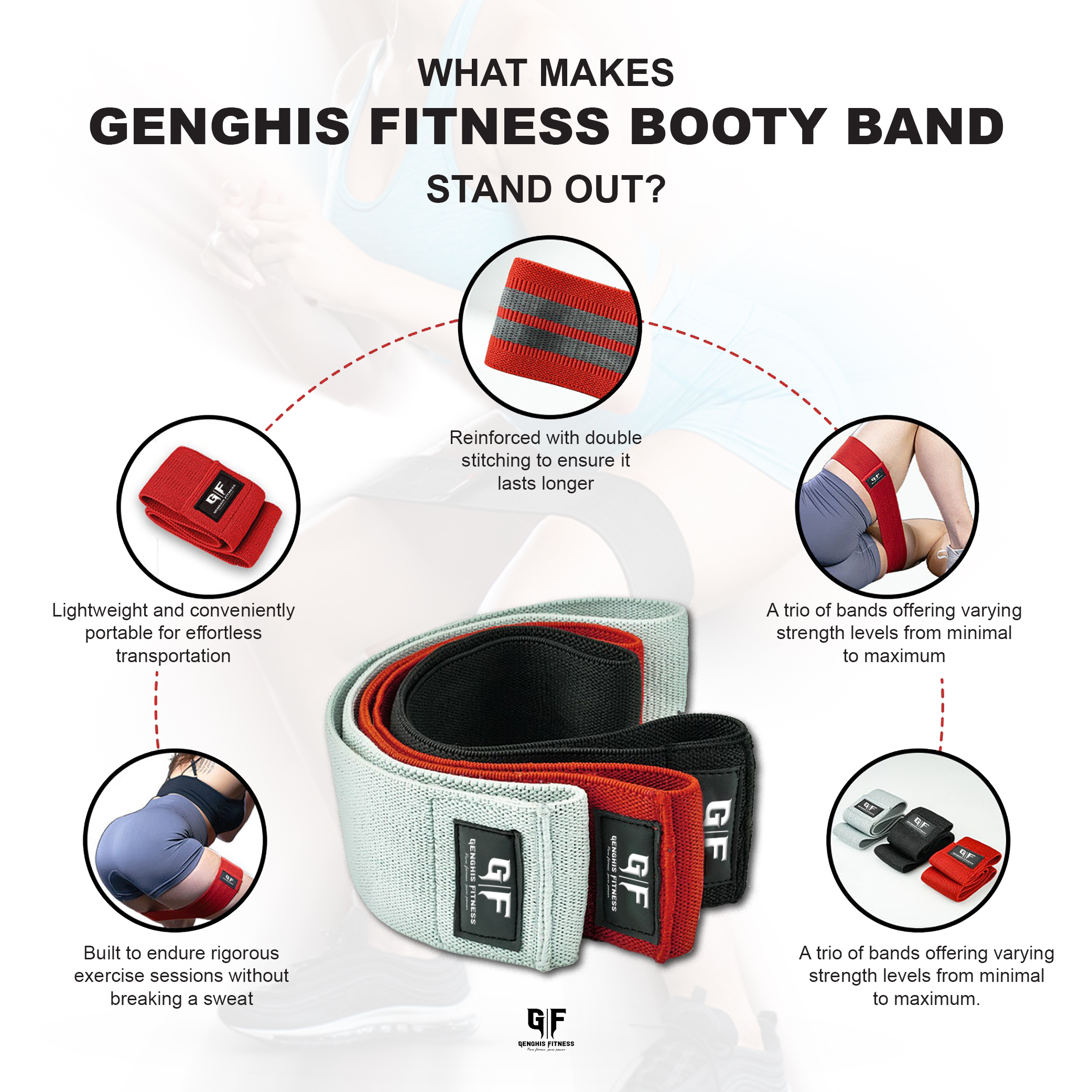
Start with the lightest band in the set. The hip circle bands are available in multiple resistance levels. The light band is the appropriate starting point for all three introductory exercises. If the light band feels completely effortless and produces no sensation in the target muscles, move to the medium band. If it makes the final few reps of each set genuinely challenging, stay on the light band until all sets are manageable before progressing.
The most common beginner mistake is choosing a heavier band to feel like they are working harder, then compensating throughout the set with incorrect mechanics. Technique established with appropriate resistance becomes the foundation that heavier-band work builds on. Compensation patterns established under excessive resistance persist and become harder to correct as the program advances.
How Much to Do in the First Month
Three sessions per week is the appropriate starting frequency for beginners. More than this in the first month creates cumulative fatigue in genuinely untrained muscles that have no adaptation base yet. Less than this fails to provide sufficient stimulus for the neural adaptations needed to establish proper hip abductor activation patterns.
In weeks one and two, limit sessions to the three introductory exercises. Two to three sets each, 12 to 15 repetitions per set, 45 seconds of rest between sets. Total session time should not exceed 20 minutes. The goal in the first two weeks is technique and neural activation, not volume or intensity.
In weeks three and four, add the banded glute bridge as a fourth exercise. Lie on your back with the band above the knees, feet flat on the floor. Drive the hips upward by pushing through the heels, press the knees outward against the band throughout, and squeeze the glutes firmly at the top for two seconds before lowering. Three sets of 15 repetitions. This adds a hip extension exercise to the hip abduction work of the introductory three exercises, beginning to address the gluteus maximus alongside the medius.
What to Expect from Early Sessions
Delayed onset muscle soreness in the outer hip, glutes, and inner thigh is common after the first two to three sessions. This soreness peaks 24 to 48 hours after training and resolves within 72 hours. It confirms the exercises are reaching muscles that were previously undertrained and generating a training response.
Soreness that persists beyond 72 hours, or discomfort in the knee joint itself rather than the muscles surrounding it, indicates that technique or band positioning needs adjustment. Band exercises should produce muscle soreness in the hip and glute area, not joint discomfort. If joint discomfort occurs, reduce the band resistance and evaluate the mechanics of the exercise.
Progressing Beyond the Beginner Stage
After 4 to 6 weeks of consistent training with the introductory exercises, you are ready to add exercises and increase resistance. The three indicators that progression is appropriate are: all sets completed with clean form throughout, no significant post-session soreness, and the final reps of the last set no longer feeling genuinely challenging. When all three are true simultaneously, move to a medium band and add the banded hip thrust with a bench and the fire hydrant.
The banded hip thrust with a bench is the primary progression from the floor glute bridge. It increases the range of hip extension, which increases the training stimulus on the gluteus maximus. The fire hydrant adds a second hip abduction exercise through a different movement pattern, providing complementary stimulus to the clamshell.
Integrating Band Work with Other Training
Beginners starting a barbell or general strength program at the same time should use band exercises as pre-session activation before lower body workouts. Two sets of the introductory exercises before squatting activates the hip abductors and establishes the knee outward drive pattern for the loaded sets that follow. As training loads increase over months, the knee sleeves address knee joint support during heavier squatting and the powerlifting leather belt addresses lumbar bracing on heavy working sets. The bands continue their activation and isolation role throughout.
Common Beginner Mistakes to Avoid
- Choosing a band that is too heavy, causing form breakdown and compensation patterns from the first session.
- Skipping seated hip abduction and going directly to dynamic exercises before the neural connection with the hip abductors is established.
- Allowing the pelvis to rotate during clamshells, which turns a hip external rotation exercise into a lumbar rotation drill.
- Rising out of the quarter-squat position during lateral band walks, eliminating the hip abductor demand entirely.
- Training too frequently in the first two weeks before the muscles have adapted to the new training stimulus.
Correct starting technique, appropriate resistance, and consistent progressive programming produce hip abductor strength that improves every lower body movement you train. The quality of the foundation built in the first month determines how effectively the more advanced band work and heavier loaded training that follows can build on it.