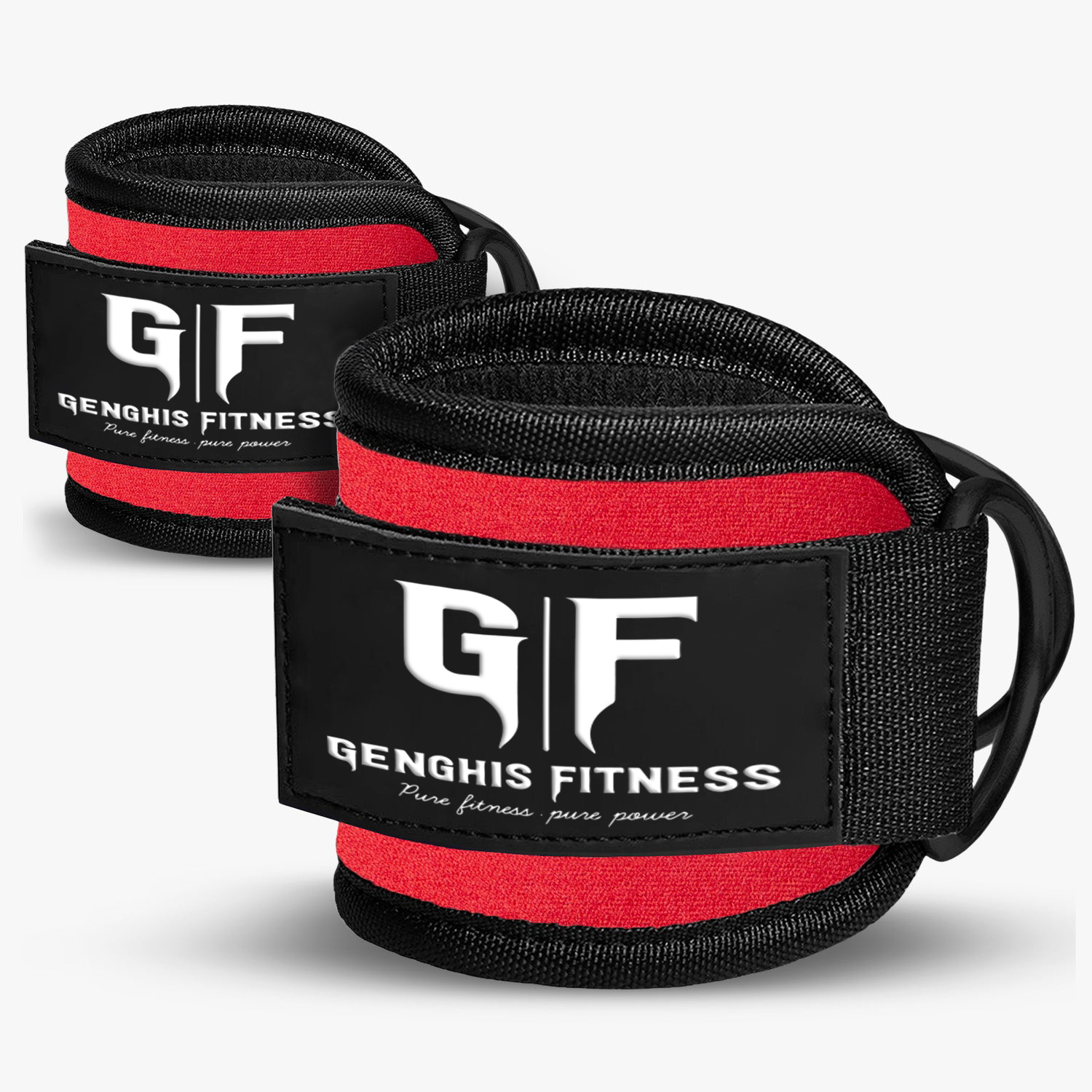
Cable Kickback Ankle Strap: The Complete Guide to the Best Glute Isolation Exercise
The cable kickback is the most effective isolation exercise for the gluteus maximus available in a gym setting. Where barbell squats and hip thrusts train the glutes as part of a multi-joint movement that also loads the quads and hamstrings significantly, the cable kickback with an ankle strap isolates the glute maximus through pure hip extension with minimal involvement from the other leg muscles. For athletes who want to develop the peak contraction of the glute or address a strength imbalance between the two sides, the cable kickback is a tool that no barbell exercise fully replaces.
This guide covers the mechanics of the exercise, how to set it up correctly, the technique cues that separate effective sets from wasted motion, common errors, and how to program it alongside compound lower body work.
Why the Cable Creates a Better Stimulus Than Bands or Bodyweight
Bodyweight donkey kicks and band kickbacks are useful activation exercises, but they have a resistance limitation. Once the hip abductors and glute maximus are sufficiently developed, bodyweight and even heavy resistance bands no longer provide enough load to continue driving muscle development. The cable machine eliminates this ceiling.
Cable resistance is adjustable in small increments and provides constant tension through the full range of motion. Unlike a dumbbell held behind the knee for a kickback, which creates zero resistance at the starting position and maximum resistance at the extended position due to gravity, the cable provides consistent resistance throughout the entire hip extension range. This means the glute is challenged from the first degree of movement to the last, rather than only in the range where gravity provides useful resistance.
The Genghis Fitness ankle straps for cable machine connect to the low pulley and allow the cable kickback to be performed with the full weight stack available, which means there is always room to progress even for advanced athletes.
How to Set Up the Cable Kickback
Set the cable pulley to the lowest position. Attach the ankle strap to one ankle, with the D-ring positioned at the back of the ankle so the cable pulls directly backward during the exercise. Clip the carabiner to the D-ring and check that the gate is fully closed.
Face the cable machine and grip the frame with both hands for balance. Stand close enough to the machine that the cable runs at a low angle from the ankle to the pulley, roughly 12 to 18 inches from the machine. The working leg should start with the knee slightly bent and the hip in a neutral position.
Select a starting weight that allows 12 to 15 clean repetitions with full range of motion. The cable kickback is an isolation exercise. Using excessively heavy weight causes the lower back to hyperextend and the hip flexors of the standing leg to dominate the movement, both of which reduce glute activation and increase injury risk.
Technique: How to Execute Each Rep
Brace the core lightly before each rep to stabilize the pelvis. Keeping the knee of the working leg bent at roughly 30 degrees, drive the leg directly backward and upward by contracting the glute. Do not swing the leg. The movement should be controlled and initiated from the hip rather than from momentum.
At the top of the movement, pause for one to two seconds and squeeze the glute as hard as possible before returning. The peak contraction is where most of the training stimulus comes from in the cable kickback. Skipping the pause and using momentum to cycle through reps reduces the exercise to a cardiovascular movement rather than a strength stimulus.
Return the leg to the starting position with control, resisting the cable on the way forward. The eccentric phase of the kickback, the return to start, is as important as the concentric phase for muscle development. Do not allow the cable to pull the leg forward passively.
Range of Motion: How High to Kick
The working range for the cable kickback extends from a neutral hip position to full hip extension. Full hip extension for most athletes places the thigh parallel to the floor or slightly above. Kicking the leg higher than this by arching the lower back is a compensation that shifts stress from the glute to the lumbar extensors.
A useful cue is to imagine pushing the heel toward the wall behind you rather than kicking it toward the ceiling. This directs the movement backward through hip extension rather than upward through lumbar hyperextension. The glute is the target. Keep the pelvis level and the lower back neutral throughout the full range.
Bent Knee vs Straight Leg Variations
Bent Knee Kickback
The standard variation. The knee is bent at approximately 30 degrees throughout the movement. This position shortens the hamstring and reduces its contribution to the hip extension, placing more of the work on the gluteus maximus. The bent knee version is the most glute-specific option and is the starting point for most athletes.
Straight Leg Kickback
With the knee extended, both the hamstring and the glute contribute to hip extension. The straight-leg version provides a different stimulus and involves more of the posterior thigh. Some athletes use both variations in the same session to target the glute maximus and hamstrings through the same movement pattern with slightly different muscle emphasis.
Common Errors to Correct
- Hyperextending the lower back at the top of the movement. The spine should remain neutral. If the back arches to get the leg higher, reduce the weight or limit the range.
- Rotating the hip outward during the kick, which turns the movement into a hip abduction rather than pure hip extension. Keep the toes pointed toward the floor throughout.
- Using momentum to cycle through reps quickly. The pause at the top and the controlled return are where the training effect lives. Do not sacrifice them for higher rep counts.
- Starting with too much weight and compensating with the lower back and standing hip. Reduce the load until the glute is the primary mover on every rep.
- Leaning heavily on the machine frame for support. Light fingertip contact for balance is correct. Gripping the frame and leaning into it reduces the demand on the stabilizing muscles of the standing leg.
How Many Sets and Reps
The cable kickback is an isolation exercise best programmed in the moderate to high rep range. Three to four sets of 12 to 15 repetitions per leg is the standard protocol. The resistance should be challenging enough that the last 3 to 4 reps of each set require genuine effort, with the peak contraction squeeze becoming the limiting factor rather than the movement itself.
Progressive overload applies the same way as in compound exercises. When all sets can be completed cleanly at the current weight, add a small increment and rebuild. Cable machines typically allow 5-pound increments, which is appropriate for an isolation exercise where small load increases make a meaningful percentage difference.
Where Cable Kickbacks Fit in a Lower Body Session
Cable kickbacks belong in the isolation phase of a lower body session, after the primary compound exercises have been completed. A typical sequence for a glute-focused lower body day: barbell squats or Romanian deadlifts as the primary strength work, hip thrusts as the primary glute mass exercise, then cable kickbacks and cable hip abduction as isolation finishers.
Pairing the kickback with the cable hip abduction in a superset reduces session time without reducing training quality. Perform 12 to 15 kickbacks on one leg, immediately follow with 12 to 15 hip abduction repetitions on the same leg, then rest before switching sides. The two exercises use different cable positions but can be done in sequence with a quick adjustment between movements.
Pairing with Other Glute Accessories
After cable kickback work, hip circle bands provide a bodyweight burnout option for the glutes and hip abductors. The Genghis Fitness hip circle bands used for clamshells or lateral walks at the end of a cable isolation session add the final stimulus to a thorough glute session. For the barbell work at the start of the same session, the Genghis Fitness powerlifting leather belt handles lumbar bracing and the knee sleeves provide joint support through the squatting movements.