Cleaning Your Weightlifting Belt: A Complete Maintenance Guide for Every Material
A weightlifting belt that is never cleaned deteriorates faster than one that receives basic maintenance. Sweat, chalk, and bacteria accumulate on the leather surface and in the stitching after every training session. Left unaddressed, this buildup dries out the leather, degrades stitching thread, and eventually causes the surface to crack at the flex points. Regular cleaning is not a luxury detail. It is the maintenance that keeps a quality belt performing for a decade rather than falling apart after two years.
This guide covers how to clean leather, nylon, and neoprene belts correctly, which products to use and which to avoid, how often to clean and condition, and how to identify when cleaning alone is no longer sufficient.
Cleaning a Leather Weightlifting Belt
What You Need
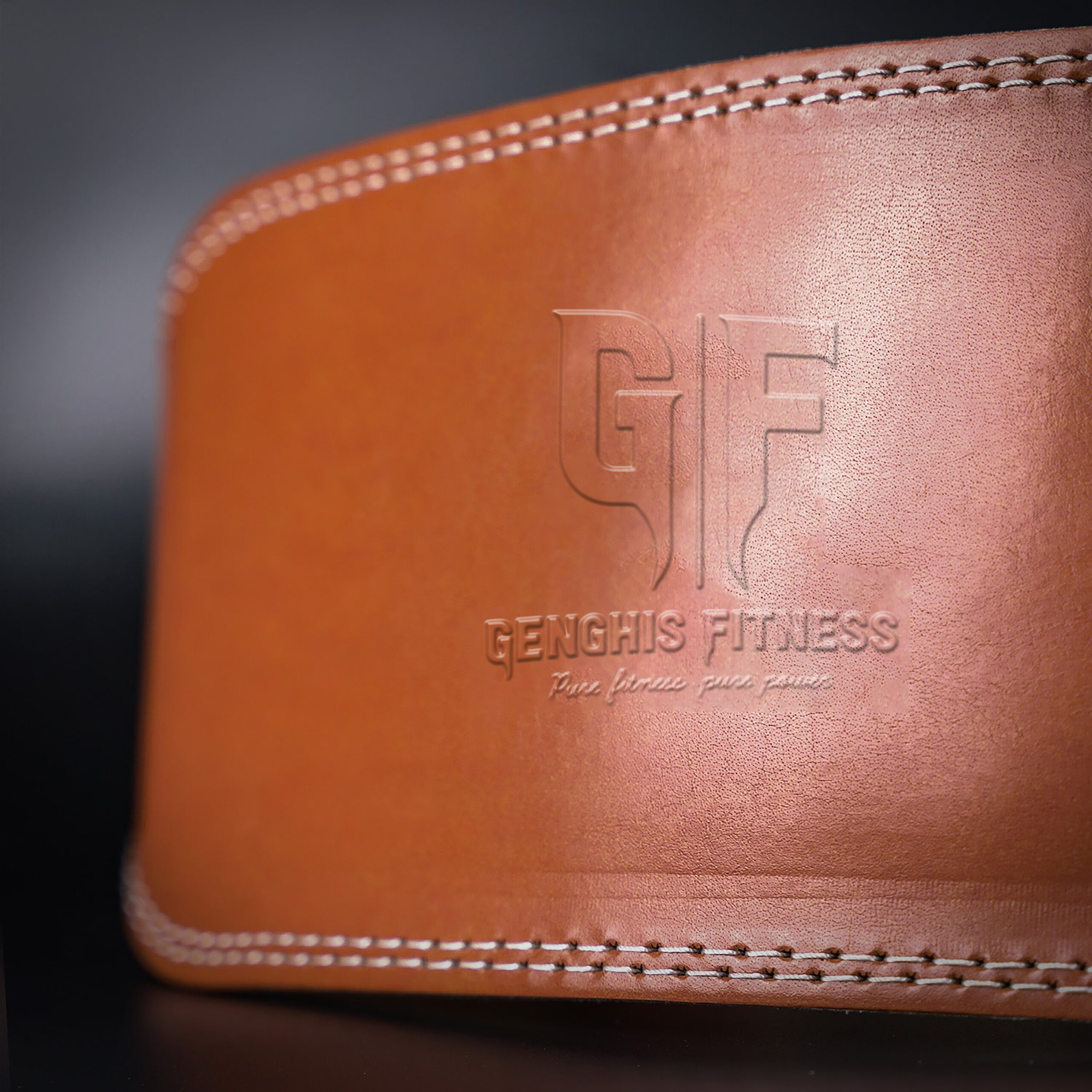
For routine cleaning of a leather belt, you need a soft cloth or sponge, lukewarm water, and optionally a very small amount of mild saddle soap or leather-specific cleaner. Do not use dish soap, laundry detergent, bleach, or alcohol-based cleaners on leather. These strip the natural oils from the leather fibers and accelerate the drying and cracking that destroys a belt’s structural integrity.
The Cleaning Process
After each session, wipe the inner surface of the belt with a slightly damp cloth to remove the sweat film that accumulates against the skin or base layer. Pay particular attention to the area around the buckle hardware where sweat pools in the fold. Allow the belt to air dry in a flat position before storing it.
For a more thorough cleaning every 4 to 6 weeks during heavy training, apply a small amount of saddle soap to a damp sponge and work it gently into the leather surface in circular motions. Focus on the flex line where the belt curves, the buckle area, and both the inner and outer surfaces. Wipe away the soap residue with a clean damp cloth and allow the belt to dry fully at room temperature away from direct heat or sunlight.
Do not soak a leather belt in water. Saturating leather with water can cause the fibers to swell unevenly, leading to distortion of the belt’s shape and weakening of the bonded structure in the buckle attachment area. Damp cleaning is correct. Soaking is not.
Conditioning After Cleaning
Cleaning removes surface contaminants but also removes some of the natural oils that keep leather supple. Follow every thorough cleaning with a light application of leather conditioner. Apply a small amount of conditioner, products like Leather Honey, Bick 4, or a neatsfoot oil blend work well, to a clean cloth and work it into the leather surface in circular motions. Allow it to absorb for at least one hour before using the belt.
Condition the powerlifting leather belt and 4-inch leather weightlifting belt two to four times per year depending on training frequency. Athletes who train four or more days per week and sweat heavily should condition closer to four times annually. Athletes training twice per week in a cooler environment can condition twice yearly and maintain the leather in good condition.
Cleaning a Nylon Weightlifting Belt
Nylon belts are significantly easier to clean than leather. The material does not require conditioning and tolerates machine washing without damage to its structural properties.
For routine cleaning, hand wash in lukewarm water with a small amount of mild detergent. Work the detergent through the nylon webbing by squeezing and pressing the belt rather than scrubbing aggressively. Rinse thoroughly until no detergent residue remains. Air dry completely before storing.
For a thorough machine wash, place the belt in a mesh laundry bag to prevent the velcro closure from attaching to other items in the drum. Wash on a gentle cold water cycle with mild detergent. Do not tumble dry. The heat of a dryer degrades the elastic components in the velcro closure and can cause the nylon to stiffen. Air dry flat or hanging straight.
The velcro closure on nylon belts accumulates lint and fiber debris that reduces its holding strength over time. After washing, clean the velcro hook surface by pressing a piece of tape firmly against it and pulling it away to lift embedded debris. A soft toothbrush run across the hook surface also removes accumulated material effectively.
The nylon lifting belt can be washed every 2 to 3 weeks during heavy training without any degradation of the webbing or closure hardware.
Cleaning a Neoprene Weightlifting Belt
Neoprene absorbs sweat and develops odor faster than leather or nylon. Regular cleaning maintains both hygiene and the material’s compression properties.
Hand wash in lukewarm water with mild detergent or a specialized neoprene cleaner. Work the detergent through the material gently without stretching the neoprene aggressively. Rinse thoroughly. Air dry away from direct sunlight and away from heat sources. Prolonged UV exposure degrades neoprene’s cellular structure and reduces its compression elasticity over time.
Do not machine wash neoprene belts in hot water or tumble dry. Both heat treatments break down the foam cell structure that gives neoprene its compression properties. Cold gentle machine cycles in a laundry bag are acceptable for some neoprene products, but hand washing is always the safer option.
The neoprene weightlifting belt should be washed after every 2 to 3 sessions during warm weather training when sweat volume is high, and every 4 to 5 sessions in cooler conditions.
Dealing with Persistent Odor
Bacterial growth in the material is the source of persistent belt odor and it can develop in all three belt materials. For leather belts, a dilute solution of white vinegar and water applied to the inner surface with a cloth, then wiped clean and allowed to dry fully, neutralizes odor-causing bacteria without damaging the leather. Follow with conditioning.
For nylon and neoprene, soaking the belt for 15 to 20 minutes in a solution of cold water and a small amount of white vinegar before washing eliminates most bacterial odor sources. Rinse thoroughly after the soak and wash as normal.
Inspecting the Belt During Cleaning
Every cleaning session is an opportunity to inspect the belt’s structural condition. Check the buckle attachment stitching for any sign of thread pulling away or fraying. Check the leather at the flex line for surface cracking that could progress to structural damage. Check the prong holes or lever mechanism for deformation or unusual wear. Identifying small issues during routine cleaning allows them to be addressed before they become failures under training load.
Storage After Cleaning
Store the belt flat or hanging straight after it is completely dry. Never store a damp belt or a belt that has not fully dried after cleaning. Storing leather damp encourages mold growth in the surface fibers. Storing neoprene damp accelerates odor development and material degradation.
Avoid coiling the belt tightly in a gym bag for extended periods. A coiled leather belt develops a permanent curve at the coil point that affects how it seats against the body. A coiled nylon belt stresses the velcro closure in a closed position that can reduce its holding strength. Hang the belt on a hook or lay it flat in a drawer between sessions.