Genghis Fitness · Shoulder Health and Rotator Cuff
Cuban Press: The Best Rotator Cuff Strength Exercise You Are Not Doing, How It Works, and How to Programme It
Updated 2026 | By Team Genghis Fitness | 22 min read
The Cuban press is a three-phase dumbbell exercise that combines an upright row, external rotation of the shoulder, and an overhead press into a single continuous movement. It was popularised in strength and conditioning circles as one of the most comprehensive rotator cuff and shoulder girdle conditioning exercises available, training the infraspinatus, teres minor, supraspinatus, subscapularis, deltoids, and upper trapezius through their full functional range in a single exercise. Despite this comprehensiveness, the Cuban press remains obscure in mainstream gym culture. Athletes who add it to their shoulder training consistently report reduced shoulder pain, improved overhead pressing stability, and better rotator cuff resilience under heavy loads.
The Three Phases and What Each Trains
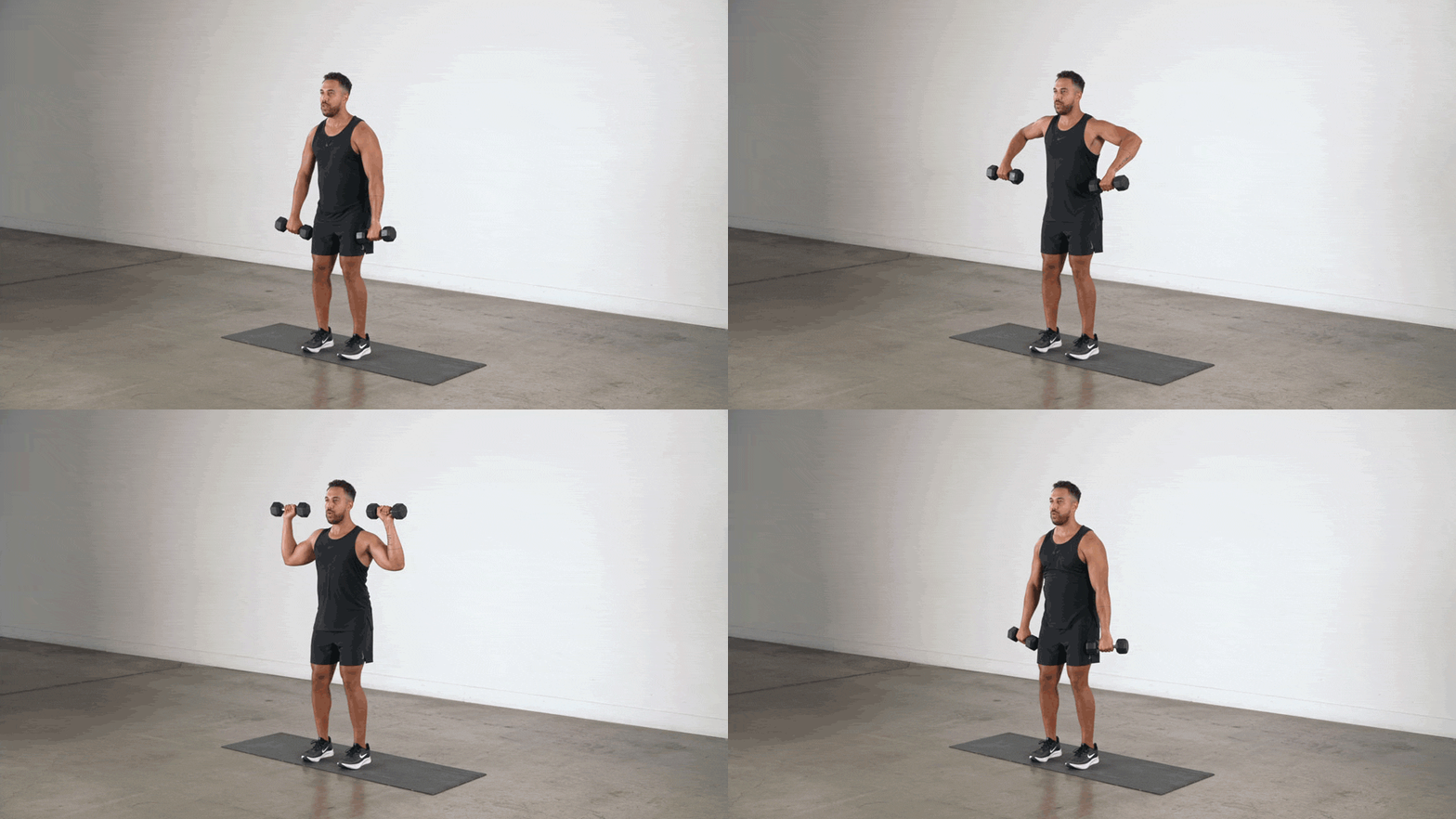
Phase 1: Upright row. Starting position is standing with dumbbells at hip height, palms facing the body. Row the dumbbells upward to approximately chin height with elbows flaring out to the sides, reaching a position where the upper arms are parallel to the floor and the forearms point downward. This phase trains the upper trapezius, lateral deltoid, and middle deltoid through the initial elevation movement.
Phase 2: External rotation. From the elbow-up position with upper arms parallel to the floor, rotate the forearms upward until they point toward the ceiling, pivoting around the elbows which remain at shoulder height. This is the most important phase of the Cuban press: the external rotation from 90 degrees of elbow flexion trains the infraspinatus and teres minor through the range of motion that is most commonly weak in overhead athletes and the range associated with shoulder impingement when weak. Research published in the American Journal of Sports Medicine identified weak external rotation strength as a primary risk factor for rotator cuff injury and shoulder impingement, directly supporting the Cuban press as a preventive exercise for overhead athletes.
Phase 3: Overhead press. From the externally rotated position with forearms pointing up and upper arms parallel to the floor (essentially the start of a dumbbell press from 90-degree elbow flexion), press the dumbbells overhead to full arm extension. This completes the functional overhead range by training the deltoids and triceps through the final pressing phase. Lower by reversing all three phases in sequence.
Why the Cuban Press Belongs in Every Overhead Athlete’s Programme
The rotator cuff is the limiting factor in shoulder health for most overhead athletes, yet it is rarely trained directly. Most shoulder training consists of pressing and lateral raises that train the deltoids and leave the rotator cuff as an afterthought. The rotator cuff muscles, particularly the infraspinatus (primary external rotator), are disproportionately underdeveloped in athletes who press heavily but neglect external rotation training, creating the strength imbalances that cause impingement and injury.
The Cuban press addresses this gap by training external rotation under load in the functional overhead position rather than in the lying-down or arm-at-side positions used in traditional rehabilitation exercises. This makes the Cuban press a performance exercise, not a rehabilitation exercise, because it develops the rotator cuff strength needed to support heavy overhead pressing and throwing rather than just the minimum required for pain-free daily function.
Including the Cuban press as a warm-up before overhead pressing sessions (2 to 3 sets of 10 to 15 reps with very light dumbbells, focusing on full range of motion and deliberate muscle activation) primes the rotator cuff for the demands of the heavy pressing session that follows. Protecting the wrists in all pressing variations with wrist wraps and training the overhead press with correct technique is covered in our overhead press guide.
Programming the Cuban Press
Use very light dumbbells (2 to 5 kg) for most athletes regardless of pressing strength. The rotator cuff muscles are small and the leverage is poor, so external rotation strength is a fraction of pressing strength. Using too much weight compromises the external rotation phase and turns the exercise into a modified upright row that misses the critical training stimulus. 3 sets of 12 to 15 reps twice per week, focusing entirely on the quality of each phase rather than load, is the appropriate programming for the Cuban press as a shoulder health maintenance exercise.
Frequently Asked Questions
How Heavy Should the Cuban Press Be?
Most experienced lifters find 3 to 7 kg per hand is sufficient and challenging for the external rotation phase of the Cuban press, regardless of how much they overhead press. The weakness in the external rotation phase limits the load more than any other factor. Athletes who can perform the full Cuban press with strict technique through all three phases at 8 to 10 kg are training their rotator cuff at a level that most gym athletes never achieve. Starting with 2 to 3 kg and building to 5 to 8 kg over several months is realistic for most athletes.
Can the Cuban Press Fix Existing Shoulder Impingement?
The Cuban press can be part of a rehabilitation approach for shoulder impingement by strengthening the external rotators that reduce subacromial space narrowing. However, acute shoulder impingement should be evaluated by a physiotherapist before introducing new exercises, as the upright row component of the Cuban press can be provocative for some impingement presentations. Once cleared by a physio, building up the Cuban press from very light loads while monitoring symptoms is a reasonable approach. The combination of improved external rotation strength and corrected pressing technique addresses the two most common causes of impingement in strength athletes.
Train the Rotator Cuff. Press Without Pain. Build Shoulders That Last.
The Cuban press for shoulder health. Wrist wraps for every heavy session.
Shop Wrist Wraps Shop Lifting BeltWhy Shoulder Health Programs Use The Cuban Press As A Foundation
The Cuban press is a rarity in strength training: an exercise where the load is deliberately kept light, the movement is deliberately kept controlled, and the objective is joint health rather than muscle size or peak force production. Physical therapists, athletic trainers, and shoulder rehabilitation specialists include the Cuban press in shoulder prehab and rehab protocols because it trains the external rotators of the rotator cuff, specifically the infraspinatus and teres minor, through a full functional range with deliberate loading in the positions where those muscles are most commonly injured.
Most pressing-dominant athletes develop strong internal rotators and weak external rotators over time because pressing loads the internal rotation movement pattern repeatedly while pulling movements, though they involve external rotation, do not load the rotator cuff external rotators under significant direct resistance. The Cuban press corrects this imbalance directly: the starting upright row position loads the supraspinatus and deltoid, the external rotation phase loads the infraspinatus and teres minor under deliberate control, and the final press overhead reinforces the end-range stability that the shoulder needs for pain-free overhead work. Done with light dumbbells, 5 to 15 pounds depending on baseline rotator cuff strength, two to three sets of 10 to 12 reps before pressing sessions serves as one of the most effective shoulder injury prevention strategies available.
Progressing The Cuban Press Without Compromising Its Purpose
The Cuban press should never be loaded as a primary strength exercise. The moment the load becomes heavy enough to compromise the quality of the external rotation phase, the exercise stops being a rotator cuff developer and starts being a poor upright row followed by a partial overhead press. Keep weights conservative: if the movement slows noticeably during the rotation phase or the shoulder hikes toward the ear to compensate for load, the weight is too heavy. Progress the Cuban press by adding repetitions before adding load, and increase load in the smallest increments available, typically two-and-a-half pound dumbbell jumps. The goal is not a heavy Cuban press. The goal is a shoulder joint that tolerates heavy pressing, pulling, and overhead work for decades without injury interruption. Add elbow sleeves during your heavy pressing work to protect the elbow joint that the Cuban press supports through shoulder stability training.
Certified strength and conditioning specialists with over 10 years of combined experience in powerlifting, nutrition coaching, and evidence-based fitness content. Based in New York City, the Genghis Fitness team tests every protocol in the gym before writing about it.