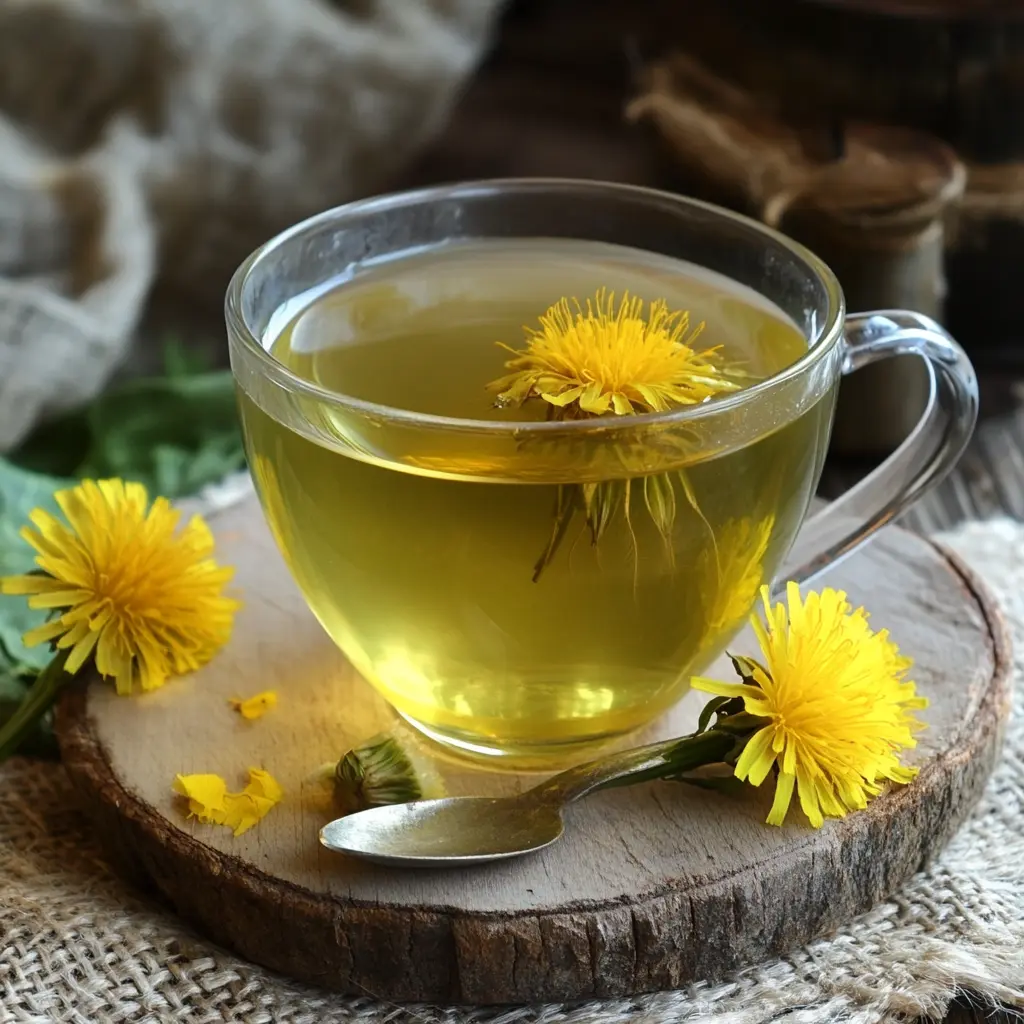
DANDELION TEA: YOUR COMPLETE PREPARATION GUIDE AND DAILY WELLNESS BENEFITS
Dandelion tea is one of the simplest, most accessible, and most nutritionally versatile herbal teas you can prepare. The same plant that emerges uninvited in lawns across North America and Europe every spring is also one of the most nutritionally dense wild plants in the Northern Hemisphere, used as both food and medicine across virtually every culture that has encountered it. Most people who want to incorporate dandelion tea into their routine face a practical challenge before a health question: which part do I use, how do I prepare it, and what should I expect from it? This guide answers all three questions with the detail and practical clarity needed to build a genuine daily dandelion tea habit that delivers on its documented potential.
DANDELION ROOT TEA VS DANDELION LEAF TEA: CHOOSING YOUR PREPARATION
Dandelion root tea and dandelion leaf tea are genuinely distinct preparations with different flavor profiles, different dominant bioactive compounds, and somewhat different primary health applications. Understanding the difference allows you to select the right preparation for your specific goals rather than defaulting to whichever form is most conveniently available. Dandelion root tea has a darker, more earthy, coffee-like character when roasted, or a milder, slightly bitter earthiness when prepared from unroasted root. The root is particularly rich in inulin, a prebiotic fiber that feeds beneficial gut bacteria, and in bitter sesquiterpene lactones including taraxacin that stimulate bile production and liver function. Root tea is the preparation most directly associated with liver support, digestive enzyme stimulation, and prebiotic gut health effects documented in research indexed through PubMed. Dandelion leaf tea is lighter in color and flavor, with a more vegetal, mildly bitter taste. The leaf is exceptionally rich in vitamins A, C, and K and is one of the most potassium-dense herbal teas available. The leaf preparation is most directly associated with mild diuretic effects, kidney support, and its exceptional mineral and vitamin content.
HOW TO PREPARE DANDELION ROOT TEA
Dandelion root tea is prepared by simmering rather than steeping, which extracts the water-soluble inulin and bitter compounds that hot steeping alone does not fully release. For dried root pieces, use one to two teaspoons of dried root per cup of water. Bring the water to a boil, add the root, reduce to a simmer, and maintain for 10 to 20 minutes. Strain thoroughly and drink while warm. The resulting tea will be dark brown, earthy, and slightly bitter with a natural sweetness from the inulin that makes it more palatable than its appearance suggests. Roasted dandelion root, which is widely available as a coffee substitute in health food stores across the US and Europe, produces a darker, richer, more coffee-like beverage that many people find immediately more appealing than the unroasted preparation. The roasting process reduces some of the inulin content and bitter compound concentration but retains meaningful hepatoprotective phenolic compounds. Cold-brew roasted dandelion root tea prepared overnight in the refrigerator produces a smooth, mellow dark beverage that is particularly appealing in summer.
HOW TO PREPARE DANDELION LEAF TEA
Dandelion leaf tea is prepared by steeping fresh or dried leaves in hot water for five to seven minutes. Fresh leaves, washed thoroughly and collected from areas not treated with herbicides or pesticides, produce a bright green tea with a mild, vegetal flavor similar to a light green tea. Dried leaves produce a more concentrated infusion with a slightly more pronounced bitter character. Fresh spring dandelion leaves collected before the plant flowers are milder and sweeter than summer leaves, which become more bitter as the plant matures. Blanching fresh leaves briefly in boiling water before steeping reduces bitterness while retaining most of the water-soluble nutrients. Dandelion leaf tea combines well with other gentle herbal teas including chamomile, lemon balm, or mint to create blends that balance the mild bitterness with floral or cooling elements. The resulting tea is rich in potassium, which makes it distinctive among herbal teas and practically relevant as a post-exercise hydration option that contributes electrolyte replenishment alongside hydration.
THE KEY HEALTH BENEFITS BY PREPARATION TYPE
Root tea provides its most consistent benefits for digestive health, liver function, and gut microbiome diversity. The inulin delivered in a cup of dandelion root tea reaches the colon and feeds the Bifidobacterium and Lactobacillus populations that produce short-chain fatty acids beneficial for gut barrier integrity and systemic immune function. The bile-stimulating bitter compounds support healthy fat digestion and the liver’s clearance of metabolic waste compounds. One to two cups of dandelion root tea daily before or with meals is the optimal timing for the digestive and liver support applications, positioning the active compounds where they are most useful when digestive enzyme and bile activity are naturally highest. Leaf tea provides its most direct benefits as a mineral-dense hydration beverage and mild diuretic support. The potassium replacement from dandelion leaf tea distinguishes it from pharmaceutical diuretics that cause potassium depletion, and the vitamin K content is relevant for bone health. The leaf tea is most useful consumed in the afternoon or early evening when avoiding caffeine is important and when the diuretic effect is unlikely to disrupt nighttime sleep.
WILD HARVESTING VS STORE-BOUGHT DANDELION TEA
Dandelion grows freely across most temperate regions of the US, Canada, Europe, and Australia, and wild harvesting is feasible for anyone with access to untreated lawn or meadow areas. The ecological considerations are straightforward: harvest from areas with no history of herbicide or pesticide application, avoid harvesting near roads where automotive pollution and runoff create heavy metal concerns, and collect from areas where you can verify the plant has not been treated. The most practical wild harvest approach is to collect young spring leaves before flowering for leaf tea and to harvest roots in autumn when inulin and nutrient concentrations are highest. If wild harvesting is not practical, quality dried dandelion root and leaf products are available from reputable herbal tea suppliers in both the US and Europe, and the cost is minimal. Look for certified organic products when possible to minimize pesticide residue concerns, particularly for root tea where soil-contact compounds are more likely to concentrate.
DANDELION TEA IN AN ATHLETIC TRAINING ROUTINE
Athletes have specific reasons to find both forms of dandelion tea practically useful. Dandelion root tea consumed daily provides the prebiotic inulin that supports the gut microbiome diversity associated with better immune function, more efficient nutrient absorption, and improved recovery signaling through the gut-brain axis. Research connecting gut microbiome health to athletic performance and recovery has grown substantially, with evidence suggesting that microbiome composition affects both the immune resilience needed to maintain training continuity and the systemic inflammatory environment that determines recovery speed between sessions. Dandelion leaf tea provides a potassium-rich hydration option that is particularly relevant for athletes who sweat heavily and need to replace electrolytes without relying on sugar-containing sports drinks for all their fluid intake. One to two cups of each form daily in appropriate timing contexts, root tea with meals for digestive support and leaf tea post-training for hydration and electrolyte contribution, represents a practical integration of dandelion tea into an athletic nutritional routine that addresses multiple physiological needs simultaneously.
Building a consistent dandelion tea habit requires understanding that the benefits accumulate gradually over weeks and months rather than appearing dramatically after a few cups. The prebiotic effects on gut microbiome composition require several weeks of consistent inulin delivery before meaningful shifts in bacterial populations become established. The liver support effects operate continuously with each cup consumed but require ongoing consumption to maintain rather than providing a lasting effect from periodic use. The diuretic effects of the leaf tea are more immediate but are appropriately mild, suitable for gentle fluid management support rather than dramatic water loss. Framing dandelion tea realistically as a daily dietary investment in gut health, liver function, and mineral intake rather than as a quick-fix remedy sets the right expectations and supports the consistency of use that produces actual results. Two cups daily, one of root tea with a meal and one of leaf tea in the afternoon, provides a comprehensive coverage of both preparations’ primary benefits within a simple routine that is easy to maintain indefinitely.
Certified strength and conditioning specialists with over 10 years of combined experience in powerlifting, nutrition coaching, and evidence-based fitness content. Based in New York City, the Genghis Fitness team tests every protocol in the gym before writing about it.
If you are exploring herbal teas for health benefits, also see our guides on green tea benefits and peppermint tea — both have strong evidence bases for daily wellness use.
COMPLETE YOUR TRAINING TOOLKIT
Your health routine starts with what you drink. Your training gains start with the right equipment. Lifting straps keep grip from limiting your heaviest pulling work.
Shop Lifting Straps