Deadlift Belt: How to Choose One and Use It on Every Pull Variation
The deadlift is the most loaded movement most athletes will ever perform. The spine is under greater compressive and shear force during a heavy deadlift than in almost any other gym exercise. A correctly chosen and correctly used belt makes a meaningful difference to how safely and effectively you can train that movement over a long career.
This guide covers what makes a belt suited specifically to deadlift mechanics, how to choose between width and thickness options, how to position and brace for pulls, and how the belt applies across conventional, sumo, Romanian, and stiff-leg variations.
Why the Deadlift Is Different from the Squat for Belt Use
The squat is a hip-dominant movement that requires the spine to maintain a neutral or slightly extended position through a full range of flexion and return. The belt must not interfere with hip crease depth at the bottom.
The deadlift starts from a static position on the floor and is a pure pulling movement. The spine must maintain a neutral or slightly extended position from the setup through lockout. There is no hip crease interference issue because the movement does not require the same acute hip angle as the bottom of a squat. This means the belt positioning constraints are somewhat different and generally easier to satisfy.
The deadlift also demands a more aggressive posterior chain involvement, particularly the erectors, glutes, and hamstrings. The belt provides a bracing surface for the anterior core that stabilizes the lumbar while those posterior chain muscles generate the force to lift the bar.
Belt Width for the Deadlift
A 4-inch straight belt is the standard for conventional deadlifts among powerlifters. The wider back panel provides maximum erector contact and bracing surface, and there is no hip-depth constraint to worry about. For athletes who also squat with the same belt in the same session, a tapered belt gives the same posterior width while reducing anterior height for the squat.
Sumo deadlift athletes sometimes prefer a slightly narrower or more tapered belt because the wide stance and outward hip rotation can cause a 4-inch belt to contact the hip crease or inner thigh at the start position. If you pull sumo and the belt digs into your groin during setup, try a tapered design or position the belt one notch higher before assuming you need a different product.
Belt Thickness for the Deadlift
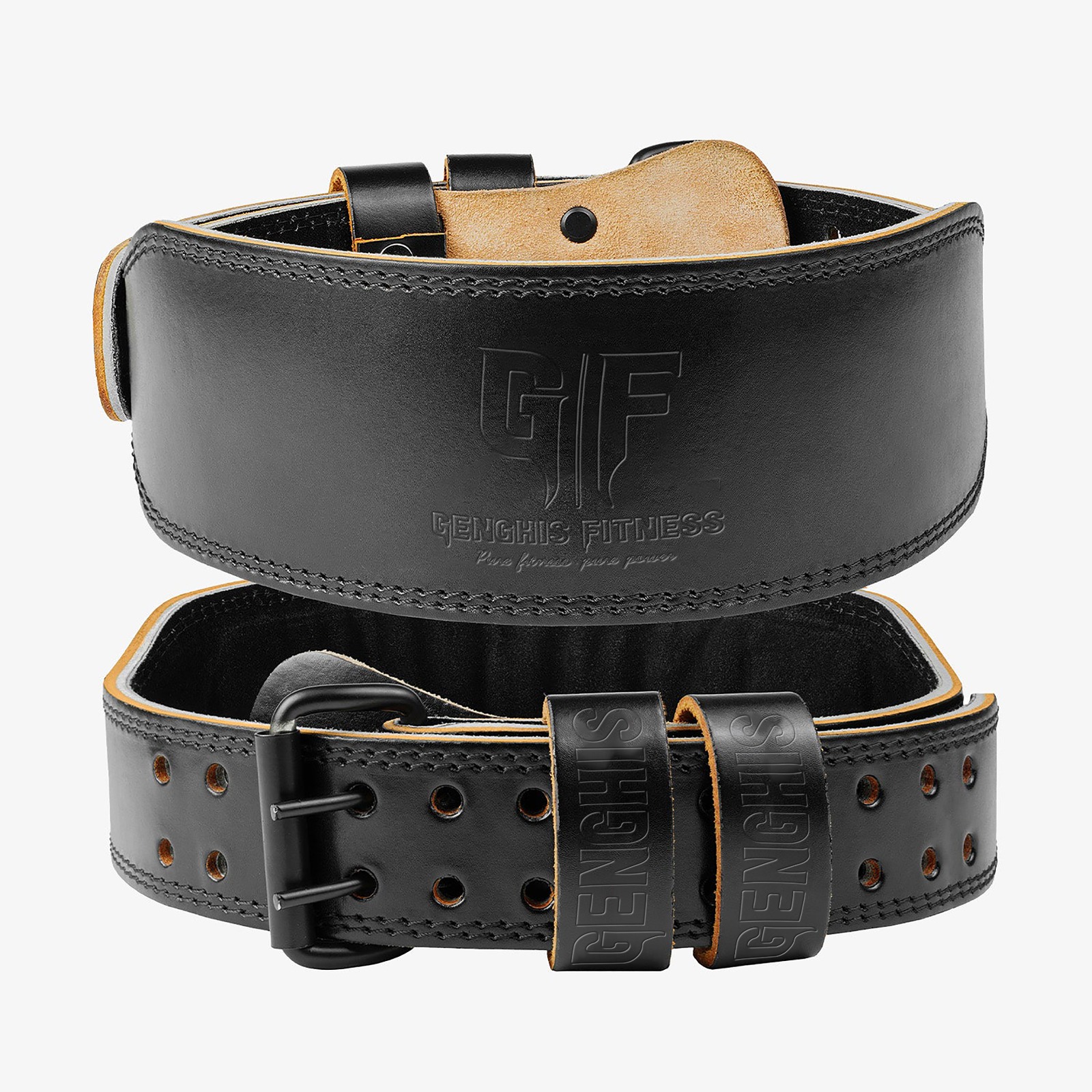
10mm leather is the practical choice for most athletes and provides competition-legal thickness in virtually all powerlifting federations. The Genghis Fitness powerlifting leather belt is a reliable 10mm option that provides real rigidity without the extended break-in period of a 13mm belt.
13mm belts are preferred by advanced athletes who have trained long enough to have a well-broken-in belt and who want the maximum rigidity available for competition-level pulls. The additional stiffness of 13mm is most noticeable during the isometric hold at setup and the lockout, where maintaining spinal position under maximum load benefits from every bit of bracing support.
Lever vs Prong for Deadlifts
Many competitive deadlifters prefer lever belts for the same reason squat-focused athletes do: speed and consistency. The lever closes in one motion, opens just as fast, and delivers the same tension on every set. The Genghis Fitness 10mm lever belt is a well-built option for athletes who train deadlifts multiple times per week and want a repeatable setup.
One practical note specific to deadlifts: some athletes find that the lever closure plate, which sits at the front of the belt, presses into the abdomen during the setup position more than a flat buckle does. If the lever hardware is uncomfortable during your hip-hinge setup, try adjusting the belt position slightly higher or switching to a prong belt where the hardware profile is lower.
How to Position the Belt for Deadlifts
For conventional deadlifts, position the belt the standard way: one to two inches above the iliac crest, back panel over the erectors. Most conventional pullers find this positioning sits slightly higher than where they wear the belt for squats. Experiment across a few sessions to find the position that feels most supportive through the full range of the pull without restricting your setup.
For sumo deadlifts, the wider stance means the front of the belt needs to clear the inner hip area. Wear the belt higher than you would for conventional, closer to two inches above the hip crest. Check at setup that the front of the belt does not press into the groin when you hinge into the starting position with your feet at sumo width.
The Bracing Sequence for Heavy Deadlifts
The deadlift bracing sequence is arguably more critical than in any other lift because the start position is static and there is no eccentric loading phase to initiate the brace naturally. You must create the brace before touching the bar.
Walk to the bar. Set your feet. Grip the bar. Then, before you initiate the pull, take a full breath into the belly and brace hard against the belt in all directions. Hold that brace completely. Do not exhale. Pull from that fully pressurized position through the full range to lockout. Exhale at the top.
Research in the NIH research database consistently shows that intra-abdominal pressure generated through Valsalva bracing reduces net compressive and shear loading on the lumbar vertebrae during deadlift-pattern movements. The belt amplifies this mechanism. Failing to brace before the pull means the belt is providing no benefit at the moment of maximum loading.
Deadlift Belt Use Across Pull Variations
Conventional Deadlift
Full belt use is appropriate for all working sets at 80 percent of one-rep max and above. Position as described. Brace before the pull. Hold through full lockout.
Romanian Deadlift
The Romanian deadlift involves an isometric hold at the hip with the bar loading the lumbar spine throughout the entire set. At heavy loads, this sustained loading is significant and the belt provides meaningful support. Use the belt for Romanian deadlifts at your working weights, not just for the heaviest conventional sets.
Sumo Deadlift
Position higher, verify hip clearance, and brace the same way. The mechanics of sumo change stance and hip angle but the lumbar bracing requirement is identical.
Stiff-Leg Deadlift
The stiff-leg variation emphasizes hamstring stretch and creates high lumbar flexion at the bottom of the movement. This is a context where the belt is particularly useful because the lumbar is under both compressive loading and significant flexion stress. Use the belt and focus on maintaining as neutral a lumbar position as possible through the stretch.
Deficit Deadlift
Standing on a plate or block to increase range of motion increases the lumbar flexion demand at the bottom. Belt use is appropriate and the same positioning and bracing rules apply.
Pairing the Deadlift Belt with Straps
Grip failure is one of the most common limiters in heavy deadlift training. When your grip fails before your back and legs, the belt’s contribution is cut short by a different bottleneck. Lifting straps address this directly.
The Genghis Fitness leather weight lifting straps secure the hand to the bar so that grip endurance does not cap the training stimulus on the posterior chain. The figure-8 lifting straps are an alternative for maximum-weight pulls where you want the most secure bar attachment available.
If you find your grip failing on sets below your training max, weight lifting hooks allow you to train the pulling muscles to their limit without grip endurance being the performance ceiling.
How Long to Warm Up Before Belting for Deadlifts
The same warm-up protocol applies as for squats. Train beltless through early sets. Apply the belt at approximately 80 percent of your working weight for the day. For most intermediate athletes, this means working up through 135, 185, and 225 pounds beltless, then strapping in for sets at 275 and above depending on your training max.
Summary
A deadlift belt works best when it is the right width and thickness for your pull variation and body proportions, positioned correctly above the hip crest, and used with a full, intentional brace before every heavy rep. Used this way across conventional, sumo, and Romanian deadlift variations, it reduces net spinal loading and lets you push the posterior chain harder without spinal position being the performance ceiling.