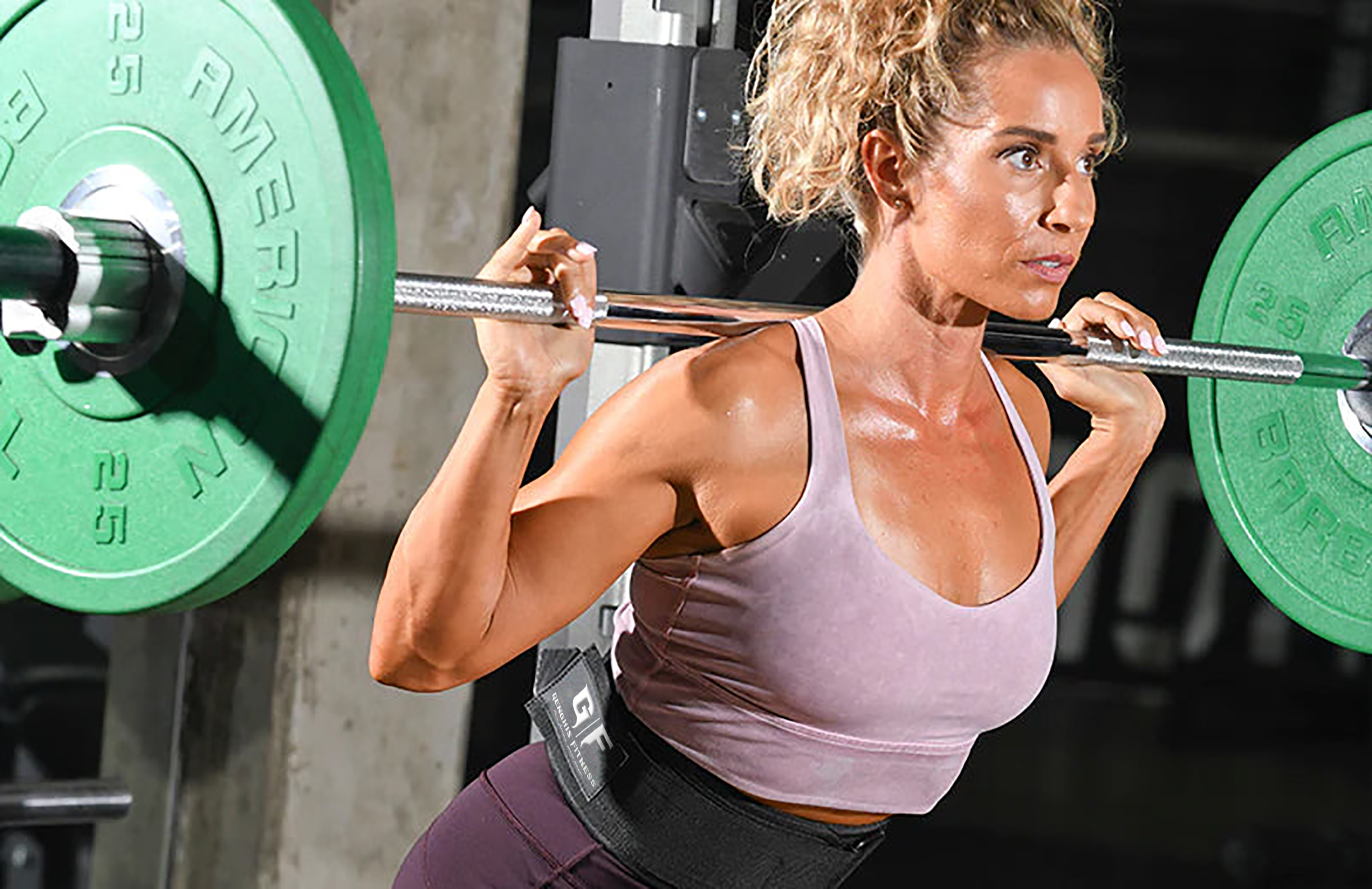
GOOD MORNINGS BARBELL EXERCISE: THE POSTERIOR CHAIN BUILDER MOST LIFTERS UNDERESTIMATE
The good morning is one of those exercises that sits in the shadow of the deadlift and the Romanian deadlift in most training programs, even though it trains the same muscle group, the posterior chain, through a range of motion and mechanical loading angle that neither of those movements can replicate. Powerlifters have used it for decades as a competition deadlift and squat accessory. Strong men use it to build the spinal erector strength that keeps them upright under maximal loading. For any athlete who wants a more resilient lower back, stronger hamstrings, and more powerful hip extension, the good morning deserves a serious look and a permanent place in the program.
WHAT THE GOOD MORNING EXERCISE ACTUALLY TRAINS
The good morning is a hip hinge movement performed with a barbell across the upper back, similar to the setup for a back squat. From a standing position with the barbell on the traps, you hinge forward at the hips, maintaining a neutral spine and a slight bend in the knees, until the torso is roughly parallel to the floor or as low as hamstring flexibility permits. You then drive the hips forward to return to standing by contracting the glutes and hamstrings. The primary movers are the hamstrings, gluteus maximus, and spinal erectors, the same muscles that drive the deadlift, the squat lockout, and every athletic movement that involves hip extension against resistance.
What separates the good morning from a Romanian deadlift is the lever arm. In a Romanian deadlift, the load is held in the hands below the center of gravity. In a good morning, the load is on the upper back above the hips. This elevated load position creates a longer moment arm from the barbell to the hips, which means the posterior chain works harder at any given barbell weight than it would during a Romanian deadlift with the same load. Research on spinal loading mechanics during hip hinge variations confirms this greater mechanical demand on the lumbar extensors during good mornings compared to equivalent-load deadlift variations.
HOW TO PERFORM BARBELL GOOD MORNINGS CORRECTLY
SETUP AND BAR POSITION
Set up a barbell in a rack at approximately upper chest height, the same as a back squat setup. Step under the bar and position it across the upper traps, not on the neck. Grip the bar with hands just outside shoulder width. Unrack and step back to a stable standing position with feet shoulder-width apart and toes pointed slightly outward. Take a deep breath and brace your core firmly before initiating the hinge. A powerlifting belt on heavier good morning sets provides meaningful lumbar support given the elevated load position of the barbell and the significant spinal erector demand of the movement.
THE HINGE
Push the hips backward while maintaining a neutral spine from tailbone to the base of the skull. The knees bend slightly but this is not a squat movement. The primary motion is at the hip joint, not the knee. Lower until you feel a significant stretch in the hamstrings or until the torso reaches parallel to the floor, whichever comes first. Do not round the lower back to get additional range of motion. A rounded lumbar spine under the elevated barbell position is a meaningful injury risk. Neutral spine maintained throughout is non-negotiable. Keep the weight on the mid-foot throughout the descent.
THE DRIVE
Contract the glutes and hamstrings to drive the hips forward and return to standing. Think about pushing the floor away with your feet rather than simply straightening the back. The hip extension should be powerful and deliberate, squeezing the glutes at the top of the movement to complete full hip extension. Control the descent over 2 to 3 seconds and drive the ascent with intent. Using lifting straps on good mornings is unnecessary since the bar is racked on the back, but knee sleeves are worth wearing to keep the joint warm during the sustained slight-flexion position held throughout each set.
WHY POWERLIFTERS AND STRENGTH ATHLETES USE GOOD MORNINGS
In powerlifting, good mornings are a classic squat and deadlift accessory because they directly strengthen the muscles responsible for maintaining a strong spinal position under maximal barbell loading. When a powerlifter fails a heavy squat, it is often because the torso pitches forward as the weight overwhelms the spinal erectors. Good morning strength is the direct antidote to that failure pattern. Training research on accessory exercise selection for powerlifting supports posterior chain accessory work as a primary intervention for improving competition lift performance, with good mornings specifically cited as a high-value squat accessory.
For general strength athletes and anyone doing significant barbell training, the good morning builds the spinal erector endurance that allows maintaining a neutral spine through high-volume deadlift and squat sessions without the form breakdown that typically occurs as fatigue accumulates late in a session. Stronger spinal erectors mean every rep of every set stays safer and more mechanically efficient.
GOOD MORNING VARIATIONS FOR DIFFERENT TRAINING GOALS
SEATED GOOD MORNINGS
Performing good mornings while seated on a bench eliminates any knee flexion and places the entire movement demand on the hamstrings and spinal erectors without any quad contribution. This variation is significantly more demanding at equivalent weights and is used by advanced powerlifters for maximum posterior chain loading. The seated position also eliminates the balance component, allowing greater focus on the pure spinal erector and hamstring contraction quality.
SAFETY BAR GOOD MORNINGS
A safety squat bar positions the load differently than a straight bar, changing the moment arm characteristics and typically making the exercise feel harder at the same weight. Safety bar good mornings are a common programming choice for athletes who want the good morning stimulus with slightly different loading characteristics or who find the straight bar position uncomfortable on the upper traps during high-volume good morning work.
BANDED GOOD MORNINGS
Attaching resistance bands to the bar and looping them under the feet creates accommodating resistance that increases the difficulty at the top of the movement where the good morning is mechanically easiest. This variation matches the strength curve of the posterior chain more precisely and is a common warm-up or activation tool using light bands before loading with the barbell. Hip circle bands can also be used for bodyweight good morning activation sets before loading the barbell, priming the glute and hamstring engagement pattern before the heavy work begins.
PROGRAMMING GOOD MORNINGS EFFECTIVELY
Good mornings are most commonly programmed as a secondary or accessory posterior chain movement following primary deadlifts or squats, using 3 to 4 sets of 6 to 10 reps at moderate loads. Start conservatively: 40 to 50 percent of your squat weight is a reasonable starting point until technique is solid and spinal erector capacity for this specific loading angle is established. Progress load gradually over weeks. The good morning rewards patience in loading progression because the elevated bar position means technique errors carry more consequence than in most other lower body exercises.
Include good mornings in your program once or twice per week on lower body or posterior chain focused days. They pair naturally with a nylon lifting belt for moderate intensity accessory work when you want lumbar support without the full rigidity of a lever belt on a volume-focused day. Consistent good morning training over an eight to twelve week block produces spinal erector and hamstring development that shows up directly in your squat and deadlift performance.
FINAL WORDS
The good morning barbell exercise is not complicated, but it demands respect. The elevated bar position makes technique errors more consequential than in most lower body exercises, so learn it with light loads and build deliberately. Master the neutral spine hinge, develop the hamstring and spinal erector strength gradually, and use it consistently as a posterior chain accessory alongside your primary compound lifts. The athletes who squat and deadlift the heaviest weights over the longest careers almost universally have exceptional spinal erector strength. The good morning is one of the most direct paths to building it.
Certified strength and conditioning specialists with over 10 years of experience in powerlifting, nutrition, and evidence-based fitness content. Based in New York City.
DEADLIFT GEAR THAT MAKES THE DIFFERENCE
Stop losing reps to grip failure. The right straps and belt keep you pulling heavier, longer.
10mm Lever Belt Figure-8 Straps Weight Lifting Hooks