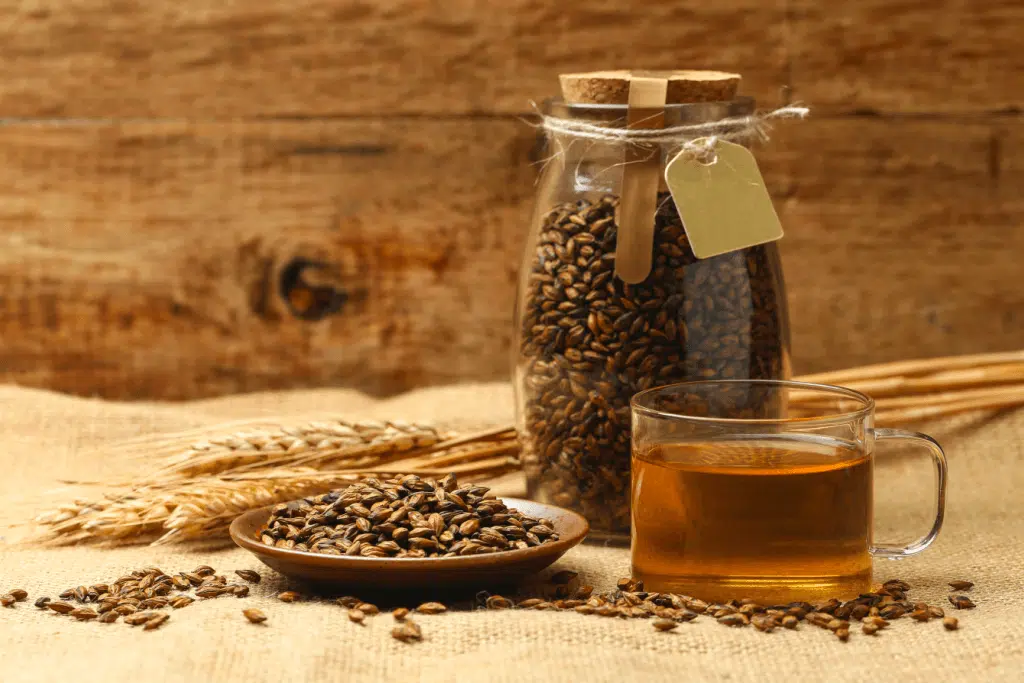
HEALTH BENEFITS OF BARLEY TEA: THE ROASTED GRAIN BEVERAGE WITH REAL NUTRITIONAL VALUE
Barley tea is one of the most widely consumed beverages in East Asia. Known as mugicha in Japan, boricha in Korea, and dàmàichá in China, it has been a household staple across these cultures for centuries, served hot in winter and cold over ice in summer as a caffeine-free alternative to water. Western nutritional awareness of barley tea has lagged behind its long track record of use, but the research on its bioactive compounds and health effects is substantive enough to make a clear case for including it in a health-conscious beverage rotation. Here is what the evidence actually supports.
WHAT BARLEY TEA CONTAINS
Barley tea is made from roasted barley grains steeped in hot water. The roasting process creates a range of Maillard reaction products, pyrazines, furans, and melanoidins, that contribute to the characteristic roasted, slightly bitter flavor profile and to several of the tea’s bioactive properties. Beyond these roasting products, barley tea provides alkylresorcinols, antioxidant phenolic compounds found in the bran layer of cereal grains. It contains a small amount of melatonin, the hormone involved in circadian rhythm regulation and antioxidant activity. It also provides beta-glucan fragments from the barley grain cell walls, along with selenium and various B vitamins at low concentrations. Studies indexed through PubMed have characterized the compound profile of barley tea in sufficient detail to evaluate its functional food potential.
ANTIOXIDANT ACTIVITY FROM ROASTING
The roasting process that creates barley tea’s distinctive flavor also generates a range of antioxidant compounds not present in raw barley. Pyrazines and melanoidins formed during Maillard browning reactions demonstrate free radical scavenging activity in vitro and in animal models. The alkylresorcinol content of barley also contributes antioxidant activity with documented bioavailability in human studies. A cup of barley tea provides measurable total antioxidant capacity, though at lower levels than highly concentrated herbal teas like clove or green tea. The antioxidant contribution is best understood as one component of a broadly antioxidant-supportive diet rather than as a primary antioxidant intervention. Consumed daily as a beverage replacement for sodas or other nutritionally empty drinks, the cumulative antioxidant contribution is meaningful over time.
BLOOD FLOW AND PLATELET EFFECTS
One of the more interesting and clinically supported findings about barley tea is its effect on blood rheology, the physical properties of blood flow. A Japanese study found that barley tea consumption reduced blood viscosity and inhibited platelet aggregation compared to water in healthy subjects. The proposed mechanism involves the alkylresorcinol and specific pyrazine compounds in the tea affecting platelet surface receptors. Improved blood fluidity and reduced abnormal clotting tendency are beneficial for cardiovascular health and for athletic performance, where microcirculation efficiency affects muscle oxygen delivery during training. This finding has been replicated in a small number of trials and represents one of the more distinctive health effects attributed specifically to barley tea rather than to herbal beverages generally.
DIGESTIVE HEALTH AND GI COMFORT
Barley tea has a long traditional use as a digestive aid in Asian medicine systems, and the compound profile provides some mechanistic support for this application. The beta-glucan fragments released during steeping have prebiotic properties that support beneficial gut bacteria populations. The slightly bitter compounds including some phenolic acids stimulate bile production, which supports fat digestion and the absorption of fat-soluble vitamins. The roasted grain base makes barley tea relatively gentle on the gastrointestinal tract compared to more astringent herbal teas, which is one reason it is widely consumed by children and elderly individuals in Japan and Korea. Athletes who struggle with gastrointestinal distress during and after training may find barley tea a more tolerable hydration option than fruit juices or strongly flavored herbal teas.
CAFFEINE-FREE HYDRATION BENEFITS
One of barley tea’s most practical advantages is that it is naturally caffeine-free. This makes it suitable for consumption at any time of day including late evening without the sleep-disrupting effects that caffeinated beverages produce. The slight sodium content of barley tea, from the grain itself, makes it a marginally better hydration vehicle than pure water for extended hydration needs, as trace electrolytes improve fluid retention in the body compared to drinking plain water alone. Athletes training for long durations or in hot environments can use cold barley tea as an effective, flavorful, caffeine-free hydration option that provides a mild antioxidant and mineral contribution alongside the primary hydration benefit.
SLEEP QUALITY: THE MELATONIN CONNECTION
Barley contains measurable amounts of melatonin, and a small number of studies have investigated whether barley tea consumption before sleep supports sleep quality through this pathway. The melatonin content of barley tea is considerably lower than that of a standard melatonin supplement, but regular evening consumption may contribute modestly to the endogenous melatonin signaling that regulates sleep onset. For athletes who prioritize sleep quality as a recovery strategy, replacing a late-evening caffeinated beverage with warm barley tea represents a practical dietary swap that removes sleep-disrupting caffeine while potentially adding a small melatonin contribution. The evidence for meaningful sleep benefit from barley tea specifically is preliminary, but the mechanism is plausible and the practice is consistent with good sleep hygiene principles.
PREPARING BARLEY TEA AND PRACTICAL CONSUMPTION
Barley tea is available as roasted whole or cracked barley kernels, as tea bags containing roasted barley, and occasionally as a cold-brew powder for convenience. To prepare from whole kernels, dry-roast one to two tablespoons in a dry pan until fragrant and lightly browned, then simmer in one liter of water for 20 minutes and strain. Pre-roasted barley tea bags require only steeping in hot water for five minutes. Cold barley tea, prepared by steeping bags in cold water for two to four hours in the refrigerator, is the traditional summer preparation across East Asia and produces a mild, refreshing beverage that is an easy replacement for sweetened cold drinks. Barley tea is safe for nearly all adults with the exception of those with celiac disease or non-celiac gluten sensitivity, for whom barley is not appropriate regardless of preparation method.
INCORPORATING BARLEY TEA INTO AN ACTIVE LIFESTYLE
Cold barley tea, prepared in advance and kept refrigerated, is one of the most practical sports hydration options available for athletes who want flavor and mild functional benefits from their fluid intake without sugar, artificial ingredients, or caffeine. The preparation requires essentially no active time once the initial batch is made: steep barley tea bags in cold water overnight in the refrigerator and the beverage is ready. The mild, roasted grain flavor is considerably more interesting than plain water without the sweetness or acidity of sports drinks and fruit juices. The trace electrolyte content from the grain itself makes it marginally more effective at fluid retention than plain water, and the antioxidant contribution from the roasted grain compounds adds a modest but real nutritional dimension to what would otherwise be purely a hydration choice.
For athletes concerned about inflammation management across a heavy training week, rotating barley tea alongside other functional herbal teas including rosehip, green tea, or ginger-based preparations creates a daily beverage pattern that contributes anti-inflammatory, antioxidant, and digestive support compounds throughout the day without the caloric load of fruit juices or the caffeine accumulation of multiple coffee or green tea servings. The key is treating these beverage choices as nutritional infrastructure rather than as dramatic interventions. None of these teas individually transforms health outcomes at the speed or magnitude that fundamental training, sleep, and dietary choices do. But over months and years, a beverage pattern built around functionally valuable options rather than empty calories or excess stimulants contributes meaningfully to the health and performance environment in which the important adaptations occur.
Certified strength and conditioning specialists with over 10 years of combined experience in powerlifting, nutrition coaching, and evidence-based fitness content. Based in New York City, the Genghis Fitness team tests every protocol in the gym before writing about it.
If you are exploring herbal teas for health benefits, also see our guides on green tea benefits and peppermint tea — both have strong evidence bases for daily wellness use.
COMPLETE YOUR TRAINING TOOLKIT
Your health routine starts with what you drink. Your training gains start with the right equipment. Lifting straps keep grip from limiting your heaviest pulling work.
Shop Lifting Straps