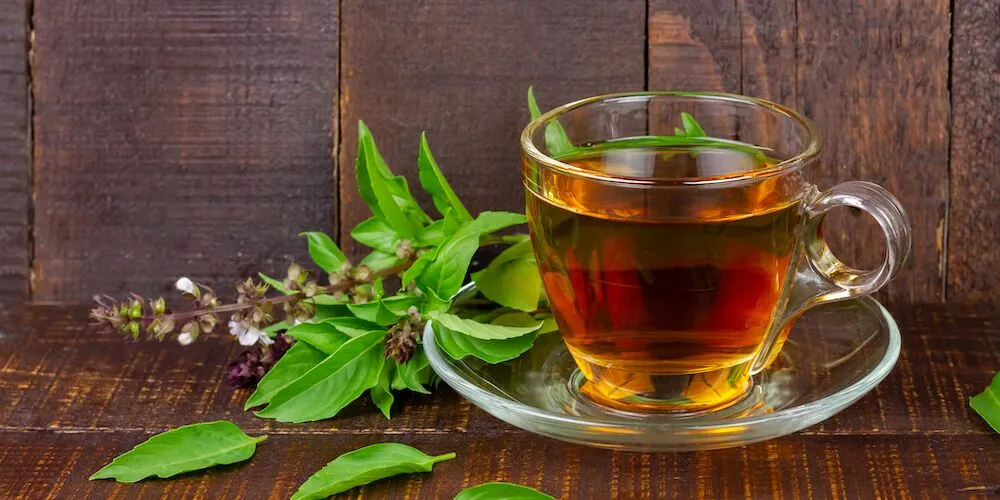
HEALTH BENEFITS OF BASIL TEA: THE AROMATIC HERB THAT DELIVERS MORE THAN FLAVOR
Basil, most commonly known as the fragrant herb that defines pesto and caprese salad, is also one of the most medicinally rich culinary plants in common use. The genus Ocimum includes multiple species with significant medicinal applications, including sweet basil used in Mediterranean cooking, holy basil or tulsi used in Ayurvedic medicine across South Asia, and Thai basil used in Southeast Asian cuisines. While most Western consumers are familiar with sweet basil as a culinary ingredient, the research on basil’s health properties spans all three major species and reveals a compound profile with documented antioxidant, anti-inflammatory, adaptogenic, and antimicrobial properties that translate into genuine health benefits from regular consumption as a tea.
THE BIOACTIVE COMPOUNDS IN BASIL TEA
Basil’s bioactive content varies between species but shares a core set of compounds across all three major culinary varieties. Eugenol is present in sweet basil at meaningful concentrations and is the same compound responsible for clove’s potent biological activity. Linalool, the terpene associated with lavender’s anxiolytic effects, is a major constituent of sweet basil’s essential oil. Rosmarinic acid, found across the Lamiaceae herb family and recognized as one of the most potent natural phenolic antioxidants, is present in all basil species. Ursolic acid contributes anti-inflammatory, anti-tumor, and hepatoprotective activity. Holy basil additionally contains the adaptogenic compounds ocimumosides A and B, eugenol at higher concentrations than sweet basil, and beta-caryophyllene, a CB2 cannabinoid receptor agonist with anti-inflammatory properties. The flavonoid content includes orientin, vicenin, and luteolin. Studies indexed through PubMed have characterized the absorption and systemic bioavailability of basil compounds following oral consumption, confirming the pharmacokinetic basis for evaluating basil tea as a functional food rather than purely a culinary ingredient.
HOLY BASIL AS AN ADAPTOGEN: THE STRESS RESPONSE APPLICATION
Holy basil, Ocimum sanctum, also known as tulsi, has the most extensive research base of any basil species specifically in the context of stress adaptation and cortisol regulation. Adaptogens are compounds that normalize the physiological stress response by modulating the hypothalamic-pituitary-adrenal axis activity, and holy basil is among the few plant preparations with multiple clinical trials supporting this application. A study published in the Journal of Ayurveda and Integrative Medicine found that holy basil supplementation significantly reduced stress, anxiety, and depression scores compared to placebo over eight weeks, with accompanying reductions in cortisol and improvements in cognitive function. The adaptogenic mechanism involves the modulation of cortisol release without complete suppression, normalizing the stress response rather than blocking it as pharmaceutical anxiolytics do. For athletes experiencing overtraining syndrome or high cumulative stress from training and life demands, holy basil tea represents one of the more evidence-consistent natural adaptogen options available.
ANTI-INFLAMMATORY EFFECTS
The rosmarinic acid and ursolic acid content of basil tea contributes meaningful anti-inflammatory activity through several molecular mechanisms. Rosmarinic acid inhibits complement activation, reduces leukocyte migration to sites of inflammation, and suppresses the production of prostaglandins through dual COX and LOX enzyme inhibition. Ursolic acid inhibits NF-kB activation and reduces the production of TNF-alpha, IL-1 beta, and IL-6, the primary pro-inflammatory cytokines driving systemic inflammation. Beta-caryophyllene in holy basil activates CB2 cannabinoid receptors, producing peripheral anti-inflammatory and analgesic effects that are distinct from the central nervous system activity of CB1 receptor agonists. The eugenol content adds COX enzyme inhibition similar to that documented for clove. This multi-pathway anti-inflammatory profile makes basil tea a genuinely comprehensive natural anti-inflammatory beverage that addresses inflammation through mechanisms that complement rather than duplicate each other.
ANTIOXIDANT ACTIVITY AND OXIDATIVE STRESS MANAGEMENT
Basil has extremely high antioxidant activity across all standardized measurement methods, driven primarily by its rosmarinic acid and flavonoid content. The rosmarinic acid in basil demonstrates antioxidant capacity that exceeds vitamin E in some comparative assay systems and is active against both lipophilic and hydrophilic free radicals. A study comparing the antioxidant activity of several common culinary herbs found basil competing with oregano and sage at the top of the ranking, significantly above most vegetables and fruits. For athletes generating elevated reactive oxygen species through intense training, the antioxidant contribution of daily basil tea provides meaningful support for the body’s management of exercise-induced oxidative stress during both training and recovery phases.
ANTIMICROBIAL AND IMMUNE PROTECTIVE PROPERTIES
Basil essential oil compounds, particularly eugenol, linalool, and cinnamyl acetate, demonstrate broad antimicrobial activity against bacteria, fungi, and viruses in laboratory research. Eugenol inhibits the growth of common food-borne pathogens including E. coli, Salmonella, and Listeria. Linalool demonstrates antifungal activity against Candida species. Holy basil specifically has shown immune-modulating effects in clinical research, with studies finding enhanced activity of natural killer cells, T-helper cells, and antibody production in participants receiving holy basil supplementation. These immune-enhancing effects, combined with direct antimicrobial activity, support both the innate and adaptive immune responses relevant to infection resistance and recovery.
BLOOD SUGAR REGULATION AND METABOLIC EFFECTS
Holy basil has demonstrated blood sugar-lowering effects in both animal studies and human clinical trials. A study published in the Journal of Clinical Biochemistry and Nutrition found that holy basil leaf supplementation reduced fasting blood glucose, postprandial blood glucose, and HbA1c compared to placebo in people with type 2 diabetes. The mechanisms include inhibition of alpha-amylase and alpha-glucosidase enzymes that reduce carbohydrate absorption rates, improvement of beta cell function in the pancreas that enhances insulin secretion, and peripheral insulin sensitization effects. Sweet basil and Thai basil likely share similar mechanisms through their eugenol and rosmarinic acid content, though the clinical evidence is more developed for holy basil specifically. For athletes using dietary approaches to optimize insulin sensitivity and blood glucose stability for body composition management, holy basil tea consumed with or after carbohydrate-containing meals is an evidence-consistent dietary strategy.
HOW TO PREPARE BASIL TEA AND DAILY CONSUMPTION
Basil tea is prepared simply by steeping fresh or dried basil leaves in hot water for five to seven minutes. Fresh basil produces a lighter, more floral and peppery flavor. Dried basil produces a more concentrated, slightly earthy flavor with higher essential oil extraction. Holy basil or tulsi tea bags are widely available from health food stores and online retailers throughout the US and Europe and represent the most convenient way to access this variety’s specific adaptogenic benefits. The flavor of basil tea pairs well with lemon juice, honey, or ginger additions. Two to three cups daily is appropriate for most healthy adults seeking the antioxidant, anti-inflammatory, and metabolic benefits. Holy basil consumed specifically for stress adaptation benefits is most effective at consistent daily consumption over four to eight weeks, following the pattern used in the clinical trials that demonstrated its cortisol-normalizing effects. Basil is generally very safe at dietary consumption levels, with no significant known drug interactions or adverse effects in healthy adults.
The versatility of basil across culinary applications creates practical opportunities to increase consumption beyond dedicated tea drinking. Fresh basil added generously to post-workout meals provides rosmarinic acid and eugenol alongside the recovery macronutrients without requiring a separate beverage habit. Holy basil or tulsi blended into a smoothie alongside protein powder, banana, and other recovery ingredients delivers the adaptogenic compounds in a format that many athletes find more convenient than a separate hot beverage routine. Basil pesto consumed regularly adds significant rosmarinic acid and antioxidant polyphenols to the diet in a format that is inherently appetizing and integrates naturally into pasta-based carbohydrate loading meals for athletes in training or competition phases. The key insight is that the bioactive value of basil does not require medicinal preparation. Using it liberally as a culinary herb across the full range of its culinary applications delivers its health benefits as a natural consequence of eating well-seasoned, herb-rich Mediterranean and Asian-influenced food, which is among the most evidence-based dietary patterns for long-term health and athletic longevity.
Certified strength and conditioning specialists with over 10 years of combined experience in powerlifting, nutrition coaching, and evidence-based fitness content. Based in New York City, the Genghis Fitness team tests every protocol in the gym before writing about it.
If you are exploring herbal teas for health benefits, also see our guides on green tea benefits and peppermint tea — both have strong evidence bases for daily wellness use.
COMPLETE YOUR TRAINING TOOLKIT
Your health routine starts with what you drink. Your training gains start with the right equipment. Lifting straps keep grip from limiting your heaviest pulling work.
Shop Lifting Straps