Genghis Fitness · Equipment and Powerlifting
Leather Weightlifting Belt Reviews: What to Look For, How Top Options Compare, and Which Format Suits Your Training
Updated 2026 | By Team Genghis Fitness | 22 min read
The market for leather weightlifting belts ranges from inexpensive budget options that look the part but fail under serious loads to premium competition-grade belts that outlast the athlete who buys them. Navigating this range requires knowing exactly which construction and material characteristics separate belts that perform at heavy loads from those that merely look like they should. This review guide covers the key quality indicators to evaluate in any leather belt purchase, how the main formats (prong buckle versus lever buckle, tapered versus uniform width, 10mm versus 13mm thickness) compare in real training use, and which factors matter most for different types of training. Rather than ranking specific brands, this guide equips athletes with the evaluation framework needed to make an informed purchase regardless of which specific product they are comparing.
Construction Quality Indicators
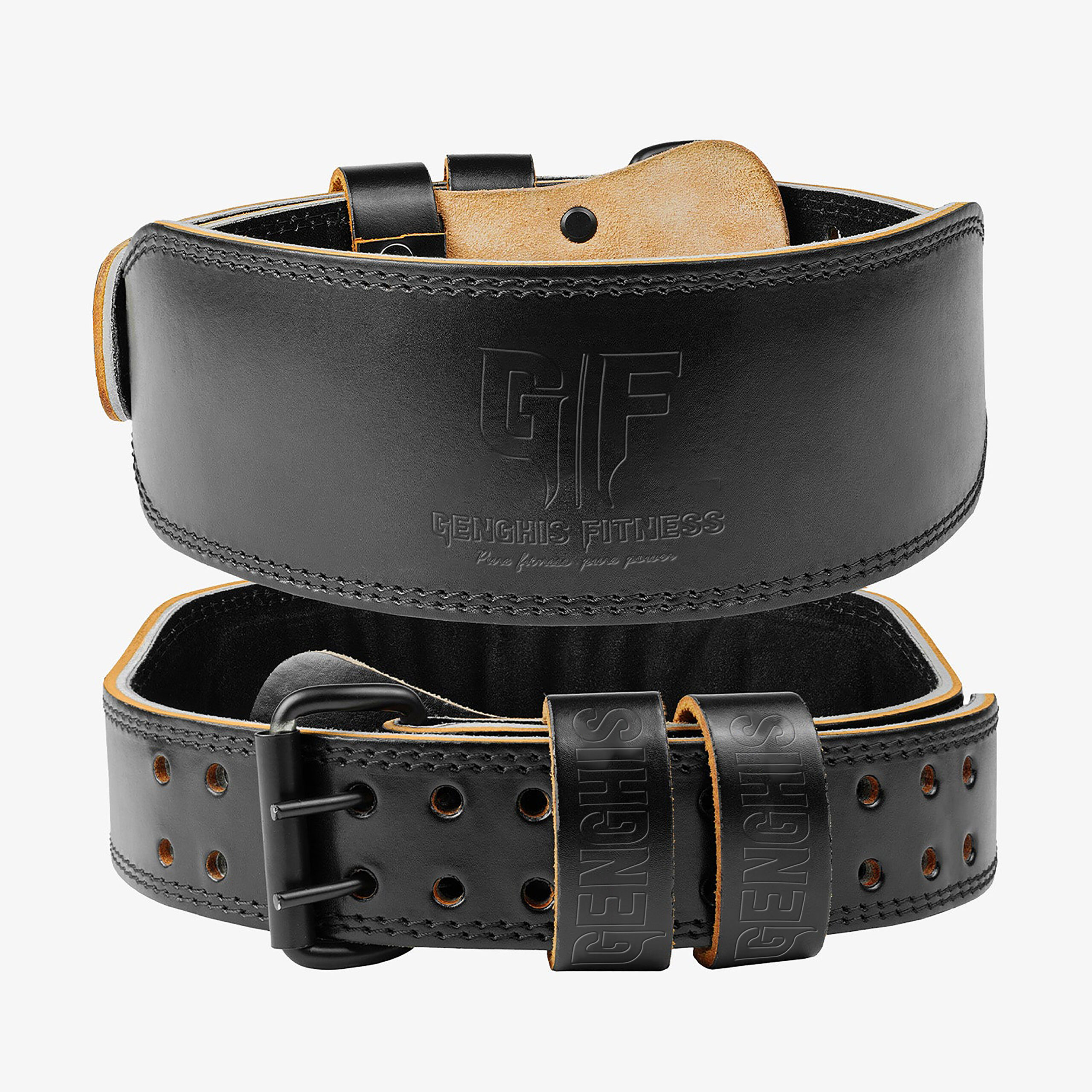
The most reliable indicator of leather belt quality is the consistency and density of the leather itself. Full-grain leather (the outermost layer of the hide, with the tightest fibre structure) is the superior choice for weightlifting belts over split leather (the lower layer with looser fibres) or bonded leather (leather scraps bonded with adhesive). Full-grain leather does not delaminate, maintains its stiffness under repeated loading better than split or bonded alternatives, and develops a custom fit over time as it conforms to the body without losing structural integrity. The edge finishing of a quality belt should be smooth and consistent, not rough or fraying, indicating that the leather was properly finished after cutting rather than left raw. Stitching should be even, tight, and recessed into the leather surface rather than raised, as raised stitching wears through contact with the bar and clothing more rapidly. Research on material fatigue in leather sports equipment published in the Journal of Materials Science confirmed that full-grain leather maintains structural integrity under repeated cyclical loading significantly longer than lower-grade leather alternatives, supporting the premium pricing of full-grain belts for serious training applications.
Prong vs Lever: Which Is Better for Training?
Both prong and lever buckle formats produce equally effective belts when constructed correctly. The practical difference is adjustment speed and convenience. Prong buckles allow the belt to be tightened to any hole position and loosened by pulling the strap back through the buckle, which takes 15 to 30 seconds per adjustment. Lever buckles snap open and closed at a single pre-set hole position in under 5 seconds, making them faster for competition use and for athletes who wear the belt throughout a session rather than putting it on and taking it off between sets. The lever buckle position requires a screwdriver to adjust to a different hole, which is a minor inconvenience but not a significant practical problem once the correct position is identified. For most training applications, either format works equally well. For competition use where time between attempts is limited, the lever buckle provides a genuine convenience advantage. The Genghis Fitness 10mm lever belt and the powerlifting leather belt represent the lever and prong options at competition-grade construction quality.
Width and Thickness: Matching the Belt to the Lift
Uniform 10 cm width belts provide consistent intra-abdominal pressure support in all directions around the trunk and are the standard for powerlifting competition (IPF maximum belt width is 10 cm). Tapered belts are narrower at the front (typically 6 to 7 cm) and wider at the back (10 cm), which some athletes find more comfortable for movements that require forward trunk lean such as the bottom of a squat or the setup position of a conventional deadlift, because the narrower front portion does not press as firmly against the hip flexors and lower abdomen in these flexed positions. For athletes who squat in an upright high-bar style or who primarily deadlift, either width works equally well. For athletes with hip flexor sensitivity at the bottom of a deep squat, the tapered design may provide a noticeable comfort advantage. The 10mm thickness is the standard for most serious training applications and competition. The 13mm thickness provides greater stiffness for higher IAP at the expense of longer break-in time and more limited range of motion in forward-bent positions. The complete thickness comparison is in our 10mm vs 13mm guide.
What a Fair Price Looks Like
Full-grain leather weightlifting belts of competition quality retail between 80 and 200 USD in the current market. Belts below 60 USD almost universally use split or bonded leather, thinner material, or inferior buckle hardware that fails under regular heavy use. Belts above 200 USD are typically either premium brand premiums or custom-made options that provide personalisation beyond what standard sizing offers. For most serious training athletes, the 80 to 150 USD range provides competition-grade construction without unnecessary premium. The Genghis Fitness powerlifting leather belt sits in this range with full-grain leather construction, competition-legal dimensions, and the proven durability that justifies the investment for athletes who train at the loads where belt quality matters.
Custom and Personalised Leather Belts
For athletes who want a belt matched to their exact measurements and aesthetic preferences, custom leather belt options allow specification of width, thickness, colour, and personalised embossing. The Genghis Fitness custom designed lifting belts allow personalisation of the belt design while maintaining the full-grain leather construction and competition-legal dimensions that make a belt genuinely useful rather than merely decorative. Custom belts take longer to produce than off-the-shelf options but provide the perfect fit for athletes with non-standard torso dimensions (very wide hips relative to waist, long torso requiring a wider belt for full coverage, or bodyweight outside the range that standard sizing accommodates comfortably). For athletes who plan to train seriously for many years, the additional cost and lead time of a custom belt is a worthwhile investment in equipment that will fit correctly and last a career. Standard sizing works well for the majority of athletes, but the custom option exists specifically for those for whom off-the-shelf sizing creates a less-than-ideal fit at the hip or waist measurement. Pairing a custom leather belt with knee sleeves and lifting straps completes the core equipment stack for serious strength training.
Frequently Asked Questions
How Long Does a Quality Leather Belt Last?
A full-grain leather belt used regularly for serious strength training should last 10 to 20 years with proper care, outlasting most training careers. The leather conforms to the body over time, improving fit and comfort with use. Annual conditioning with neatsfoot oil or a dedicated leather conditioner maintains the leather flexibility and prevents cracking at the buckle attachment points where the leather is repeatedly flexed. The most common failure modes in quality leather belts are buckle hardware wear (which can be replaced in most prong-buckle designs) and stitching deterioration at the ends (which can be re-stitched by a leather worker). Catastrophic structural failure of the leather itself is rare in full-grain construction under normal training use.
Can You Use a Weightlifting Belt for Olympic Lifting?
Yes, but with caveats. Olympic lifting movements (the snatch and clean and jerk) require more trunk rotation, forward lean, and overhead mobility than powerlifting movements. The stiff uniform-width powerlifting belt can restrict the forward hip flexion needed for the clean pull and the overhead position needed for the jerk. Many Olympic weightlifters prefer the tapered belt or a narrower 6 cm nylon belt that provides IAP support with less restriction of the extreme positions the lifts demand. The powerlifting belt is appropriate for the pulling and squatting components of Olympic lifting training, with the restriction caveat applying primarily to the catch and overhead positions of competition movements.
Built Right. Built to Last. Built for Your Career.
Full-grain leather that gets better with every year of training.
Shop Powerlifting BeltShop 10mm Lever BeltCertified strength and conditioning specialists with over 10 years of experience in powerlifting, nutrition, and evidence-based fitness content. Based in New York City.
For more on every type of weightlifting belt, sizing guide, and training recommendation, visit the weightlifting belt guides covering leather, lever, neoprene, and nylon options alongside how-to guides and care instructions.