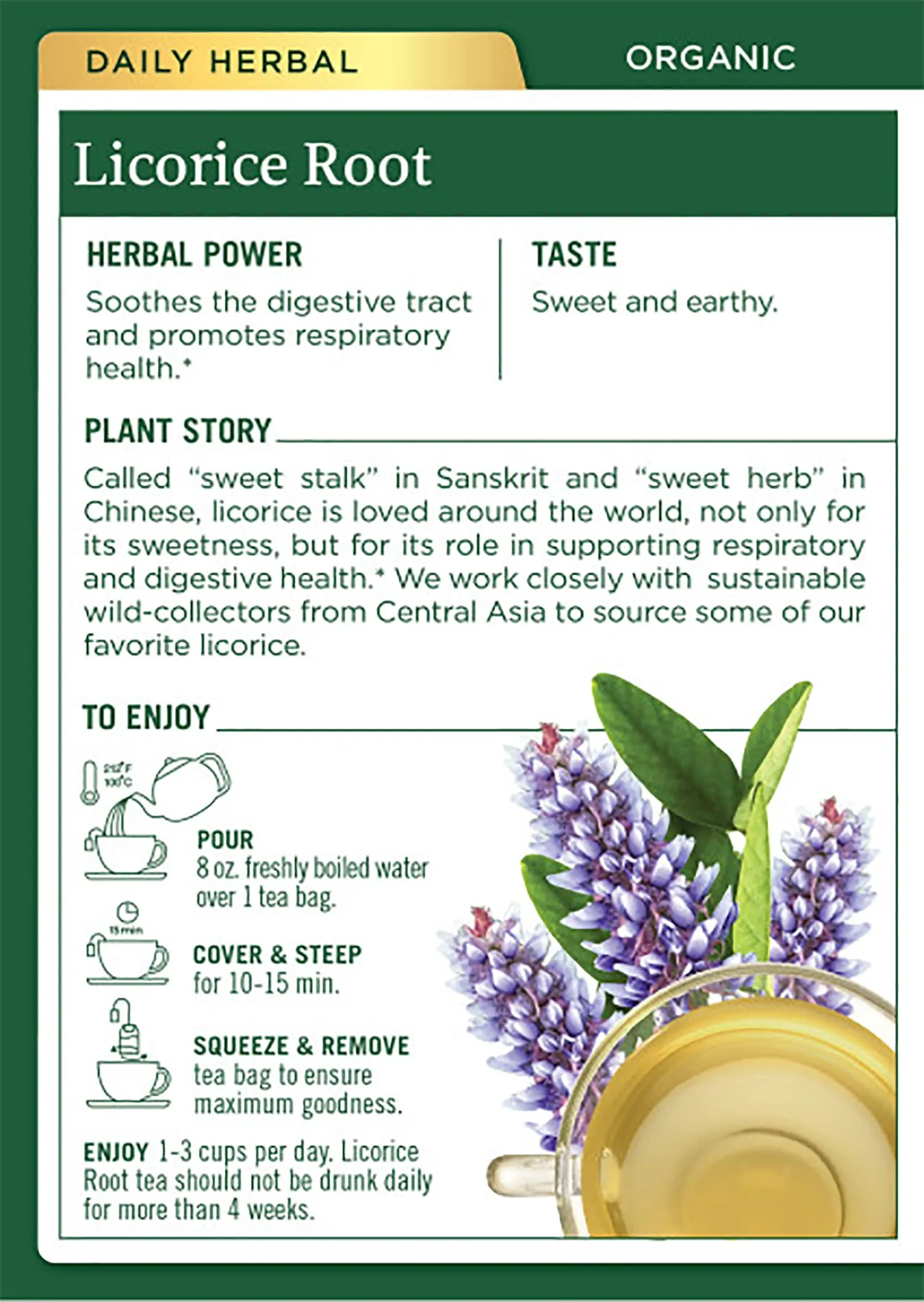
LICORICE ROOT TEA BENEFITS: THE SWEET ROOT WITH POWERFUL BUT DOUBLE-EDGED EFFECTS
Licorice root, Glycyrrhiza glabra, produces one of the most intensely flavored herbal teas available and is one of the most pharmacologically active plants in common use. The primary active compound glycyrrhizin is 30 to 50 times sweeter than sucrose and produces documented anti-inflammatory, antiviral, hepatoprotective, and adrenal-supportive effects. It also produces hypertension and potassium depletion at high doses through mineralocorticoid excess. Understanding both sides of this compound is essential before building licorice root tea into a daily routine.
WHAT LICORICE ROOT CONTAINS
Glycyrrhizin, also called glycyrrhizic acid, is the dominant bioactive compound and is responsible for both the therapeutic effects and the primary safety concerns at high doses. It inhibits the enzyme 11-beta-hydroxysteroid dehydrogenase, which normally converts active cortisol to inactive cortisone in peripheral tissues. By inhibiting this conversion, glycyrrhizin amplifies cortisol activity, which is both anti-inflammatory in the short term and the mechanism for its blood pressure-raising and potassium-depleting effects at high doses.
Additional active compounds include flavonoids, liquiritin, isoliquiritigenin, and glabridin, a phenolic compound with estrogen receptor binding activity. Chalcones including licochalcone A have documented antimicrobial and anti-tumor properties. Studies indexed on PubMed have characterized glycyrrhizin’s pharmacokinetics from oral consumption with a documented half-life of 10 to 12 hours.
ANTI-INFLAMMATORY AND IMMUNE-MODULATING EFFECTS
Glycyrrhizin’s inhibition of 11-beta-HSD produces cortisol amplification that reduces inflammatory signaling across multiple tissues. This mechanism explains the traditional use of licorice in respiratory inflammation, where the amplified cortisol activity reduces airway inflammation comparably to low-dose inhaled corticosteroids in some animal models.
Licorice root tea has demonstrated specific effectiveness for sore throat in clinical studies, with an oral rinse preparation finding significant reductions in post-surgical sore throat pain. The anti-inflammatory action at the throat mucosa combines with the demulcent coating properties of the glycyrrhizin-rich root preparation. See our guide on teas for sore throat for the complete range of options for this application.
ANTIVIRAL PROPERTIES
Glycyrrhizin demonstrates broad antiviral activity in laboratory and some clinical settings. It has shown activity against influenza viruses, herpes simplex virus, severe acute respiratory syndrome coronavirus, and HIV in laboratory models through mechanisms including viral envelope disruption and inhibition of viral replication enzymes. A clinical trial in Japan found intravenous glycyrrhizin treatment reduced hepatitis C viral loads.
For oral consumption in tea, systemic glycyrrhizin concentrations are considerably lower than IV administration, but the antiviral activity at gut mucosal surfaces during digestion and at upper respiratory mucosal surfaces through gargling may be clinically relevant for common viral respiratory infections.
LIVER PROTECTION AND ADRENAL SUPPORT
Licorice root’s hepatoprotective effects are well-documented through glycyrrhizin’s anti-inflammatory action in liver tissue and glabridin’s antioxidant protection of hepatocytes. Intravenous glycyrrhizin has been used clinically in Japan for decades for chronic hepatitis treatment. Oral consumption produces lower but meaningful liver tissue concentrations relevant to dietary liver health support.
The adrenal support application comes from glycyrrhizin’s cortisol-preserving mechanism. For individuals experiencing adrenal fatigue from chronic stress, licorice root tea may support adrenal output by slowing cortisol breakdown rather than requiring increased cortisol production. This is distinct from stimulant-based energy approaches and is most relevant for people with confirmed low cortisol rather than for general energy management.
DIGESTIVE HEALTH AND GI PROTECTION
Deglycyrrhizinated licorice (DGL), a pharmaceutical preparation of licorice with glycyrrhizin removed to eliminate the blood pressure effects, has documented efficacy for peptic ulcers and gastric mucosal protection. Whole licorice root tea retains glycyrrhizin but provides the mucosa-protective glycyrrhizin metabolites alongside the DGL benefits. For digestive applications where blood pressure safety is a concern, limiting consumption to occasional use rather than daily drinking manages the glycyrrhizin accumulation risk.
For a broader picture of digestive herbal teas without the safety considerations of licorice, our guide to teas for bloating relief covers the full range of options from gentlest to most potent.
THE CRITICAL SAFETY ISSUE: GLYCYRRHIZIN AND BLOOD PRESSURE
Consuming more than 100mg of glycyrrhizin daily for extended periods causes pseudoaldosteronism: hypertension, sodium retention, and potassium depletion through the cortisol amplification mechanism. This is not a theoretical risk. Documented clinical cases of licorice-induced severe hypertension from excessive consumption exist in the medical literature.
A cup of licorice root tea made from one teaspoon of dried root contains approximately 75 to 150mg of glycyrrhizin depending on preparation. One cup daily or less, used on an occasional basis rather than every day for months, stays within the range used historically without adverse effects for most healthy adults. Individuals with hypertension, kidney disease, or heart disease should avoid licorice root tea entirely. Pregnant women should not use it. People taking diuretics, antihypertensives, or corticosteroids should consult a healthcare provider.
HOW TO PREPARE LICORICE ROOT TEA
Simmer one teaspoon of dried chopped licorice root in two cups of water for ten to fifteen minutes. The resulting tea is intensely sweet and slightly woody with a distinctive anise-like quality. No sweetener is needed. Licorice blends naturally with peppermint for a classic throat-soothing combination, or with ginger for a warming digestive blend that addresses upper and lower GI concerns simultaneously.
DEGLYCYRRHIZINATED LICORICE AS A SAFER ALTERNATIVE
For individuals who want the digestive and mucosa-protective benefits of licorice root without the blood pressure risk of glycyrrhizin, deglycyrrhizinated licorice preparations offer a practical alternative. DGL tablets or powder have glycyrrhizin removed to below 3 percent and are widely used for peptic ulcer management and gastric mucosal protection in integrative medicine contexts. The DGL preparations retain the demulcent, mucosa-soothing, and digestive-protective properties while eliminating the mineralocorticoid mechanism responsible for hypertension and potassium depletion.
DGL is not the same as whole licorice root tea, and the anti-inflammatory, antiviral, and adrenal-supportive effects of glycyrrhizin are not present in DGL preparations. For people specifically interested in the glycyrrhizin-mediated effects on inflammation, viral infections, or liver health, only whole root preparations provide these effects and the dose management principles described earlier apply. For people primarily interested in digestive benefits with no need for systemic glycyrrhizin activity, DGL is a safer option for regular use.
Understanding the distinction between these two preparation types allows you to choose the right licorice format for your specific health goal. Whole licorice root tea for occasional use targeting systemic anti-inflammatory, antiviral, or adrenal effects. DGL preparations for regular digestive and mucosal applications where the mineralocorticoid risk of whole root is unacceptable for long-term daily use. Both approaches have legitimate applications and both are supported by the evidence when used appropriately within their intended scope.
Licorice root tea occupies a genuinely unusual position in the herbal tea landscape. Most herbal teas discussed across this site can be consumed daily without meaningful safety concerns at standard preparation quantities. Licorice root cannot. This does not make it a less valuable herb. It makes it a more powerful one that requires proportionate respect for its dose limitations. The intensity of its therapeutic effects, the breadth of its mechanisms, and the sweet palatability that makes it inherently enjoyable to drink all reflect the remarkable pharmacological density of glycyrrhizin as a bioactive compound. Respecting the dose guidance is not a barrier to benefiting from licorice root tea. It is the prerequisite for benefiting from it safely and sustainably rather than experiencing the adverse effects that follow from treating a potent medicinal plant as a casual daily beverage.
FINAL WORDS
Licorice root tea is one of the most pharmacologically potent herbal teas available, and that potency requires proportionate respect for the dose and frequency limits that keep it therapeutic rather than harmful. The anti-inflammatory, antiviral, hepatoprotective, and digestive applications are genuine and clinically supported. The hypertension risk at high doses is equally genuine. One cup on an occasional basis within a varied herbal tea rotation, not as a daily fixture, is the use pattern consistent with both capturing its benefits and staying safely within its therapeutic window. Used this way, licorice root tea contributes a genuinely unique set of pharmacological actions to a health-focused beverage routine that no other tea replicates.
Certified strength and conditioning specialists with over 10 years of combined experience in powerlifting, nutrition coaching, and evidence-based fitness content. Based in New York City, the Genghis Fitness team tests every protocol in the gym before writing about it.