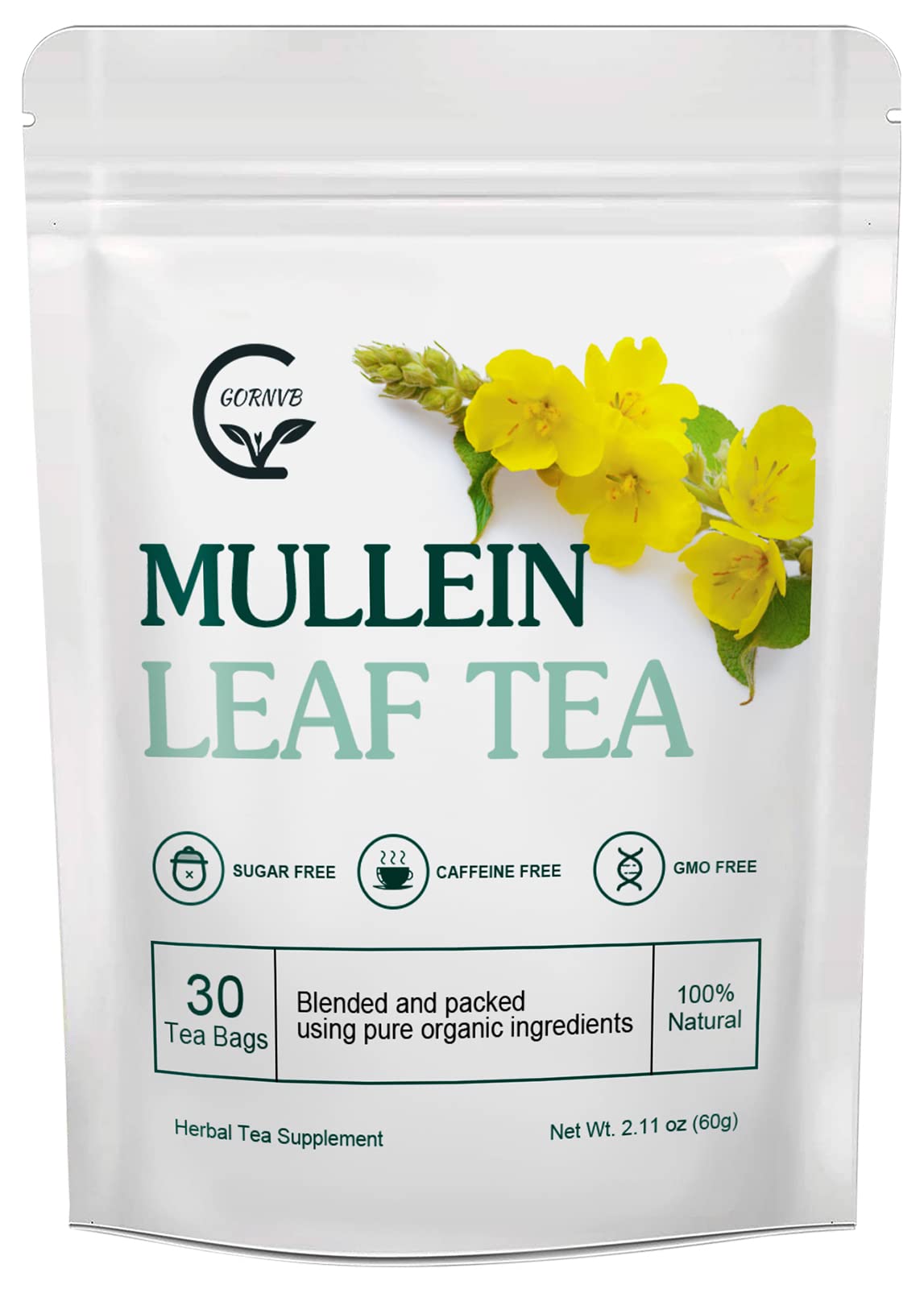
MULLEIN TEA: THE RESPIRATORY HERB WITH CENTURIES OF USE AND GROWING SCIENTIFIC SUPPORT
Mullein is one of the most recognizable wild plants in the Northern Hemisphere. The tall, woolly-leaved biennial Verbascum thapsus grows across roadsides, fields, and disturbed soils throughout North America, Europe, and Central Asia, and has been used in traditional medicine for respiratory conditions since ancient Greece. The Greek physician Dioscorides described its use for lung conditions in the first century CE, and Native American tribes across North America used mullein smoke and leaf tea for respiratory complaints long before European contact. Modern research has begun characterizing its bioactive compounds and evaluating its traditional applications, and the findings support several of its historical uses while providing a clearer picture of the mechanisms involved.
WHAT MULLEIN CONTAINS
Mullein leaves and flowers contain a range of bioactive compounds including verbascoside, a phenylethanoid glycoside with demonstrated antioxidant, anti-inflammatory, and antimicrobial activity. Saponins are present in the root and to a lesser degree the leaves, and these compounds have expectorant properties that facilitate mucus loosening and clearance from the respiratory tract. Mucilaginous polysaccharides from the leaf coat and soothe irritated mucous membranes throughout the respiratory tract. Flavonoids including luteolin, apigenin, and kaempferol contribute anti-inflammatory and antioxidant activity. The plant also contains iridoid glycosides and aucubin, a compound with hepatoprotective and anti-inflammatory properties documented in other plant species. Studies indexed through PubMed have characterized the antiviral activity of mullein extracts, finding activity against influenza and herpes simplex virus in laboratory settings.
RESPIRATORY SUPPORT: THE CORE APPLICATION
Mullein tea’s most established and historically consistent application is respiratory support, particularly for conditions involving mucus accumulation, airway inflammation, and persistent cough. The saponin content acts as a natural expectorant by stimulating the movement of mucus up and out of the lower respiratory tract, making productive coughs more effective at clearing airways without increasing airway irritation. The mucilaginous polysaccharides simultaneously coat and protect the bronchial mucosa, reducing the inflammation and tissue irritation that makes dry, unproductive coughs uncomfortable and persistent. This combination of expectorant and demulcent action addresses two distinct components of respiratory discomfort at the same time, which is why mullein tea is one of the few single-herb preparations where the mechanism is cleanly aligned with the traditional application. For athletes dealing with post-training respiratory irritation from heavy breathing in cold or polluted air, or managing a minor upper respiratory infection during a recovery week, mullein tea provides evidence-consistent support.
ANTI-INFLAMMATORY AND ANTIVIRAL PROPERTIES
Verbascoside, mullein’s primary phenolic compound, has been extensively studied for its anti-inflammatory mechanisms. It inhibits protein kinase C activity, reducing the inflammatory signaling cascade that drives tissue swelling and pain in response to infection or irritation. Laboratory studies have found that mullein extracts reduce the production of pro-inflammatory cytokines including tumor necrosis factor-alpha and interleukin-1 beta, which are central to the acute inflammatory response during respiratory infections. The antiviral activity of mullein extracts has been demonstrated against influenza virus, parainfluenza virus, and herpes simplex virus in cell culture models. The mechanism appears to involve disruption of the viral envelope rather than interference with viral replication, which is a mechanism shared with several other plant phenolic compounds. These antiviral findings are from laboratory studies rather than clinical trials, but they provide mechanistic support for the traditional use of mullein during acute respiratory infections.
EAR HEALTH AND PAIN RELIEF
Mullein flower oil, prepared by macerating dried mullein flowers in olive oil, has a documented traditional use for ear infections and ear pain that is supported by a small but notable clinical study. A comparative trial published in the Archives of Pediatrics and Adolescent Medicine found that naturopathic ear drops containing mullein flower extract were equally effective to anesthetic ear drops for reducing pain associated with acute otitis media in children. This is a remarkably specific clinical finding for an herbal preparation and represents one of the cleaner examples of a traditional application being validated in a controlled clinical setting. The anti-inflammatory properties of the flower compounds are likely responsible for the pain reduction, and the antimicrobial activity may contribute to the management of bacterial components of ear infections when the oil is applied topically. Mullein tea does not replicate this topical application but demonstrates the breadth of the plant’s bioactive profile beyond its respiratory primary use.
LYMPH SUPPORT AND TRADITIONAL SYSTEMIC USE
Traditional herbalists across North American and European traditions have used mullein for what they describe as lymphatic support, referring to its attributed ability to reduce swollen lymph nodes and support the clearance of lymphatic congestion associated with infection and inflammation. The scientific characterization of this application is less developed than the respiratory use, but the anti-inflammatory and antimicrobial properties of verbascoside and the saponin content are consistent with mechanisms that could support lymphatic drainage and reduce the inflammatory swelling in lymph nodes that accompanies acute infections. This application lacks the clinical evidence that the respiratory use has accumulated, but it is mechanistically plausible and consistent with the traditional context in which mullein was used as a general respiratory and lymphatic support herb rather than a narrow-spectrum remedy for a single condition.
HOW TO PREPARE MULLEIN TEA
Mullein tea requires careful straining after preparation because the fine hairs that cover the leaves can be mildly irritating to the throat and gastrointestinal tract if not fully removed. Steep one to two teaspoons of dried mullein leaf in hot water for ten to fifteen minutes, then strain twice through a fine mesh strainer lined with a paper coffee filter or cheesecloth to remove all leaf material and fine hairs. The resulting tea is mild and slightly earthy with a pleasant, neutral flavor that most people find easy to drink. Mullein flowers produce a gentler, more floral tea with similar but milder bioactive content than the leaves. Two to three cups daily is an appropriate consumption level for acute respiratory support. Adding honey enhances the demulcent effect and improves palatability. Mullein is generally safe for all healthy adults, with no significant known drug interactions or safety concerns at normal dietary consumption levels.
MULLEIN AND ATHLETIC RESPIRATORY HEALTH
Athletes who train outdoors in cold weather, urban environments with air quality concerns, or during seasons with high allergen loads often deal with chronic low-grade respiratory irritation that affects both training comfort and performance. The combination of expectorant, demulcent, and anti-inflammatory effects in mullein tea makes it a practical daily support option for maintaining respiratory mucosal health through demanding training periods. Two cups of mullein tea daily during high-load training blocks or during winter outdoor training provides consistent delivery of the saponin and polyphenol compounds that support airway clearance and mucosal integrity. This is not a treatment for diagnosed asthma or significant respiratory disease, which require proper medical management, but as a supportive dietary beverage for generally healthy athletes managing the normal respiratory demands of serious training, mullein tea earns its traditional reputation with a genuine evidence basis.
The historical breadth of mullein’s therapeutic use across geographically separated traditional medicine systems, from Native American practitioners to European herbalists to Ayurvedic physicians in South Asia, who used closely related Verbascum species, provides a compelling convergent validity argument for its respiratory applications. When independent cultures separated by thousands of miles independently arrive at the same plant for the same use, it suggests an observable effectiveness that preceded any scientific characterization of its mechanisms. Modern research has now provided that mechanistic characterization for the respiratory applications, and the alignment between the traditional use pattern and the pharmacological findings for saponin-mediated expectorant action and mucilaginous demulcent protection is as clean as it gets in herbal medicine. Mullein tea stands as one of the stronger examples of traditional botanical medicine being validated by the kind of systematic mechanistic and clinical investigation that bridges folk practice and evidence-based health recommendations.
Certified strength and conditioning specialists with over 10 years of combined experience in powerlifting, nutrition coaching, and evidence-based fitness content. Based in New York City, the Genghis Fitness team tests every protocol in the gym before writing about it.
If you are exploring herbal teas for health benefits, also see our guides on green tea benefits and peppermint tea — both have strong evidence bases for daily wellness use.
COMPLETE YOUR TRAINING TOOLKIT
Your health routine starts with what you drink. Your training gains start with the right equipment. Lifting straps keep grip from limiting your heaviest pulling work.
Shop Lifting Straps