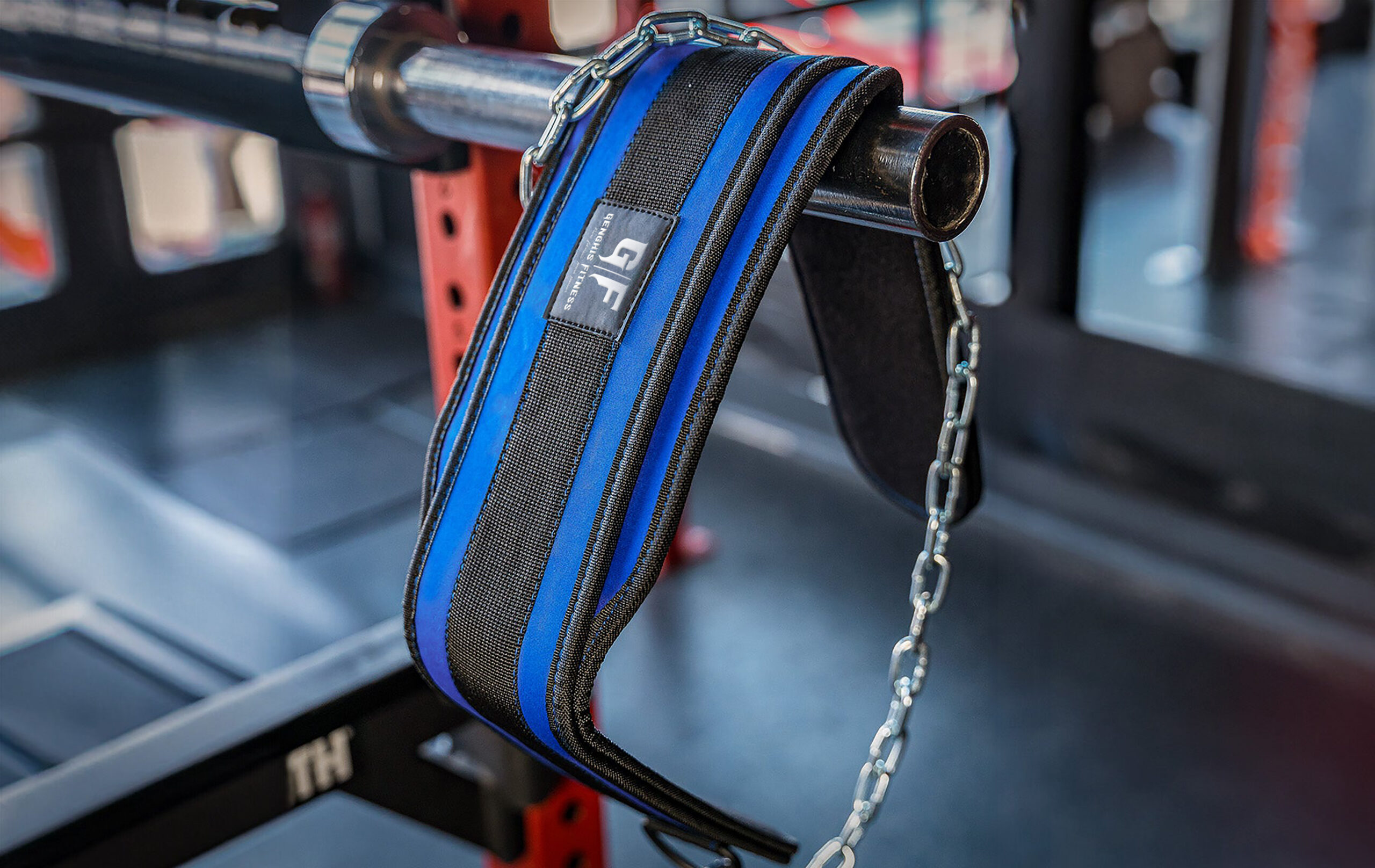
NYLON LIFTING BELT WITH CHAIN: WHAT WORKS, WHAT DOES NOT, AND WHEN TO UPGRADE
A nylon lifting belt paired with a chain loading system is one of the most versatile setups for athletes who want to use their lifting belt for both spinal support during compound barbell training and as a foundation for weighted bodyweight exercises. The nylon belt’s adjustable buckle closure allows chain attachment at various points around the belt circumference, making it a functional base for weighted dips and pull-ups in training environments where a dedicated dip belt is not available. Understanding when this combination works well, when a dedicated dip belt is the better choice, and how to use a nylon belt and chain safely for weighted exercises is what this guide covers.
HOW ATHLETES USE A NYLON BELT WITH CHAIN FOR WEIGHTED EXERCISES
Nylon belts have been used as a makeshift dip belt by attaching a chain or strap to the belt and hanging weight plates from it during weighted dip and pull-up training. The appeal is obvious: the athlete already has the nylon belt in their gym bag, and adding a chain and carabiner creates a functional weighted exercise setup without purchasing a dedicated dip belt. This approach works adequately for light to moderate weighted dip and pull-up loading in the range of 25 to 45 pounds for athletes whose nylon belt has a robust buckle mechanism and adequate webbing construction. Beyond this loading range, the structural limitations of a training belt used as a dip belt become apparent.
WHY A DEDICATED DIP BELT IS DIFFERENT FROM A MODIFIED TRAINING BELT
A dedicated dip belt with chain is specifically engineered for the dynamic loading of weighted dips and pull-ups. The hip contact surface is padded to distribute the plate weight across the iliac crest area rather than concentrating it at the belt edge. The chain attachment hardware is rated for the dynamic loading that weighted bodyweight exercises create, where the peak force during the descent and ascent can be two to three times the static plate weight. The carabiner at the chain end is selected for dynamic loading ratings rather than the static load ratings that most general hardware carabiners specify. These purpose-built design elements matter at heavy loading where the forces involved exceed what a training belt adapted as a dip belt can handle safely.
THE STRUCTURAL LIMITATION OF BELT-PLUS-CHAIN SETUPS AT HEAVY LOADING
When a nylon belt is used with a chain for weighted dips, the primary structural concern is the buckle or lever mechanism and the webbing at the attachment point where the chain is connected. Most nylon lifting belts are designed with hardware rated for the tensile loads of belt bracing, which are distributed forces applied circumferentially around the full belt perimeter. Chain loading concentrates the entire weight load at the specific point where the chain attaches to the belt, creating a concentrated tensile load that the belt hardware and webbing at that attachment point must handle alone. For loading above 45 pounds, this concentrated load can exceed what consumer-grade belt hardware is designed to withstand reliably over repeated dynamic loading cycles.
HOW TO USE A NYLON BELT WITH CHAIN SAFELY FOR LIGHT LOADING
For light to moderate weighted dip and pull-up training in the 0 to 35 pound range, using a quality nylon belt with a chain is a practical option that allows athletes to progress beyond bodyweight without purchasing a dedicated dip belt. Thread a length of chain through the belt loop or under the belt and use a rated carabiner to attach the chain ends and hang the weight plates. Keep the weight plates close to the body to minimize the swinging moment that increases dynamic loading beyond the static weight. Wrap a towel between the belt and the hip crest if the belt edge creates hip bone pressure at the plate hanging position, as the concentrated weight load at a single point creates more localized pressure than the distributed bracing force the belt is designed for.
TRAINING PROGRESSIONS SUITED TO THE NYLON BELT AND CHAIN SETUP
The training programs most suited to nylon belt plus chain weighted exercise combinations are those that progress weighted dips and pull-ups from bodyweight plus 10 pounds through bodyweight plus 35 pounds. At this loading range, with a quality nylon belt, a proper chain, and a rated carabiner, the setup provides adequate structural safety for the exercise loads involved. Research on progressive overload and upper body strength development confirms that consistent load progression on compound pressing and pulling movements is the primary driver of long-term upper body strength and development, validating the investment in a setup that allows systematic weight addition to bodyweight pulling exercises beyond what bands or vests provide in the practical training environment.
WHEN TO UPGRADE TO A DEDICATED DIP BELT
Once the progression target exceeds 45 to 50 pounds of added loading on weighted dips and pull-ups, transitioning to a dedicated dip belt with chain is the appropriate upgrade. A quality dip belt is engineered for this specific application with hip padding, attachment hardware, and chain specifications rated for the dynamic forces of heavy weighted bodyweight exercises. The transition from nylon belt to dip belt at this loading threshold is an investment in both training effectiveness and safety that the accumulated loading makes genuinely necessary rather than optional.
THE PRIMARY ROLE OF THE NYLON LIFTING BELT
The Genghis Fitness nylon lifting belt is built primarily for its primary purpose: spinal support during heavy compound barbell training where the IAP mechanism protects the lumbar spine. It excels at this application across a multi-year service life when correctly sized and actively braced against. As a secondary application, it can serve as a light-to-moderate weighted dip and pull-up belt for athletes who are still in the early progression phases of weighted bodyweight training. Pair it with knee sleeves for lower body joint support during squat and deadlift sessions and lifting straps for heavy pulling work as the primary support equipment it is designed for.
BUILDING A COMPLETE EQUIPMENT KIT FOR UPPER AND LOWER BODY TRAINING
A complete upper body and lower body training setup uses the nylon belt in its designed role for compound barbell spinal support, the dip belt for weighted dip and pull-up progressive overload, and dedicated grip assistance tools for pulling exercises where grip is the limiting variable. Each tool serves its specific design purpose rather than being adapted for applications that exceed its design parameters. This complete equipment approach is both more effective and more cost-efficient over a full training career than attempting to make any single piece of equipment serve all purposes it can be made to work in at the expense of performance and safety at heavy loading.
FINAL WORDS
Use the nylon lifting belt for what it does best: providing spinal support during squats, deadlifts, and overhead press through the IAP mechanism. Use a chain and carabiner with the nylon belt for light-to-moderate weighted dip and pull-up progression when a dedicated dip belt is not yet in the equipment kit. Upgrade to a dedicated dip belt with chain when weighted exercise loading exceeds 45 pounds and the purpose-built design of a dip belt provides meaningfully better hip contact distribution and attachment hardware ratings for the loading demands. Use the lever belt or leather belt for the heaviest compound barbell work where full-grain leather rigidity maximizes IAP and spinal protection at near-maximum loading.
Certified strength and conditioning specialists with over 10 years of experience in powerlifting, nutrition, and evidence-based fitness content. Based in New York City.
Explore the full weightlifting belt guides for lever belt comparisons, leather belt reviews, neoprene belt recommendations, sizing guides, and sport-specific belt selection across powerlifting, CrossFit, and Olympic lifting.