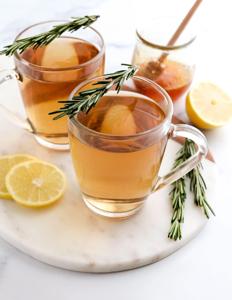
HEALTH BENEFITS OF ROSEMARY TEA: THE KITCHEN HERB THAT PUNCHES WELL ABOVE ITS WEIGHT
Rosemary is one of the most commonly grown culinary herbs across the US and Europe, recognized immediately by its distinctive pine-resin aroma and its essential role in Mediterranean cooking. What most people who grow or cook with rosemary do not realize is that the dried herb steeped as a tea concentrates its essential oil compounds and polyphenols into a bioactive beverage that has accumulated a meaningful body of research support for cognitive enhancement, anti-inflammatory effects, antimicrobial activity, and antioxidant protection. Rosemary tea is not a dramatic medicinal preparation requiring special sourcing or preparation knowledge. It is made from the same rosemary that grows in a kitchen garden or sits in a spice jar, brewed as a simple infusion that delivers its active compounds in a form your body can use.
THE BIOACTIVE COMPOUNDS IN ROSEMARY TEA
Rosemary’s bioactive profile is dominated by rosmarinic acid and carnosic acid, two of the most potent phenolic antioxidants found in any culinary herb. Rosmarinic acid inhibits complement activation, reduces leukotriene production, and scavenges reactive oxygen species with activity that exceeds vitamin E in standardized comparative assays. Carnosic acid has exceptional lipid antioxidant activity and has been specifically studied for neuroprotection against oxidative damage in neural tissue. The essential oil fraction includes 1,8-cineole, alpha-pinene, camphor, borneol, and beta-pinene, compounds with documented cognitive, respiratory, and antimicrobial effects. Ursolic acid contributes anti-inflammatory and anti-proliferative properties. Diterpene compounds including carnosol add antioxidant and anti-tumor activity to the polyphenol profile. Flavonoids including luteolin, apigenin, genkwanin, and cirsimaritin contribute additional anti-inflammatory and antioxidant effects. Studies indexed through PubMed have confirmed that rosemary compounds including rosmarinic acid and 1,8-cineole achieve systemic circulation following oral consumption, establishing the pharmacokinetic basis for evaluating rosemary tea as a functional beverage rather than purely a culinary ingredient.
COGNITIVE ENHANCEMENT: THE MOST DISTINCTIVE APPLICATION
Rosemary’s effects on cognitive performance are among its most clinically interesting attributes. The compound 1,8-cineole, present in rosemary’s essential oil and inhaled from rosemary’s characteristic aroma, inhibits acetylcholinesterase, the enzyme that degrades the neurotransmitter acetylcholine, which is critical for memory consolidation and attention. This is the same mechanism targeted by pharmaceutical Alzheimer’s medications including donepezil. A study published in Therapeutic Advances in Psychopharmacology found a direct correlation between blood concentration of 1,8-cineole and cognitive performance scores in human subjects, providing the first direct measurement of a rosemary aroma compound producing measurable cognitive effects through a dose-dependent mechanism. For oral consumption in rosemary tea, the systemic 1,8-cineole delivered from the essential oil fraction supports the same acetylcholinesterase inhibition systemically. Several studies examining rosemary extract as a cognitive supplement have found improvements in memory speed and accuracy, and while rosemary tea delivers lower concentrations than standardized extracts, daily consumption contributes to the broader dietary environment supporting cognitive health.
ANTI-INFLAMMATORY AND ANTIOXIDANT EFFECTS
Rosemary’s anti-inflammatory mechanisms operate through multiple parallel pathways that together produce a more comprehensive anti-inflammatory effect than compounds targeting single pathways. Carnosol inhibits NF-kB activation, reducing the transcription of inflammatory genes. Rosmarinic acid inhibits complement activation and 5-lipoxygenase, reducing leukotriene production. Ursolic acid suppresses COX-2 expression and reduces prostaglandin synthesis. These mechanisms address different branches of the inflammatory cascade simultaneously, which is why rosemary-derived extracts have been investigated for a wide range of inflammatory conditions. For athletes dealing with training-induced inflammation that accumulates across heavy training weeks, rosemary tea provides a daily dietary anti-inflammatory contribution through this multi-pathway mechanism. The antioxidant activity from the rosmarinic acid and carnosic acid fraction adds protection against oxidative damage during and after training sessions when reactive oxygen species production peaks.
ANTIMICROBIAL PROPERTIES
Rosemary essential oil and its isolated compounds demonstrate broad antimicrobial activity against bacteria and fungi in laboratory settings. 1,8-Cineole, alpha-pinene, and camphor all contribute antimicrobial effects through membrane-disrupting mechanisms. Rosemary shows activity against Staphylococcus aureus, E. coli, Salmonella species, Listeria monocytogenes, and Candida albicans in vitro. The oral cavity concentrations achievable from rosemary tea consumption are relevant for oral health applications, and gargling with rosemary tea has been studied as a natural alternative to conventional antiseptic mouthwash. A study comparing rosemary extract mouthwash to chlorhexidine, the standard pharmaceutical antiseptic mouthwash, found comparable reductions in total oral bacterial counts, suggesting that rosemary tea as a regular beverage may contribute meaningfully to oral microbiome management.
CIRCULATORY AND DIGESTIVE BENEFITS
Rosemary has a traditional use across Mediterranean herbal medicine for improving circulation, and some research supports a mechanism for this application. Several rosemary compounds have mild vasodilatory effects and have been found to improve peripheral blood flow in animal models. The improvement in circulation has practical implications for muscle function and recovery in athletes, and for the cognitive benefits where cerebral blood flow is a key determinant of neurological performance. The bitter compounds in rosemary stimulate digestive enzyme production and have mild carminative effects that reduce bloating and improve gut motility. Traditional use of rosemary in Mediterranean cooking, where it appears in virtually every savory preparation, reflects an intuitive understanding of its digestive benefits that modern research has begun to document mechanistically.
HOW TO PREPARE ROSEMARY TEA AND INCORPORATE IT DAILY
Rosemary tea is made by steeping one to two fresh rosemary sprigs or one teaspoon of dried rosemary in hot water at 90 degrees Celsius for five to seven minutes. Over-steeping produces a strongly astringent, somewhat medicinal flavor. The correctly steeped tea has a pleasant pine-herb aroma with a clean, slightly resinous, and warming flavor that most people find immediately agreeable. Adding lemon juice brightens the flavor and adds its own vitamin C and polyphenol contribution. Rosemary pairs particularly well with a slice of fresh ginger in the cup for a warming, anti-inflammatory blend with complementary mechanisms. Two to three cups daily is appropriate for most healthy adults and is safe for long-term consumption at this level. Rosemary tea is generally very well tolerated, with no significant known drug interactions at dietary consumption levels. The one caution is for pregnant women, for whom large medicinal quantities of rosemary are traditionally avoided due to its historical use as an emmenagogue at high doses, though culinary amounts in food and in one to two cups of tea daily are generally considered safe. Growing rosemary at home for tea use is straightforward in most US and European climates, making fresh-herb rosemary tea the most accessible and most flavorful option for daily preparation.
ROSEMARY TEA FOR ATHLETES AND ACTIVE ADULTS
For athletes, rosemary tea’s most practically relevant benefits are the anti-inflammatory and antioxidant contributions to recovery, the cognitive enhancement dimension relevant to focus and competition performance, and the circulatory support that affects both muscle function and mental performance. The rosmarinic acid and carnosic acid antioxidants address the exercise-induced oxidative stress that accumulates across heavy training weeks, and the multi-pathway anti-inflammatory action reduces the chronic training-related inflammation that, left unmanaged, impairs recovery between sessions and undermines adaptation over time. The cognitive effects are particularly relevant for sports with high tactical, attentional, or decision-making demands, where the acetylcholinesterase inhibition from 1,8-cineole may contribute to sharper focus and faster information processing during training and competition. Pre-training rosemary tea consumption is supported by this cognitive mechanism, and the circulation-enhancing properties may additionally improve warm-up efficiency and the delivery of nutrients and oxygen to working muscles from the first set of a training session.
Certified strength and conditioning specialists with over 10 years of combined experience in powerlifting, nutrition coaching, and evidence-based fitness content. Based in New York City, the Genghis Fitness team tests every protocol in the gym before writing about it.
If you are exploring herbal teas for health benefits, also see our guides on green tea benefits and peppermint tea — both have strong evidence bases for daily wellness use.
COMPLETE YOUR TRAINING TOOLKIT
Your health routine starts with what you drink. Your training gains start with the right equipment. Lifting straps keep grip from limiting your heaviest pulling work.
Shop Lifting Straps