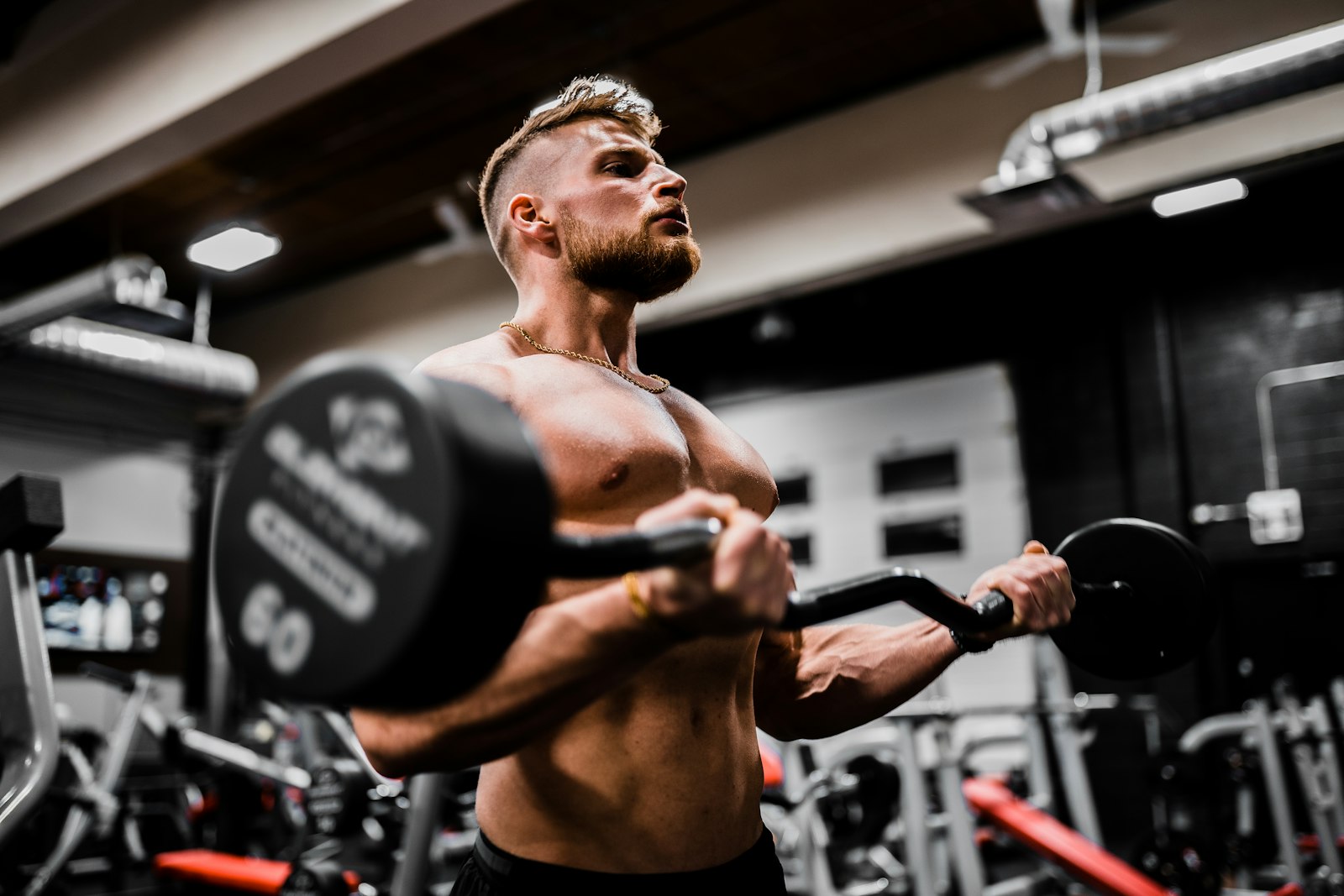
SPIDER CURLS: THE BICEP ISOLATION EXERCISE THAT ELIMINATES CHEAT AND MAXIMIZES PEAK CONTRACTION
What Makes Spider Curls Different From Every Other Curl Variation
Spider curls are performed lying face-down on an incline bench, with the upper arms hanging straight down from the shoulders perpendicular to the floor. The barbell or dumbbells are curled from full extension to full contraction in this position, with the upper arms remaining stationary throughout. This position accomplishes two things that standard standing curls cannot: it completely eliminates the ability to use body swing or shoulder elevation to assist the curl, and it keeps the bicep in a shortened position at the peak contraction that produces maximum bicep tension at the top of the movement. The result is a curl that is harder, more isolated, and more productive for peak bicep development than standard curls at equivalent loads. Research in the Journal of Strength and Conditioning Research confirmed that controlled isolation exercises through full range of motion with peak contraction produce superior hypertrophy outcomes compared to momentum-assisted heavier loading. Spider curls apply this principle in one of the most mechanically advantageous positions available for bicep training. For athletes who want to maximize bicep peak development, spider curls belong in every arm training session alongside heavier compound curling work. Pair with an arm blaster for standing curls to cover both strict isolation formats in the same session.
How to Set Up and Perform Spider Curls
The Setup
Set an adjustable bench to roughly 30 to 45 degrees incline. Lie face-down on the bench with your chest on the upper pad, upper arms hanging straight down from the shoulders, and feet hooked on the bench support or braced on the floor behind you. The face-down position means the upper arms hang vertically due to gravity, perpendicular to the floor. This is the fundamental position that creates the exercise. Pick up the barbell or dumbbells from underneath with a supinated grip, arms fully extended.
The Curl
Curl the weight toward the shoulders by bending at the elbow, keeping the upper arms completely stationary and perpendicular to the floor throughout. Do not allow the elbows to swing backward or the shoulders to shrug at the top. The bicep is fully shortened at peak contraction in this position, which is where maximum mechanical tension on the muscle occurs. Squeeze hard at the top for one full second before lowering slowly over three to four seconds. The slow eccentric, where the bicep is being lengthened under load, is where a significant portion of the hypertrophy stimulus is generated.
Weight Selection
Start with a weight approximately 20 to 30 percent lighter than your standard barbell curl weight. The spider curl position eliminates every form of assistance that standard curls allow, making the effective difficulty significantly higher than the absolute weight suggests. Strict spider curls with 40 pounds are a more demanding bicep exercise than sloppy standing barbell curls with 60 pounds, and they produce more direct bicep stimulus per rep. Prioritize quality over load in this exercise.
Why the Face-Down Position Produces Superior Peak Contraction
In a standard standing curl, the bicep reaches its shortest position, and therefore its highest level of mechanical tension, at approximately 90 degrees of elbow flexion. Beyond 90 degrees, the moment arm of the load relative to the elbow joint decreases and the effective resistance reduces. This means the final range of motion in a standing curl, from 90 degrees to full contraction, provides less resistance than the midpoint of the movement. In the spider curl position, the changing relationship between the load direction and the upper arm angle means the mechanical tension remains higher through the top of the movement than in a standing curl. This produces the intense top-of-the-movement bicep contraction that makes spider curls feel harder at the top than at the midpoint, which is the opposite of what most curl variations feel like.
Spider Curls vs Preacher Curls: Understanding the Difference
Both spider curls and preacher curls are performed with the upper arm supported against a pad and the torso inclined forward. The critical difference is the upper arm angle. In a preacher curl, the upper arm rests against a forward-angled pad, which means the bicep is in a lengthened position throughout most of the movement and is most challenged at the bottom. In a spider curl, the upper arm hangs straight down, which means the bicep reaches maximum tension at the top of the movement. These different loading profiles make the two exercises complementary: preacher curls build the stretched position of the bicep while spider curls build the peak contraction. Including both in an arm program provides more comprehensive bicep stimulus than either alone. The arm blaster provides a third variation that locks the elbows at a neutral angle and is best used for the heaviest strict curl loading in any arm session.
Programming Spider Curls
Spider curls are most effective as a secondary or tertiary exercise in an arm training session, performed after heavier compound curling movements like barbell curls or hammer curls. Three to four sets of 10 to 15 reps at a controlled tempo, with a one to two second squeeze at full contraction, is the standard spider curl protocol. Twice per week in an arm program or once per week as a single arm day finisher provides the volume and frequency needed for meaningful bicep peak development without overloading the relatively small bicep muscle group.
For athletes who want to add arm specialization, alternating between arm blaster barbell curls and spider curls in the same session covers both the strict standing isolation that the arm blaster provides and the top-position peak contraction that spider curls uniquely deliver. Three sets of each, performed back to back as a superset with 90 seconds of rest between rounds, constitutes a complete bicep session that trains the muscle through its full range of mechanical tension variation. Add wrist wraps on the arm blaster sets if wrist extension under load is a limiting factor in your curl strength.
Why Spider Curls Build a Better Bicep Peak Than Standard Curls
The bicep peak, the high point of the muscle belly visible when the arm is flexed, is determined primarily by the length and thickness of the bicep short head, which attaches closer to the shoulder and creates the visible peak when contracted. Spider curls specifically load the bicep at the shortened position where both heads are simultaneously fully contracted, which is exactly the mechanical condition that produces the dense, high-quality muscle tissue in the peak position. Most curl variations either load the bicep maximally at mid-range or at the bottom stretch position, leaving the peak contraction position under-stimulated. Consistent spider curl training fills this gap and produces visible improvements in bicep peak height within eight to twelve weeks of three sessions per week. This is why competitive bodybuilders who have developed impressive bicep peaks almost universally include a peak-contraction curl variation like spider curls, concentration curls, or cable curls in their arm training alongside the heavier compound curling movements that build overall mass.
For the most comprehensive bicep training approach, combine spider curls for peak contraction stimulus with incline dumbbell curls for the stretched position stimulus that spider curls lack. The incline dumbbell curl, performed lying back on a 45-degree incline bench, places the bicep in a fully lengthened position at the bottom of each rep, creating a powerful stretch reflex that loads the muscle at length. Alternating between these two extreme position curls within the same arm session produces the complete range of mechanical loading that builds both the thickness and the peak height of the bicep simultaneously. Add the arm blaster for the standing barbell curl that anchors the elbows and provides the heaviest strict loading in any arm session, and you have the complete three-variation arm training system that covers every aspect of bicep development.
FINAL WORDS
Spider curls are not a beginner exercise. They are a precision tool for athletes who have mastered basic curl mechanics and want to specifically develop bicep peak and top-contraction strength that standard curls cannot produce as effectively. Add them to every arm session, use strict form and controlled tempo rather than chasing load, squeeze hard at the top of every rep, and experience the bicep peak development that eliminating every source of assistance from your curls actually produces. Combine with arm blaster curls for a complete bicep isolation system that builds size and peak definition from every mechanical angle.
Certified strength and conditioning specialists with over 10 years of experience in powerlifting, nutrition, and evidence-based fitness content. Based in New York City.