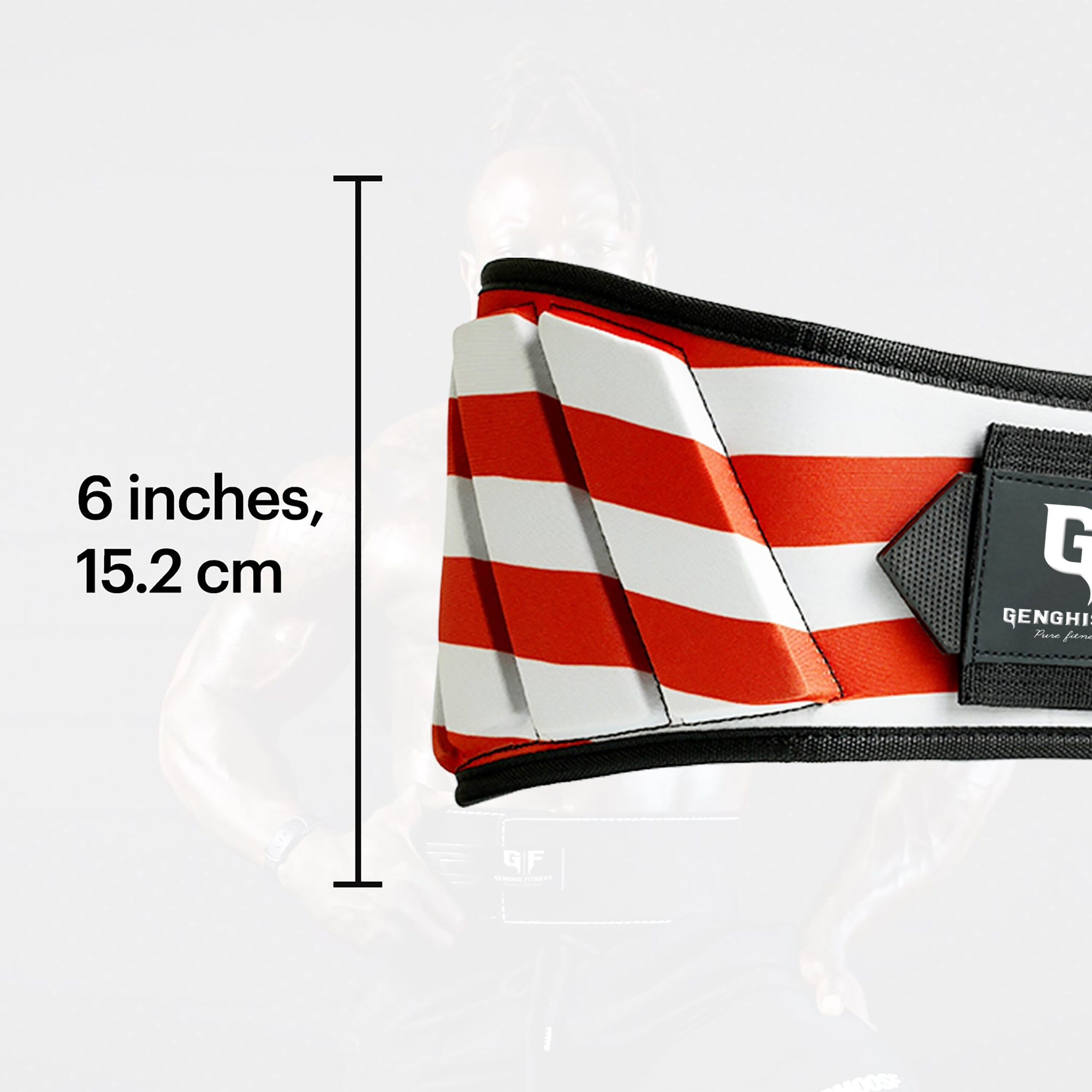
STORING A NYLON LIFTING BELT: HOW TO KEEP IT CLEAN, MAINTAIN CLOSURE STRENGTH, AND MAKE IT LAST
Why How You Store Your Belt Matters More Than You Think
A quality nylon lifting belt is a daily training tool that takes on sweat, chalk, bar knurling contact, and repeated tension loading every session. How you treat it between sessions determines whether it performs at full capacity for two to four years or starts losing closure strength and structural integrity within months. The most common causes of premature nylon belt failure are all storage and maintenance related: Velcro closures clogged with chalk and debris, nylon fibers degraded by persistent moisture, buckle mechanisms corroded by sweat salts, and permanent deformation of the belt shape from improper storage positions. All of these are preventable with simple habits that take two minutes after each session.
This is not overthinking gym gear maintenance. It is protecting an investment that directly supports your spinal health under heavy loads. A belt whose Velcro closure holds 80 percent as securely as it once did because of embedded chalk debris is not providing 80 percent of the support it should. It is providing an unknown, unreliable amount that you are trusting during your heaviest sets. Proper storage and maintenance removes that uncertainty entirely.
Cleaning Your Nylon Belt Before Storage
After Every Session
After each training session, wipe the entire belt surface, both inner and outer faces, with a dry cloth or paper towel to remove chalk, loose debris, and surface sweat. Pay particular attention to the Velcro closure strips. Any chalk or gym dust embedded in the Velcro hooks or loops reduces the holding strength of the closure significantly over time. A stiff-bristled brush, an old toothbrush works perfectly, used across the Velcro surface in short strokes dislodges embedded particles that a cloth alone cannot remove.
Deep Cleaning Every Two to Three Weeks
Fill a basin with cold water and add a small amount of mild liquid detergent. Submerge the belt and agitate gently by hand for 30 to 60 seconds, working the soapy water through the nylon fibers. Do not scrub aggressively, which can fray the nylon surface and stress the stitching at high-load points. Rinse thoroughly under cold running water until no soap remains, then press excess water out gently without wringing or twisting the belt. Lay flat on a clean towel and allow to air dry completely, typically four to six hours, before storing or using again.
Never put a nylon lifting belt in a washing machine. The agitation cycle puts stress on the stitching, the buckle hardware, and the Velcro attachment points that accumulates into premature failure. Never put it in a dryer. Heat degrades nylon fibers and causes Velcro to lose its hook and loop engagement permanently. Cold water hand washing is the only cleaning method that preserves all belt components across years of regular use.
The Right Way to Store a Nylon Lifting Belt
Flat Storage
Storing the belt completely flat, either on a shelf or in a wide, flat drawer with nothing heavy on top of it, is the best option for maintaining its shape and preventing buckle or closure stress. A nylon belt stored flat retains its original dimensions and closure alignment indefinitely. If you have a dedicated gear shelf or wall-mounted organizer for training equipment, a flat hanging position, such as draped over a horizontal rod, is equally good and keeps the belt visible so it does not get forgotten under other equipment.
Loose Loop Storage
If flat storage space is not available, loosely loop the belt into a circle and place it upright in a bin or gym bag pocket. The loop should be large enough that the belt is not under any tension at any point around the circumference. A tight loop maintained for days at a time creases the nylon at the fold points and eventually causes the material to develop permanent stiff spots that affect how the belt sits on the torso during training. Loose and relaxed is the target.
What to Avoid Completely
Never store a nylon belt coiled tightly and secured with a rubber band or strap. Never fold it in half and store it under heavy equipment. Never leave it balled up in a gym bag for more than a day between sessions. Never store it in a hot car, in direct sunlight through a window, or near a radiator or heating vent. Nylon degrades measurably faster under UV exposure and elevated temperatures, and a car dashboard in summer can reach temperatures that permanently damage both the nylon and any plastic buckle components on the belt.
Caring for the Closure System
Velcro Maintenance
Velcro closures are the most maintenance-sensitive component of a nylon belt. The hook side of Velcro, the scratchy side, traps chalk, lint, hair, and gym debris with every use. As these particles accumulate, the hooks cannot penetrate the loop side deeply enough to create a secure bond, and closure strength drops progressively. Clean the hook side with a stiff brush after every session and perform a deeper pick-clean with a pin or toothpick monthly to remove embedded particles the brush cannot reach. The loop side of Velcro, the soft side, should be kept closed against the hook side whenever the belt is not in use to prevent lint accumulation in the loops.
Buckle and Ratchet Maintenance
If your nylon belt uses a metal buckle or ratchet closure rather than Velcro, wipe the hardware down after each session with a dry cloth to prevent sweat salt corrosion on the metal components. A small amount of silicone spray lubricant applied to the ratchet mechanism every two to three months keeps it operating smoothly and prevents the stiff, grinding action that develops when sweat residue accumulates in the mechanism. Check that all rivets securing the buckle to the belt webbing are tight and flush. Any loose rivet is a structural failure point that needs addressing before the next heavy session.
Inspecting Your Belt for Wear Before Each Session
Before every training session, take ten seconds to inspect your belt. Check the stitching along the edges and at all high-stress points, particularly where the closure attaches to the belt body and where the inner lining meets the outer shell if your belt has a layered construction. Any fraying or thread separation at these points needs to be repaired or the belt replaced before it is loaded. Check that the closure holds firmly when you pull the two ends apart with both hands at the force you would expect during a heavy brace. If the Velcro releases before you apply serious force, the closure needs cleaning or the belt needs replacing. A belt that fails under a 400-pound squat is a far bigger problem than the cost of replacing it preemptively. Pair a reliable belt with knee sleeves and wrist wraps for a complete support system that you inspect and maintain with the same discipline.
When to Replace Your Nylon Lifting Belt
Signs that a nylon belt has reached the end of its useful life include: persistent odor that does not resolve after thorough washing, indicating bacterial colonization in the nylon fibers; visible fraying or surface pilling across more than a small area of the belt face; Velcro closure that will not hold securely even after thorough cleaning; buckle or ratchet mechanisms that slip or do not lock reliably; and any visible separation of layers in a multi-layer belt construction. When these signs appear, continued use under heavy training loads creates real safety risk. A fresh belt from a quality manufacturer is a small investment compared to the consequences of a closure failure under a heavy barbell.
FINAL WORDS
A nylon lifting belt is one of the most used pieces of equipment in a serious athlete’s kit. Treat it accordingly. Wipe it down after every session, deep clean it monthly, store it flat or loosely looped away from heat and sunlight, keep the closure system clear and functional, and inspect it before every heavy session. These habits extend the lifespan of a quality Genghis Fitness nylon lifting belt from one year to three or four, and ensure it performs at full specification every time you trust it under load.
Certified strength and conditioning specialists with over 10 years of experience in powerlifting, nutrition, and evidence-based fitness content. Based in New York City.
TRAIN WITH EQUIPMENT THAT MATCHES YOUR EFFORT
Serious strength training demands serious gear. A lever belt, quality straps, and knee sleeves are not accessories. They are tools.
10mm Lever Belt Lifting StrapsThis guide is part of the Genghis Fitness weightlifting belt guides, where 167 articles cover every belt type, training use case, and buying decision from beginner to competition level.