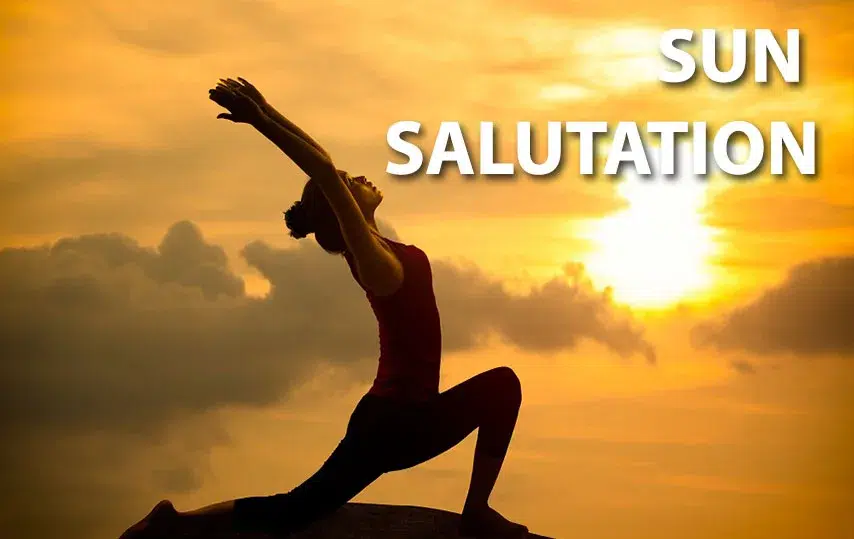
SUN SALUTATION FOR ATHLETES: THE FULL BODY WARM-UP THAT ACTUALLY PREPARES YOU TO TRAIN
Sun salutation, known in Sanskrit as Surya Namaskar, is a sequence of 12 yoga poses performed in flowing succession that moves the spine through full flexion and extension, opens the hip flexors and hamstrings, loads the shoulder girdle, and builds body heat and cardiovascular preparation simultaneously. For athletes who often rush through warm-ups with a few minutes of light cardio and call it done, a properly executed sun salutation sequence offers something fundamentally different: a systematic, full-body preparation protocol that addresses the specific movement restrictions and joint stiffness that accumulate between training sessions. This guide teaches the sequence and explains why each component matters for performance.
WHY SUN SALUTATIONS WORK AS AN ATHLETIC WARM-UP
A quality athletic warm-up should accomplish several things: raise core temperature, increase joint range of motion, activate the neuromuscular patterns relevant to the training session ahead, and shift the nervous system toward readiness without creating fatigue that impairs the session itself. Sun salutations accomplish all of these through a sequence that moves every major joint through a meaningful range of motion in a flowing, breath-connected pattern that builds body heat within the first two rounds and creates a genuine state of physical readiness within five rounds. Research comparing yoga-based warm-ups to traditional warm-up protocols found that yoga sequences produced equivalent cardiovascular preparation with superior flexibility and mobility outcomes compared to static stretching and light cardio warm-ups.
THE 12 POSES OF SUN SALUTATION: WHAT EACH ONE DOES
POSE 1: MOUNTAIN POSE (TADASANA)
Stand at the top of your mat with feet together or hip-width apart, arms at your sides, spine tall. This is the grounding position. Take a full breath in and set your attention. It sounds simple, but deliberately arriving in a still, tall, aware standing position before training begins is a neurological reset that shifts focus from whatever preceded the session to what is about to happen. Stand with feet rooted, spine long, shoulders back and down, the same postural standard that applies to every loaded standing exercise in your training.
POSE 2: UPWARD SALUTE (URDHVA HASTASANA)
Inhale and sweep the arms overhead, pressing the palms together and gazing upward slightly. This overhead reach lengthens the lateral torso, activates the serratus anterior and lower trapezius, and opens the thoracic spine into extension. For athletes whose thoracic mobility is restricted from heavy pressing and rowing, this overhead reach at the start of every sun salutation begins the process of restoring the extension range that loaded training compresses.
POSE 3: STANDING FORWARD FOLD (UTTANASANA)
Exhale and fold forward from the hips, bringing the hands toward the floor. Bend the knees as much as needed to maintain a long spine rather than rounding to reach further. This position begins the hamstring and lower back lengthening that is critical for athletes whose posterior chain tightness limits both squat depth and deadlift starting position. Research on standing forward fold mechanics confirms meaningful hamstring and lumbar erector lengthening in this position when held with a neutral spine, making it a valuable component of any posterior chain preparation protocol.
POSE 4: HALFWAY LIFT (ARDHA UTTANASANA)
Inhale and lift the torso halfway, bringing the spine parallel to the floor with hands on the shins or fingertips on the floor. This flat-back position activates the spinal erectors and teaches the hip hinge pattern that is foundational to every deadlift variation. Use it consciously as a hip hinge reinforcement: push the floor away with the feet, lengthen through the crown of the head, feel the hamstrings engage as they resist the hip hinge. This is your deadlift prep embedded in the sun salutation sequence.
POSES 5 TO 8: PLANK, LOW PLANK, COBRA, DOWNWARD DOG
Exhale and step or jump back to a high plank position, then lower to a low plank (Chaturanga) with elbows at 45 degrees from the torso. Inhale into cobra or upward-facing dog, pressing through the hands and opening the chest. Exhale and push back to downward-facing dog. This four-pose sequence in the middle of the salutation is the upper body and spinal mobility core of the sequence. The plank and Chaturanga load the shoulder girdle, triceps, and anterior core. The cobra or upward dog opens the thoracic spine into extension and stretches the hip flexors as the pelvis drops toward the floor. The downward dog lengthens the entire posterior chain from wrists to heels and loads the shoulder in a weight-bearing position that builds rotator cuff endurance.
Athletes who use wrist wraps for heavy pressing will benefit from the wrist loading in plank and downward dog as a maintenance exercise for wrist joint health and the hand and forearm strength that supports pressing performance. Take these four poses with full attention to alignment rather than rushing through them as transitions.
POSES 9 TO 12: RETURN TO STANDING
From downward dog, step or jump the feet toward the hands, returning to the halfway lift on the inhale, then folding forward on the exhale, then sweeping back up to upward salute on the inhale, and returning to mountain pose on the exhale. The return sequence mirrors the opening of the salutation and closes the circle of the movement. Each full round takes approximately 30 to 45 seconds when performed at a breath-connected pace, meaning five rounds takes three to four minutes and ten rounds takes six to eight minutes.
HOW MANY ROUNDS TO PERFORM BEFORE TRAINING
For a pre-training warm-up, 5 to 10 rounds of sun salutation is appropriate depending on training session intensity and the time available. Five rounds raises body temperature, increases joint range of motion, and activates the major muscle groups without creating meaningful fatigue. Ten rounds provides a more thorough warm-up that is appropriate before a heavy strength session or a demanding metabolic conditioning workout. The first two rounds are typically slower and more exploratory as the body responds to the movement demands. Rounds three through five build the heat and rhythm that make the sequence feel genuinely athletic. If you train with knee sleeves for lower body work, apply them after completing your sun salutation rounds so the joint is already warm before you add the compression.
MODIFICATIONS FOR STRENGTH ATHLETES WITH MOBILITY LIMITATIONS
Athletes with significant hamstring tightness should keep the knees generously bent in forward folds for the first several weeks of practice rather than straining for straight legs with a rounded back. A rounded lumbar spine in forward fold provides no posterior chain benefit and creates spinal flexion stress that is counterproductive as a warm-up. Athletes with shoulder limitations can replace Chaturanga with a modified low plank that lowers only partway rather than to a full low position. Athletes with wrist discomfort can perform plank and downward dog on fists or on the forearms rather than flat palms. The sequence accommodates modification without losing its primary warm-up value.
For athletes recovering from lower body injuries who are using tools like hip circle bands for rehabilitation activation work, sun salutations can be modified to reduce or eliminate the step-back to plank component, focusing the sequence on the standing and forward-fold poses that deliver spinal and hamstring mobility without the loaded shoulder and hip flexor demands of the plank phases.
BUILDING SUN SALUTATION INTO YOUR WEEKLY ROUTINE
The most effective way to integrate sun salutations into an athletic training schedule is to use them as the opening sequence of every training session, replacing whatever abbreviated warm-up you currently do. Five rounds before every lifting session takes three to four minutes and consistently delivers better mobility, joint temperature, and movement quality going into the first working set than any amount of stationary bike or arm circles. Over eight to twelve weeks of consistent daily practice, the cumulative mobility and movement quality improvements compound into better lifting mechanics, fewer soft-tissue complaints, and a pre-training ritual that creates genuine mental and physical readiness for hard work.
FINAL WORDS
Sun salutation is not a yoga ritual that sits outside athletic training. It is a systematically designed full-body warm-up sequence that addresses thoracic mobility, hamstring flexibility, hip flexor opening, shoulder stability, and spinal health in a single flowing protocol that takes less time than most athletes spend dawdling at the start of a session. Five rounds before every training session, ten before your hardest sessions. Learn the sequence, perform it with attention to the alignment cues in each pose, and give it six weeks of consistent morning or pre-session practice. The improvement in how you move through your first working set will be the argument that keeps you doing it indefinitely.
Certified strength and conditioning specialists with over 10 years of experience in powerlifting, nutrition, and evidence-based fitness content. Based in New York City.