WEIGHTLIFTING BELT EXERCISES: THE COMPLETE LIST OF MOVEMENTS THAT ACTUALLY BENEFIT FROM BELT SUPPORT
Not every exercise in the gym benefits from a weightlifting belt. Using a belt on the wrong movements gives you nothing except a false sense of protection and a dependency that undercuts the belt’s effectiveness where it actually matters. Using it on the right movements, at the right loads, consistently and correctly, reduces injury risk, allows higher training loads, and extends the productive lifespan of your training career. This guide covers every exercise category where a weightlifting belt belongs, explains why the mechanism works for each one, and clarifies the exercises where leaving the belt in the bag is the correct call.
PRIMARY BELT EXERCISES: MAXIMUM LUMBAR LOADING
BACK SQUAT
The back squat is the single highest-demand exercise for belt use. The combination of axial spinal loading from the barbell, the compressive forces generated through the descent, and the moment arm demands at the bottom position where the lumbar is most vulnerable make this the movement where belt support provides the most direct protective benefit. Use your belt on all working sets above 75 percent of your max on this movement. The intra-abdominal pressure your belt amplifies directly reduces the disc compression forces that accumulate with years of heavy beltless squatting.
CONVENTIONAL AND SUMO DEADLIFT
Heavy deadlifts are the other primary use case. The hip hinge pattern loads the lumbar extensors maximally at the start of the pull, exactly where disc injury risk peaks. Belt use on heavy conventional and sumo deadlift working sets is standard practice across competitive powerlifting in the US and internationally for good reason. The belt’s pressure support is most critical in the first half of the pull where the bar is traveling from the floor and the lumbar spine is under maximum shear force. Research on spinal loading during heavy deadlifts, cited through PubMed, supports belt use at competition-level loads as a meaningful injury prevention strategy.
OVERHEAD PRESS AND PUSH PRESS
Heavy standing overhead pressing loads the lumbar spine through extension forces as the lifter manages the moment arm of the load in front of their center of gravity. At heavy loads, particularly on push press where leg drive creates a rapid load transfer to the upper body, the lumbar stabilizers work hard to maintain a neutral spine position through the entire lift. Belt support on heavy overhead work reduces the lower back fatigue that accumulates across high-volume pressing sessions and allows more productive training at the upper range of pressing capacity.
SECONDARY BELT EXERCISES: HIGH BENEFIT AT HEAVY LOADS
ROMANIAN DEADLIFT
The Romanian deadlift maintains tension on the hamstrings and posterior chain through a controlled hip hinge without the bar touching the floor between reps. At heavy loads, the sustained eccentric loading of the lumbar extensors through the bottom portion of the movement is demanding enough to warrant belt use. Use it on working sets of RDLs above 70 percent of your conventional deadlift max, particularly on high-rep sets of 8 or more where lumbar fatigue accumulates across the set.
BARBELL ROW
Heavy barbell rows, Pendlay rows, and Yates rows all require a hip hinge position that loads the lumbar extensors isometrically while the upper back does the pulling work. At heavy loads, particularly on rows where the torso is near parallel to the floor, the sustained isometric demand on the lower back across multiple sets accumulates meaningful lumbar stress. Belt use on your heaviest row sets is a sensible protective measure that does not affect the upper back stimulus the movement is designed to deliver. Pair heavy rows with leather lifting straps so grip never limits the load before your back does.
FRONT SQUAT
Front squats load the upper back and require a more upright torso than back squats, which slightly reduces the lumbar moment arm compared to a low-bar back squat. At heavy loads, however, the axial compressive forces through the spine are still significant and belt use on heavy front squat working sets provides the same intra-abdominal pressure benefit. Some athletes find that the upright torso position of a front squat makes the belt feel more comfortable than in a low-bar back squat, since the belt does not need to accommodate the forward lean that can make lower-back belt contact feel more pronounced.
GOOD MORNINGS
Good mornings are a low-bar hip hinge performed with a barbell on the back and are one of the highest lumbar-loading exercises in the gym when performed at serious weights. The moment arm created by the barbell as the torso descends toward parallel is substantial, and the lumbar extensors work at their most mechanically disadvantaged position throughout the movement. Belt use on all working sets of good mornings is not optional for athletes training this movement at meaningful loads.
EXERCISES WHERE A BELT PROVIDES LITTLE OR NO BENEFIT
Bench press, incline press, and all horizontal pressing movements performed lying on a bench do not benefit from a weightlifting belt because the lumbar spine is not under primary axial loading. The bench provides the spinal support. Wearing a belt on bench press is a habit, not a performance tool.
Leg press, hack squat machine, and similar machine-based leg movements distribute loading through the machine frame rather than the spine. Belt use here provides no meaningful benefit. Isolation exercises including curls, extensions, flies, and all cable work similarly do not load the lumbar in ways that a belt can address. Use the belt on the movements that genuinely demand it and leave it off everywhere else. That is how it works best.
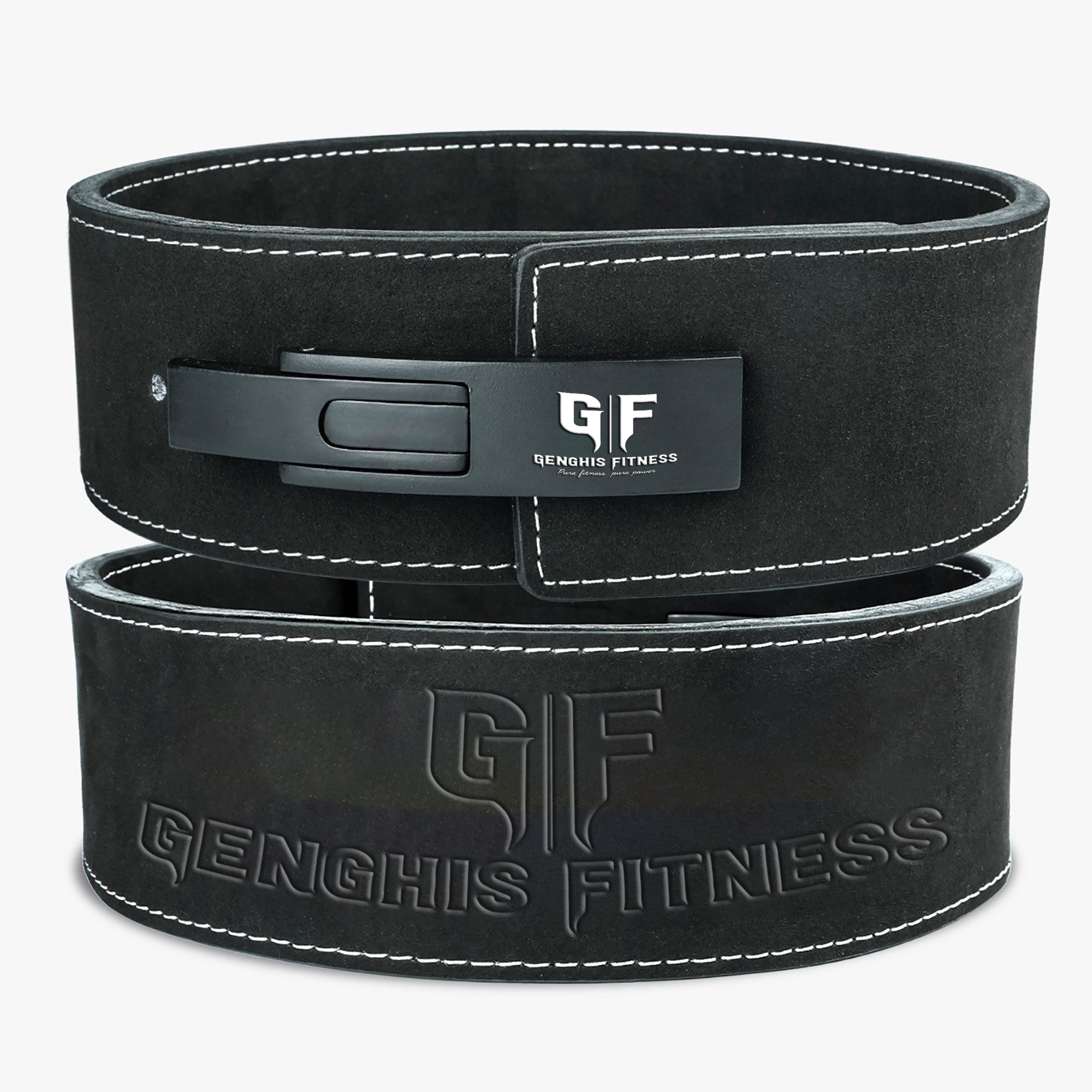
Build your belt kit with the right options for your training. Our powerlifting leather belt for maximum squat and deadlift support, our neoprene weightlifting belt for versatile training across mixed movement sessions, and our 10mm lever belt for competition-focused athletes who want identical tension on every working set without exception.
PROGRAMMING BELT USE ACROSS A TRAINING WEEK
A practical system for belt use across a typical strength training week looks like this. On squat days, belt goes on for all working sets at or above 75 percent of max on back squats and front squats. Warm-up sets below that threshold are beltless. On deadlift days, belt goes on for heavy conventional and sumo deadlift working sets, heavy RDLs, and heavy barbell rows. Light accessory pulling work is beltless. On pressing days, belt goes on for heavy standing overhead press working sets. All horizontal pressing is beltless. Any conditioning, accessory, or isolation work throughout the week is beltless regardless of the exercise.
This system keeps the belt as a purposeful tool deployed on the specific movements and intensities where it earns its place, while leaving enough beltless training in the program to ensure core strength continues developing independently. Athletes who implement this approach report that their beltless squat and deadlift strength also improves over time, because the combination of high-load belted work and moderate-load beltless work builds both the protected strength ceiling and the unassisted baseline simultaneously.
One final note on belt use across different training modalities. Athletes who combine powerlifting with Olympic lifting, CrossFit, or strongman training may find that the list of appropriate belt exercises expands to include cleans, snatches at heavy loads, log press, atlas stone loading, and other sport-specific movements that create significant lumbar loading. Evaluate each movement by its lumbar demand at the loads you are using, apply the belt when that demand crosses the threshold, and leave it off when the movement does not create the loading pattern the belt is designed to support.
Certified strength and conditioning specialists with over 10 years of experience in powerlifting, nutrition, and evidence-based fitness content. Based in New York City.
TRAIN WITH EQUIPMENT THAT MATCHES YOUR EFFORT
Serious strength training demands serious gear. A lever belt, quality straps, and knee sleeves are not accessories. They are tools.
Lifting Straps Knee SleevesRelated guides and comparisons are collected in the weightlifting belt guides, covering all belt materials, thicknesses, closure systems, and sport-specific recommendations in one location.