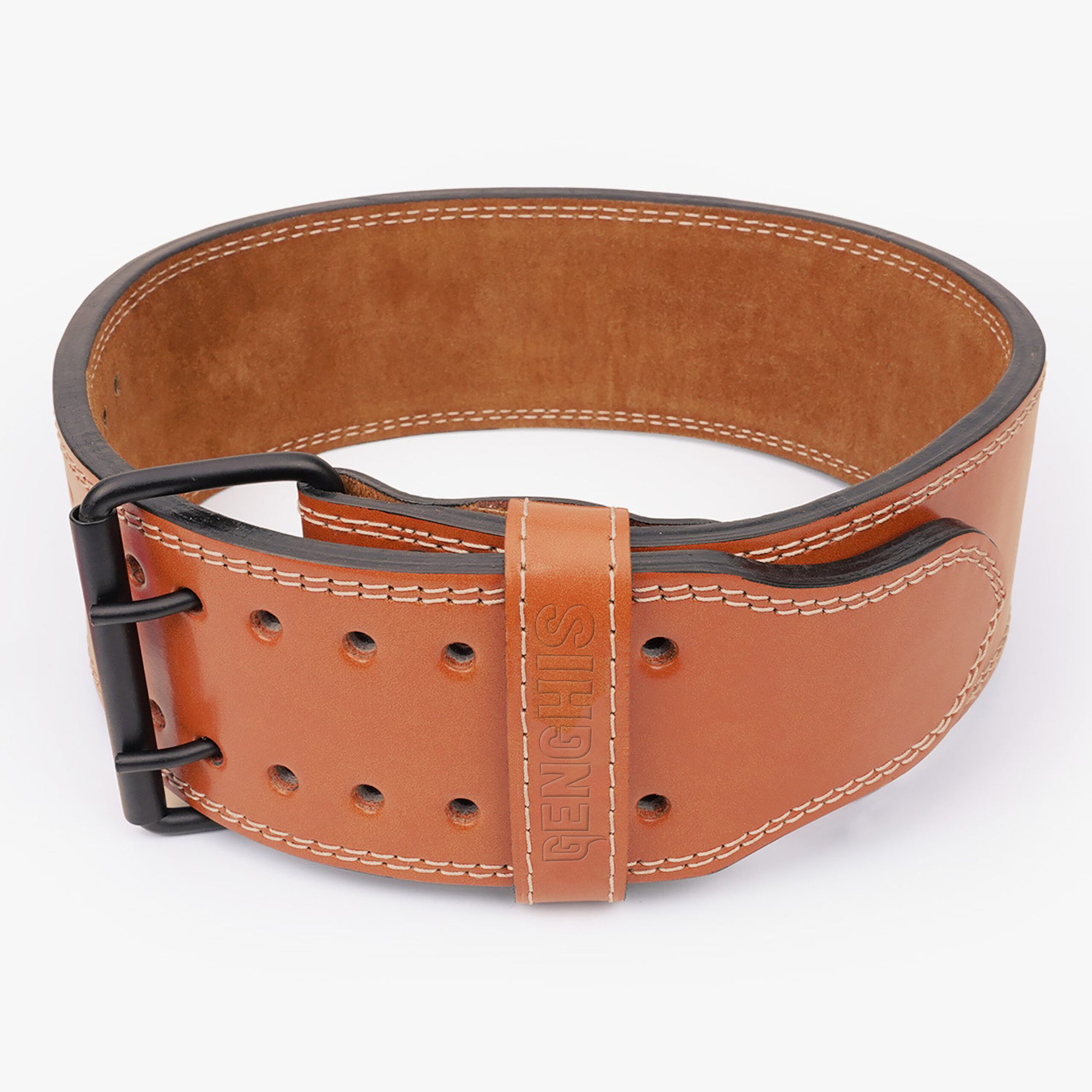
WEIGHTLIFTING BELT SIZING GUIDE: HOW TO MEASURE CORRECTLY AND CHOOSE THE RIGHT SIZE
Getting the right lifting belt size is one of the most commonly mismanaged aspects of belt purchasing, and the consequences of sizing errors are significant in both directions. A belt that is too large provides only loose circumferential contact at maximum tightness, which means the core cannot effectively brace against it and the IAP increase that makes belts protective and performance-enhancing never occurs. A belt that is too small cannot close at a tension that allows full belly breathing, which prevents the athlete from taking the breath that is required before the bracing contraction that generates IAP. Both errors produce a belt that feels wrong from the first session and that athletes often incorrectly blame on the product rather than recognizing as a sizing error that is straightforward to correct.
THE MOST IMPORTANT RULE: TRAINING WAIST IS NOT CLOTHING WAIST
The first and most important rule of weightlifting belt sizing is that your training waist measurement and your clothing waist size are not the same measurement. Clothing waist size is typically measured at the natural waist, which is the narrowest point of the torso, usually one to three inches above the navel. This is several inches higher on the torso than where a lifting belt is worn during training. A lifting belt is positioned at or just above the iliac crest, which is typically two to four inches lower on the torso than the clothing waist measurement location. The circumference at the iliac crest is typically two to six inches larger than the clothing waist circumference, depending on the athlete’s body composition and proportions. Using your clothing waist size to order a belt is the single most common cause of belt sizing errors.
HOW TO MEASURE YOUR TRAINING WAIST CORRECTLY
Measure your training waist in a standing position while wearing the clothing you train in. Place the measuring tape at the position where you intend to wear the belt during training, at or just above the iliac crest, not at the natural waist. Take the measurement after a moderate exhale so the tape reflects the relaxed torso circumference rather than the fully expanded bracing circumference. The belt must be able to close at this relaxed circumference. During bracing, the torso expands in all directions and the belt provides resistance to that expansion, which is what creates the IAP increase. Compare your measured circumference to the manufacturer’s sizing chart for the specific belt you are evaluating.
LEVER BELT SIZING: SPECIAL CONSIDERATIONS FOR THE CLOSURE MECHANISM
Lever belt sizing requires particular care because the lever position on the belt body is set once and fixed for each session. The lever must be able to close at the position that creates the correct training tension for your torso circumference. If the lever must be set at the very end of the available adjustment range to close, you have limited room to accommodate the natural variation in torso circumference across sessions caused by hydration, food volume, and daily body weight fluctuation. The ideal lever position closes in the middle third of the available adjustment range, giving you room to move the lever position one step in either direction if you want slightly more or less tension on a given training day without being at the extreme of the adjustment capacity.
WHEN TO SIZE DOWN VS SIZE UP
When choosing between two adjacent sizes for a lever belt, size down rather than up. A belt that is slightly snug when closed provides better bracing contact than a belt that is slightly loose and requires maximum tightening to create adequate tension. The correct tension for a lifting belt allows full belly breathing with the belt closed but provides firm resistance when the core is braced outward. If you cannot take a full breath into the belly with the belt on, it is too tight. If the belt does not provide firm resistance when the core is braced maximally outward against it, it is too loose. This tension range is what the belt must achieve with the lever set in a mid-range position or the prong engaged at a mid-range hole position.
BELT WIDTH: 4 INCH VS 3 INCH AND HOW TORSO PROPORTIONS DETERMINE THE CHOICE
Belt width is the second sizing dimension that requires evaluation alongside circumference. The standard powerlifting belt width is 4 inches, which provides the most surface area for bracing contact and is the competition-legal width in major federations. Four inches is appropriate for athletes whose torso proportions allow the belt to sit between the iliac crest and the lower rib cage without contacting both simultaneously. Athletes with shorter torsos may find that a 4-inch belt contacts both the iliac crest and the bottom ribs at deep squat positions, creating discomfort and restricting movement. For these athletes, a 3-inch belt provides essentially the same lumbar coverage and IAP support without the height interference that creates positional problems. If you are uncertain which width suits your torso proportions, measure the distance between your iliac crest and lower rib cage while seated in a flexed position.
THICKNESS SPECIFICATION: WHY 10MM IS THE STANDARD FOR MOST ATHLETES
Thickness at 10mm is the most common specification for both training and competition use. The research on belt rigidity and intra-abdominal pressure validates 10mm leather as the optimal balance of stiffness for IAP generation and comfort for sustained training use. The 13mm option provides additional rigidity that some elite powerlifters prefer for maximum effort lifts but is less comfortable during extended training sessions and is not typically necessary or beneficial for athletes training below elite competition levels. For most athletes at most training intensities, 10mm is the correct thickness specification for both leather and lever belt options.
SIZING NEOPRENE AND NYLON BELTS CORRECTLY
Neoprene and nylon belts use different sizing conventions than leather belts because their closure systems differ. Neoprene belts sized by small, medium, large, and extra-large use measurements that correspond to waist circumference at the training position rather than at the clothing waist position. The neoprene weightlifting belt sizing guide specifies the circumference ranges for each size designation, and athletes should measure their training waist circumference and match it to the appropriate size rather than assuming their clothing size will transfer. The nylon lifting belt similarly uses circumference-based sizing at the training waist position. When in doubt between two sizes for neoprene or nylon belts, size down for adequate compression and bracing contact.
WHEN CUSTOM SIZING IS THE CORRECT SOLUTION
If your training waist circumference does not fall cleanly within the standard sizing range of available belt sizes, or if your torso proportions require a non-standard combination of circumference, width, and thickness specifications, a custom-designed lifting belt eliminates the sizing compromise entirely. Custom belts are built to the exact measurements you specify, ensuring the lever or prong engages at the correct position on the belt body for your specific circumference and that the belt width matches your torso proportions without adjustment. The additional cost of custom sizing is recovered in training quality: a belt that fits correctly from session one provides its full IAP benefit immediately rather than requiring workarounds to function adequately despite a sizing mismatch.
FINAL WORDS
The sizing principles in this guide apply to all belt types across all materials. Measure at the training position, not the clothing waist position. Size down when between two sizes for lever and neoprene belts. Verify that the closure engages in the middle of its available adjustment range. Confirm that full belly breathing is possible at the intended training tension. Check that the belt width does not create contact issues at the extremes of range of motion. Pair the correctly sized belt with knee sleeves for complete joint support and lifting straps for heavy pulling sessions as part of a training support system where every tool is correctly sized and correctly used. The Genghis Fitness 10mm lever belt and powerlifting leather belt are available in sizing ranges appropriate for the training waist circumferences of most athletes, and the sizing charts reflect the training waist position measurement rather than the clothing waist measurement that causes errors elsewhere.
Certified strength and conditioning specialists with over 10 years of experience in powerlifting, nutrition, and evidence-based fitness content. Based in New York City.
Related guides and comparisons are collected in the weightlifting belt guides, covering all belt materials, thicknesses, closure systems, and sport-specific recommendations in one location.