Weightlifting Hook: How Lifting Hooks Work and When to Use Them
A weightlifting hook is a grip aid that attaches to the wrist and hooks over the barbell, transferring the load from the fingers and hand to the wrist and forearm. Unlike lifting straps that wrap around the bar and use friction and material tension to hold the hand in contact, a hook creates a rigid mechanical connection between the wrist and the bar that does not require the finger flexors to do any work at all.
This is a more complete grip solution than straps for specific applications and a more limited tool in others. Understanding exactly where hooks excel and where they fall short determines whether they belong in your training bag.
How Weightlifting Hooks Work
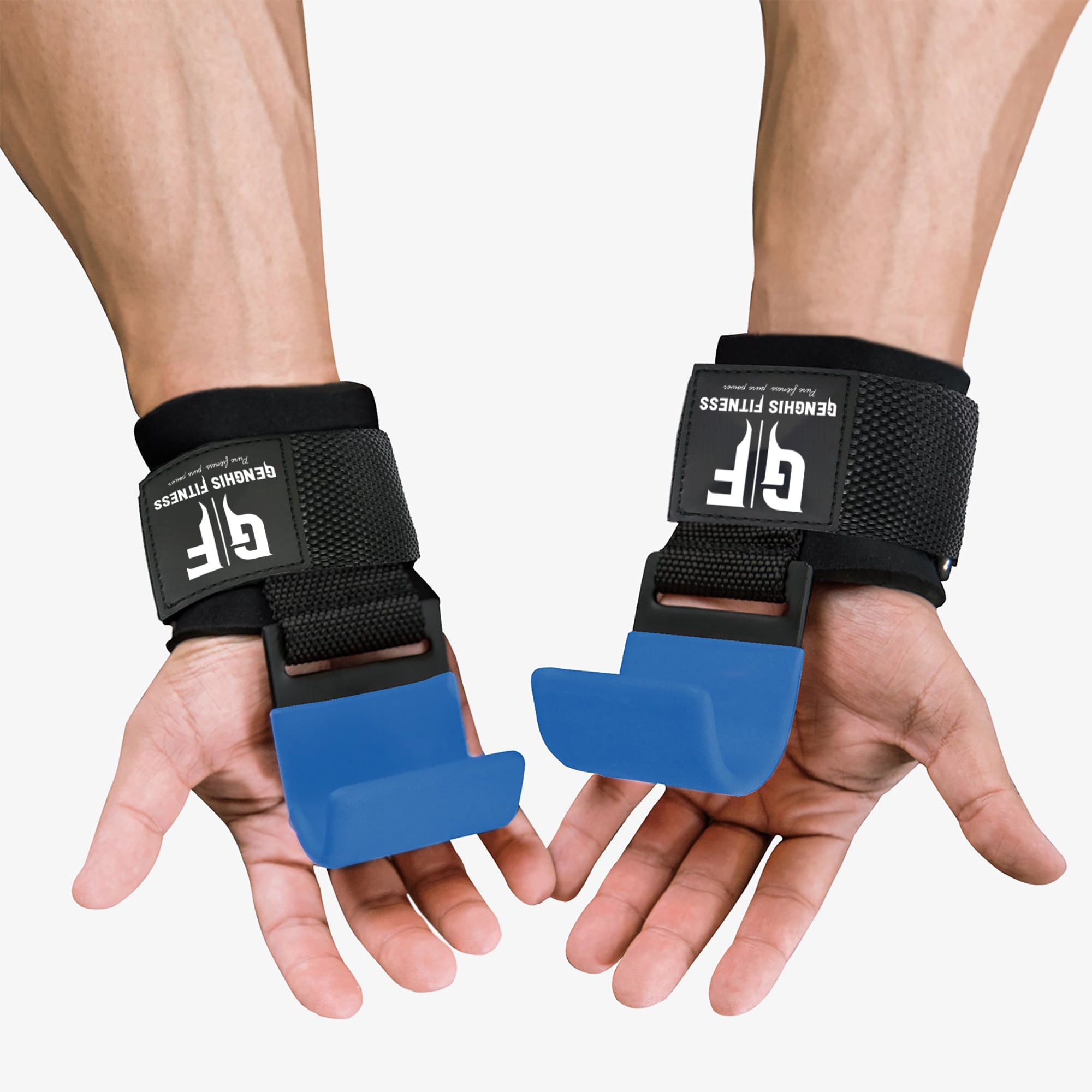
The hook mechanism consists of a rigid hook element, typically made from steel or heavy-duty plastic, mounted on a wrist strap. The strap wraps around the wrist and is secured with velcro. The hook extends over the back of the hand and curves downward toward the palm. To use the hook, the athlete closes the fingers around the bar with the hook positioned between the palm and the barbell. As the bar is lifted, the hook bears the load rather than the finger flexors.
The Genghis Fitness weight lifting hooks are built with a wrist strap that distributes the load across the forearm and a hook designed to handle the full range of loads used in strength training without deforming. Once hooked onto the bar, the weight is held even if the athlete relaxes their fingers entirely.
Where Hooks Outperform Straps
Speed of Setup
Lifting hooks are faster to get onto and off the bar than any strap design. The hook slides over the bar in one motion. Straps require wrapping one or more times around the bar. For athletes doing high-rep accessory work where grip is frequently the limiting factor and fast transitions between sets matter, hooks reduce setup time to near zero.
Grip-Independent Loading
Straps reduce the demand on grip but do not eliminate it. Even with straps, some finger flexor engagement is still required to maintain the hand’s position on the bar. Hooks remove the grip requirement almost entirely. The load is borne by the wrist structure rather than the hand. This makes hooks the correct tool for athletes with grip limitations due to injury, for testing the pulling muscles at loads that exceed any grip capacity, and for very high-rep work where grip fatigue would otherwise cut sets short.
Consistency Across the Set
Straps can slip or shift across a long set at heavy loads, creating inconsistent tension through the range of motion. A hook that is correctly sized and positioned does not slip. The mechanical connection between the hook and the bar remains constant from the first rep to the last, which eliminates the grip inconsistency that affects strap users at maximum loads.
Where Straps Outperform Hooks
Releasing the Bar Mid-Set
Standard loop straps and leather straps can be released by simply opening the hand. The strap stays on the bar and the hands come free. Hooks cannot be released quickly because the hook mechanism requires the bar to be set down or the wrist to be turned to disengage. For safety in any exercise where dropping the bar is necessary, straps are preferred. Never use hooks for Olympic lifting movements where bar release in the catch phase is essential.
Feel and Proprioception
Straps maintain some contact between the hand and the bar. The hand still receives proprioceptive information about bar positioning and movement through the strap. Hooks effectively remove most of this information. Some athletes find that hooks make it harder to feel how the bar is moving and positioned, which can affect technique on exercises where bar path matters. For simple vertical pulling, this is rarely an issue. For more technical pulling movements, straps may preserve more useful feedback.
Best Exercises for Weightlifting Hooks
- Deadlift: all variations including conventional, sumo, Romanian, and stiff-leg
- Rack pulls and partial deadlifts above the knee
- Barbell rows: pendlay row, bent-over row, yates row
- Lat pulldowns and cable rows at maximum resistance
- Shrugs: barbell, dumbbell, and trap bar
- Farmer’s carries where grip endurance would otherwise end the set
- Heavy dumbbell rows where one-arm support makes strap wrapping awkward
How to Size and Fit Weightlifting Hooks
The wrist strap section is sized by wrist circumference. Most hooks are adjustable across a broad range through the velcro closure and are labeled as one-size-fits-most or come in two size brackets. The hook element should sit comfortably against the back of the hand when the strap is secured, with the hook extending over the fingers toward the palm without digging into the knuckles.
Test the fit by closing the fingers around a bar with the hook in position. The hook should contact the bar and hold the wrist close to the bar surface without the hook riding so high that it contacts the forearm or so low that it misses the bar entirely. Adjust the strap length and hook position before loading the bar.
Breaking In New Hooks
New hooks can feel stiff and awkward in the first few sessions. The wrist strap needs to form to your wrist shape, and the hook angle may need minor adjustment to sit correctly against your hand anatomy. Use the hooks for moderate-weight sets in the first two to three sessions before applying them to maximum loads. This allows both the equipment and your technique for using them to settle before the loads are at their most demanding.
Pairing Hooks with a Lifting Belt
Heavy pulling sessions with hooks benefit from addressing both the grip and the lumbar bracing simultaneously. The Genghis Fitness powerlifting leather belt handles core bracing for the heaviest deadlifts and rows while the hooks handle the grip side. For athletes who alternate between hooks for maximum loads and straps for working sets, the Genghis Fitness leather weight lifting straps and figure-8 lifting straps cover the full spectrum from moderate-load strap work to maximum-load hook use.
Care and Inspection
Inspect the hook element for cracks or deformation after every few months of heavy use. A hook that has bent under load no longer sits at the correct angle and may slip from the bar at critical moments. The velcro on the wrist strap should hold the strap firmly under the tension of a heavy set. Weak velcro that allows the strap to loosen mid-set should be replaced before it causes a loss of control under load.