When to Use a Weight Belt: The Complete Decision Framework
The answer most lifters receive to this question is vague at best. Use it on heavy sets. Use it when you need it. The problem with those answers is that they assume you already know what heavy means in this context and what needing it actually looks like. If you are asking when to use a weight belt, you probably do not have clear answers to either of those questions yet.
This guide gives you a concrete, decision-based framework for knowing exactly when to strap in, when to leave the belt on the hook, and how to integrate it intelligently into your training across different lifts and loading phases.
The Core Principle: The Belt Amplifies What Your Core Already Does
A weight belt enhances intra-abdominal pressure by giving the abdominal wall a rigid surface to push against when you brace. It does not create the bracing response. It amplifies it. This distinction matters for the when question because if your core is not bracing actively, the belt is a decorative accessory, not a functional tool.
The belt is most valuable when two conditions are present simultaneously: the load is heavy enough to genuinely challenge your bracing capacity, and you are executing an active, intentional brace against the belt. Remove either condition and the belt contributes much less than people assume.
Movements That Benefit from a Belt
Heavy Compound Lifts with Axial Loading
Axial loading means load is transmitted through the spine from top to bottom, as in a barbell squat or overhead press. These movements create the most spinal compressive and shear force of any gym exercise and are where the belt provides the clearest biomechanical benefit. The primary movements in this category are the back squat, front squat, deadlift, Romanian deadlift, sumo deadlift, barbell row, and standing overhead press.
Use the belt for working sets on all of these movements when you are training at 80 percent of your one-rep max or above. At that intensity, the belt provides a meaningful enhancement to your bracing capacity and the corresponding reduction in spinal loading is relevant.
Olympic Weightlifting Movements
The clean, snatch, and their derivatives involve rapid acceleration and aggressive hip extension. Many Olympic weightlifters use a belt, though opinions vary on whether it is beneficial or limiting for the catch phase. If you use a belt for Olympic movements, a thinner, more flexible option like a nylon or 10mm leather belt is preferable to a rigid 13mm belt that can restrict the hip and torso positions required in the catch.
Loaded Carries
Heavy farmer’s carries, yoke carries, and suitcase carries place sustained axial loading on the spine across a duration that challenges core endurance rather than maximal bracing capacity. A belt during heavy loaded carries extends the time you can maintain quality spinal position before fatigue compromises your mechanics. This is a legitimate use case that many lifters overlook.
Movements That Do Not Benefit Significantly from a Belt
- Machine-based lower body exercises: leg press, leg curl, leg extension. The loading is not transmitted through the spine axially.
- Horizontal pulling: cable rows, seated machine rows. Spinal loading is present but does not reach the levels where belt use is meaningful for most athletes.
- Isolation exercises: curls, lateral raises, tricep pushdowns. No significant spinal loading.
- Bodyweight exercises: push-ups, pull-ups, dips. A weighted dip belt adds external load but a lifting belt around the waist does nothing useful here.
- Cardio and conditioning work: running, rowing, cycling. The belt restricts breathing expansion which is counterproductive to sustained aerobic effort.
The Load Threshold: When Heavy Becomes Belt-Worthy
A useful working rule is to train without the belt until you reach 80 percent of your working weight for the session. Below that threshold, your core musculature benefits from the training stimulus of bracing without external support. Above it, the belt is adding genuine safety margin and performance benefit.
For a lifter whose best squat is 300 pounds, the belt comes on when warm-up sets reach approximately 240 pounds. Everything below that is performed beltless. This preserves unassisted core development while using the belt when the loads actually warrant it.
The National Strength and Conditioning Association supports the principle that core stabilizer training without external support is important for long-term athletic development. Using the belt too early in the warm-up sequence reduces this stimulus without providing proportional safety benefit at sub-maximal loads.
Early Career vs Advanced Athletes
Beginners: Hold Off Longer Than You Think
Athletes in their first year of serious barbell training should delay belt use until their technique is consistent and their core strength is genuinely being challenged by their training weights. Using a belt before technique is established can mask positional errors and prevent the proprioceptive learning that comes from feeling when spinal position breaks down under load.
A beginner whose deadlift is 135 pounds does not need a belt. The spine is not being loaded at a level where the bracing enhancement changes anything meaningful. Train beltless until your lifts start to feel genuinely demanding, typically around 1 to 1.5 times bodyweight on the squat and deadlift.
Intermediate Athletes: Selective Use for Top Sets
Once your strength base is established, introduce the belt for your heaviest work sets while continuing to warm up without it. This is the most productive phase for belt use because it lets you continue overloading the movement under slightly more favorable conditions while the warm-up sets keep the unassisted core development ongoing.
Advanced Athletes: Use as a Precision Tool
Advanced athletes typically know exactly which sets warrant the belt and which do not. Belt use becomes habitual and efficient rather than a deliberate decision each session. Some advanced athletes periodically train entire training blocks without a belt to identify weaknesses that have been masked by consistent belt use. This is a legitimate practice used by many strength coaches.
When to Use a Belt for Injury Management
A weight belt is sometimes used by athletes managing lower back fatigue or mild strain who still want to train. This is not ideal and should be done conservatively. If pain is present, the first step is reducing load and volume rather than adding a belt to push through it. A belt does not protect damaged tissue. It helps a healthy spine perform under load.
If you have a diagnosed lower back condition, follow your physician or physical therapist’s specific guidance on returning to loaded training. Do not self-prescribe belt use as a workaround for a medical issue that needs treatment.
When Not to Use a Belt Even on Heavy Sets
There are scenarios where the belt is counterproductive even on heavy work. If you are working on a movement where core stability under load is itself the training goal, such as in certain corrective exercise protocols or foundational movement work, using the belt removes the training effect you are trying to create.
If you are performing exercises where intra-abdominal pressure could be problematic, such as during post-surgical recovery or with certain cardiovascular conditions, follow medical guidance rather than general training principles.
The Practical Decision Checklist
- Is this a compound, axially loaded movement? If no, skip the belt.
- Is the load at or above 80 percent of my working weight? If no, train beltless.
- Am I executing an active, intentional brace against the belt? If no, the belt is not providing its designed benefit.
- Have I warmed up without the belt for early sets? If no, reconsider skipping straight to belted work.
- Is this a session where I want to test unbelted capacity? If yes, leave it off deliberately.
Selecting the Belt You Use When You Use It
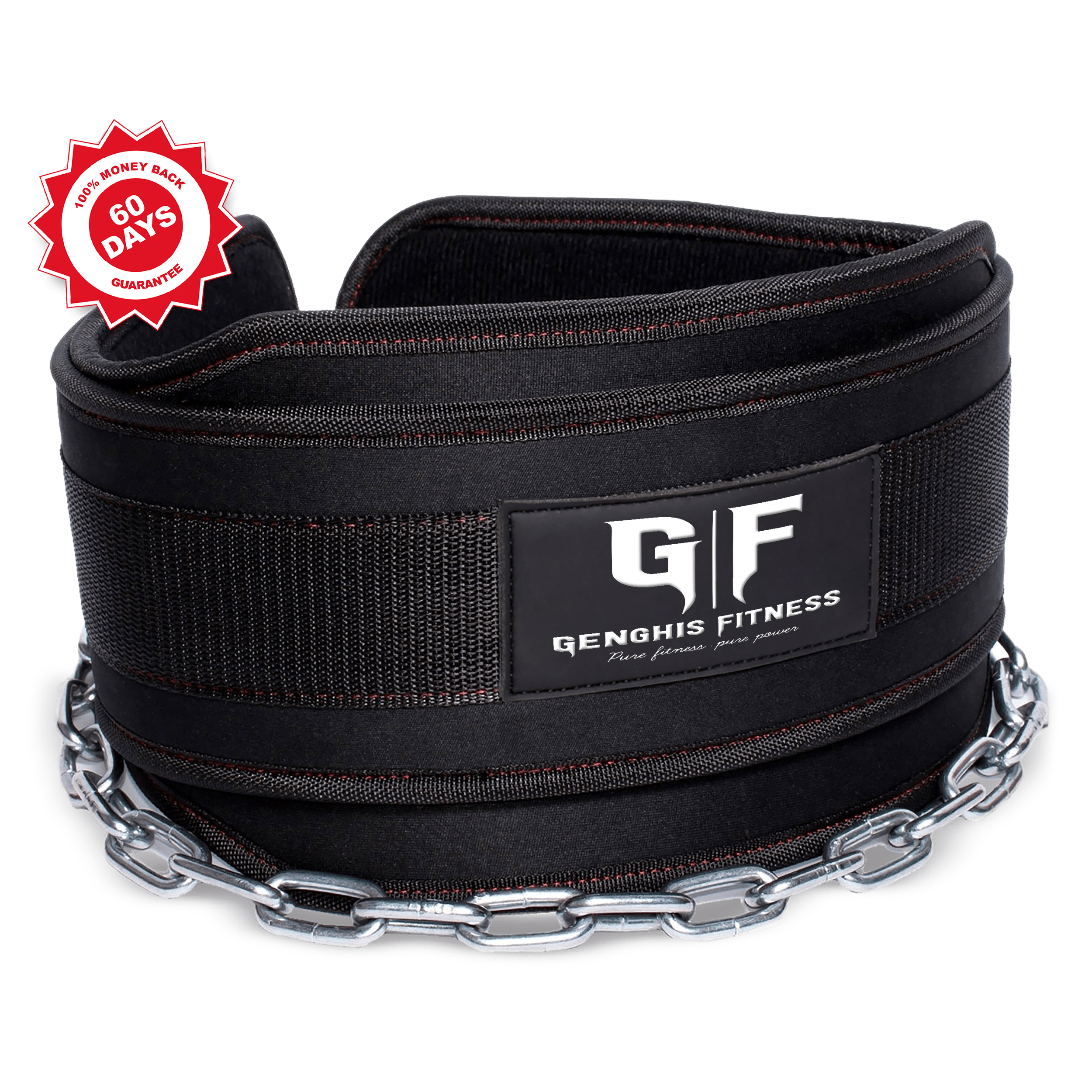
For heavy squats and deadlifts, the Genghis Fitness powerlifting leather belt provides the rigidity those movements benefit from. For Olympic lifting or mixed-modality sessions, the nylon lifting belt offers faster transitions and less restriction in the hip positions required for cleans and snatches. For general gym training at moderate to heavy loads, the neoprene weightlifting belt covers the full range of a typical mixed session.
Final Word
Use a weight belt on the sets where spinal loading is high, your brace can benefit from external amplification, and you are executing the technique correctly. Skip it everywhere else. That simple framework, applied consistently, captures most of the belt’s benefit while preserving the core training stimulus that makes your brace stronger over time.