Genghis Fitness · Gear Guides and Bench Press
Bench Press Slingshot: What It Does, How It Helps Break Through Plateaus, When to Use It, and Whether It Is Worth Buying
Updated 2026 | By Team Genghis Fitness | 22 min read
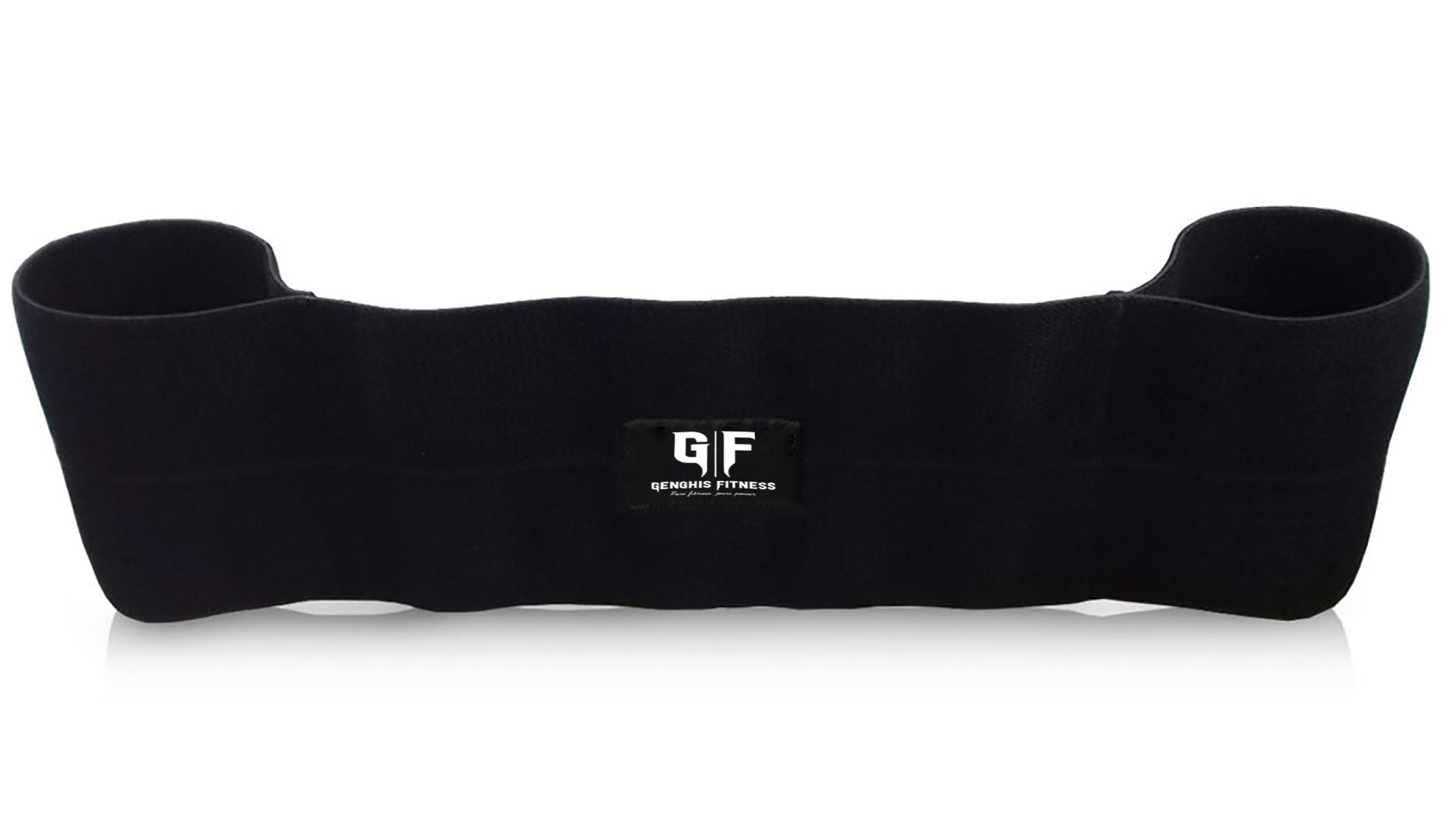
The bench press slingshot (also called a bench blaster or pressing sling) is an elastic band that wraps around the upper arms and stores energy at the bottom of the bench press, releasing it during the ascent to help the lifter through the sticking point. It was developed and popularised by powerlifter Mark Bell and has become one of the most widely used bench press training tools in strength sports. The slingshot is neither a magic performance enhancer nor an overrated gimmick; it is a specific tool with specific applications that make it genuinely useful for some training goals and irrelevant for others. This guide covers what the slingshot actually does mechanically, the evidence for its training effects, and the specific use cases where it provides real value.
What the Slingshot Actually Does
The slingshot is made from elastic material that stretches as the bar descends to the chest. At the bottom position, the elastic tension stores energy and assists the press from the bottom through the sticking point (typically 5 to 15 cm off the chest). This assistance typically allows lifters to press 10 to 20 percent more weight than their raw maximum or complete more reps at a given load than they could without assistance.
The mechanical effect is specifically at the sticking point, not at lockout. The slingshot provides maximum assistance where the mechanical disadvantage is greatest (just off the chest where the leverage is worst) and progressively less assistance as the bar moves higher and the raw pressing advantage increases. This means the slingshot overloads the lockout with more total weight than the lifter could normally handle at that position, creating an overloading effect in the stronger range.
Research published in the Journal of Human Kinetics examined slingshot use and found it significantly increased force output and bar velocity compared to raw pressing at equivalent perceived effort, confirming the mechanical assistance effect and suggesting utility for developing bar speed and neural drive at supramaximal loads.
When the Slingshot Provides Genuine Training Value
Breaking through bench press plateaus: When bench progress stalls despite consistent training, using the slingshot for 3 to 6 weeks to overload the pressing muscles with supramaximal loads can break through the neural ceiling that plateau represents. The lifter uses 10 to 15 percent more than their raw maximum with the slingshot, forcing the nervous system to recruit additional motor units and adapt to the higher force demand. When the slingshot is removed, the trained pattern with enhanced neural drive often translates to a raw personal record. This is the most evidence-supported application of the slingshot as a training tool.
High-volume work with reduced joint stress: The slingshot reduces the joint stress at the bottom of the bench press by taking some of the load at the position of maximum shoulder impingement risk. For athletes who want to accumulate high bench press volume for hypertrophy or endurance purposes but are limited by shoulder pain at the bottom position, the slingshot allows higher rep sets with less bottom-position joint stress. This is particularly useful during high-volume hypertrophy phases where the goal is muscle endurance and metabolic stress rather than raw strength development.
Accommodating resistance training: Combining the slingshot with accommodating resistance (bands or chains that add load at the top of the lift) creates an overload curve that matches the strength curve of the bench press more precisely than straight weight alone. This advanced technique is used by competitive powerlifters to develop explosive strength off the chest while also overloading the lockout. Our bench blaster sling is designed for exactly these applications.
When Not to Use the Slingshot
The slingshot should not be used as the primary bench press training tool by athletes who need to develop raw bottom-position strength. If weakness at the bottom of the press is the limiting factor in the raw bench, using the slingshot masks and avoids this weakness rather than addressing it. Beginners and intermediate lifters who have not yet maximised their raw bench press gains through basic progressive overload should prioritise raw technique development before introducing the slingshot. Close-grip bench press variations, pause bench press, and tempo training to address specific weaknesses are more targeted solutions for technique-based limitations than the slingshot.
Frequently Asked Questions
How Much Does the Slingshot Add to the Bench Press?
The slingshot typically adds 10 to 20 percent to the raw bench press maximum, depending on band tension, the lifter’s build, and technique. A lifter with a raw max of 140 kg can typically use 155 to 168 kg with the slingshot. This 10 to 20 percent range means the slingshot works best as an overloading tool for experienced lifters who have plateaued, not as a shortcut for beginners to lift more weight than their strength warrants.
Is the Slingshot Safe for Injured Shoulders?
The slingshot reduces anterior shoulder stress at the bottom position and can allow continued bench training for athletes with mild shoulder impingement that limits raw pressing. However, training through an acute shoulder injury without medical evaluation is not advisable regardless of what equipment is used. Athletes with diagnosed shoulder conditions should get physiotherapy guidance before using the slingshot to ensure the assistance mechanism does not create different load patterns that worsen the specific injury. For general shoulder discomfort from bench volume, the slingshot combined with correct technique corrections (elbow angle, scapular position) often provides enough relief to continue productive training.
How Should the Slingshot Be Programmed?
The most effective programming approach: use the slingshot for 1 to 2 sessions per week during a 4 to 8 week overloading block, working at 10 to 15 percent above raw maximum for sets of 3 to 5 reps. Continue 1 to 2 raw bench sessions per week at normal training loads during the same period so the raw technique is maintained. After the overloading block, drop the slingshot for a peaking phase of 2 to 3 weeks and test the raw maximum. Most athletes see a 2.5 to 7.5 kg improvement in raw maximum following a properly executed slingshot overloading block.
Break Through Plateaus. Overload the Press. Hit New Personal Records.
The bench blaster for supramaximal overloading. Wrist wraps for every heavy session.
Shop Bench Blaster Shop Wrist WrapsBuilding The Overload Phase Into Your Bench Training Block
The slingshot creates a specific training stimulus that cannot be replicated with a straight bar and more weight. When the elastic material loads at the bottom of the press and contributes force through the concentric, the lifter experiences a bar weight that exceeds their raw capacity while still completing a mechanically sound full press. This overload exposure teaches the nervous system to produce force against loads it has not handled before, which is a proven driver of maximal strength adaptation. Three to four weeks of slingshot work at 105 to 115 percent of your raw bench maximum, followed by a return to raw pressing, consistently produces new raw bench maxes for intermediate and advanced lifters who have stalled on conventional progressive overload.
The bench blaster sling from Genghis Fitness provides the elastic resistance profile that makes this overload method effective, with construction designed to maintain consistent tension through repeated heavy use rather than degrading after a few training blocks. Program slingshot work on your primary bench day for three to four weeks as a peaking tool, working up to two to three heavy singles or doubles at your overload weight. Return to raw bench pressing the following week and test your new raw max after the nervous system adaptation from the overload phase has settled. Most athletes find their raw bench has moved three to ten pounds upward after a properly executed slingshot overload block, which represents significant progress for lifters who have been training long enough that raw strength gains have slowed to small increments.
Certified strength and conditioning specialists with over 10 years of experience in powerlifting, nutrition, and evidence-based fitness content. Based in New York City.
PROTECT YOUR BENCH AND PUSH MORE WEIGHT
A bench blaster overloads your lockout, wrist wraps lock your joint, elbow sleeves keep the tendons warm.
Elbow Sleeves