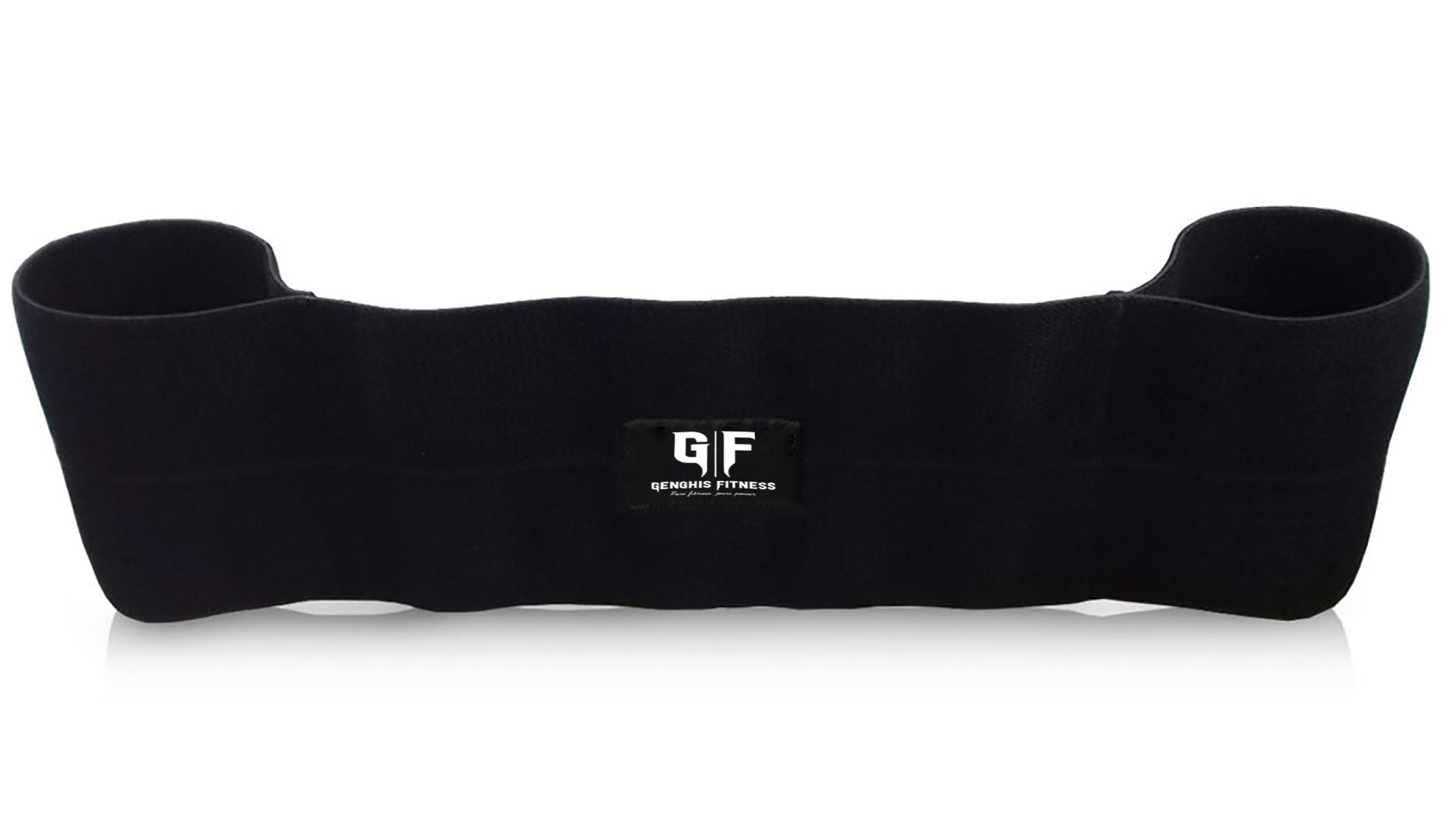
Bench Blaster for Bench Press: Mechanism, Application, and Programming
The bench blaster is an elastic sling that wraps around both upper arms and stores energy during the descent of the bench press, releasing it as mechanical assistance at the bottom position. The practical outcome is that you can handle loads above your current raw maximum through the full range of motion, which provides a training stimulus your nervous system and pressing musculature cannot experience through standard raw bench work. Used correctly in structured programming blocks, it produces measurable raw bench press improvements.
How the Bench Blaster Works
The elastic material of the sling stretches under tension as the bar descends toward the chest. At the bottom of the press — the point where raw pressing is most mechanically disadvantaged and where the sticking point typically lives — the sling releases its stored elastic energy and adds it to your muscular pressing force. This lets the bar move through the sticking point with a load that would otherwise pin you at the bottom.
The mechanical assistance is not constant through the range of motion. It is concentrated at the bottom and decreases as the bar moves toward lockout. This means your triceps and anterior deltoid are still doing real work in the top half of the press. The sling does not make the lift easy. It makes the impossible load possible for the specific portion of the range of motion where your current raw capacity would otherwise end.
Who Benefits from Bench Blaster Training
Powerlifters and serious bench press athletes who have been stuck at the same weight for multiple training cycles are the primary use case. When progressive loading on raw bench has stalled despite consistent training, the nervous system needs a new stimulus — specifically, the experience of handling loads above the current maximum. The Genghis Fitness Bench Blaster Sling provides that stimulus by allowing four to six weeks of working sets at five to fifteen percent above your current raw maximum.
Athletes recovering from minor shoulder irritation who need to reduce the joint stress at the bottom of the bench press while maintaining training volume will find the sling useful as a load management tool. The elastic assistance at the bottom position changes the stress profile of the press in a way that some athletes find allows continued bench training at reasonable volume while the shoulder recovers from accumulated loading stress.
How to Programme a Bench Blaster Block
Run bench blaster work in four to six week blocks. The protocol is straightforward: take your current raw bench press maximum, add five to ten percent, and use that as your working load with the blaster. Perform three to four working sets of four to six reps at this load. The key training signal is the experience of the nervous system handling supramaximal weight through the full pressing arc, including the sticking point, repeatedly across multiple sessions.
After four to six weeks, remove the blaster and test raw. Most athletes who run the protocol consistently report a raw press improvement of five to fifteen pounds when they return to unassisted pressing. The mechanism is neural adaptation — the nervous system has learned to recruit pressing musculature more efficiently at loads above the previous maximum because it has been repeatedly exposed to those loads in the blaster.
Do not run bench blaster blocks continuously. After six weeks of blaster work, return to raw pressing for at least four weeks before starting another cycle. Continuous sling use reduces the specificity of the overload stimulus as your body adapts to the assisted loads. The tool works best as a periodic intervention applied when raw progress has stalled, not as a permanent fixture in the program.
Bench Blaster vs Slingshot
The bench blaster and the slingshot are both elastic pressing assistance tools with similar mechanisms. The primary difference is in the magnitude of assistance and the application point. A slingshot provides assistance throughout more of the pressing range and tends to add more total load carryover. The bench blaster concentrates its assistance more specifically at the bottom position sticking point.
Neither is universally superior. Athletes who want to focus their overload specifically at the sticking point will find the bench blaster more targeted. Athletes who want a broader overload stimulus across the full pressing range may find a slingshot suits their programming intent better. Both should be used in structured blocks rather than continuously.
Related reading
Bench Blaster Exercise Guide | Wrist Wraps for Bench Press | Bench Blaster vs Slingshot
Common Setup Mistakes to Avoid
The most common mistake with the bench blaster is starting too heavy. Athletes who load five percent above their maximum for the first session before developing familiarity with how the sling changes the mechanics of the press create a negative first experience that makes them discard the tool before it has a chance to produce results. Start at a load you can raw bench for eight or nine reps. The sling makes the first session feel easier than raw pressing. That feeling goes away quickly as loads increase toward and above your raw maximum.
The second common error is incorrect sling positioning. The sling should sit at armpit level on the upper arms. Too high on the shoulder means the elastic pulls in the wrong direction and reduces the assistance at the bottom position. Too low toward the elbow changes the angle and creates awkward mechanical forces that interfere with your natural pressing path. Check the position in a mirror or have someone verify it before your first working set.
The third error is using the blaster as a permanent tool rather than a periodic intervention. Athletes who train in the sling every bench session for months stop getting the overload adaptation benefit because the nervous system adapts to the assisted loads. The tool is most effective when the raw bench has stalled and the blaster provides a specific novel stimulus to break through the plateau. After the adaptation occurs and raw pressing improves, return to raw training and save the blaster for the next plateau cycle.
Warm up without the sling before every bench blaster session. Your shoulder joints and pressing musculature need to be fully warmed up and primed before you load them with supramaximal weights. Three to four progressive raw warm-up sets is the standard approach. Put the blaster on only for your working sets at or above your raw maximum. This protects the shoulder while ensuring the overload stimulus is applied at the intensity level where it produces the intended adaptation.
Tracking your raw bench numbers before, during, and after a bench blaster block makes the adaptation visible and keeps your programming evidence-based. Log your raw one-rep maximum or a calculated maximum from a three to five rep max test before starting the blaster block. Log the weights you handle in the blaster throughout the block. Test raw again at the end of the block before returning to standard programming. Most athletes who run this tracking process and follow the block structure correctly see their raw numbers move, and having the data makes the next blaster block easier to programme with precision.