Genghis Fitness · Equipment and Bench Press Training
Bench Blaster and Slingshot: How Accommodating Resistance Overloads the Bench Press, EMG Research, Correct Use, and Who Benefits
Updated 2026 | By Team Genghis Fitness | 22 min read
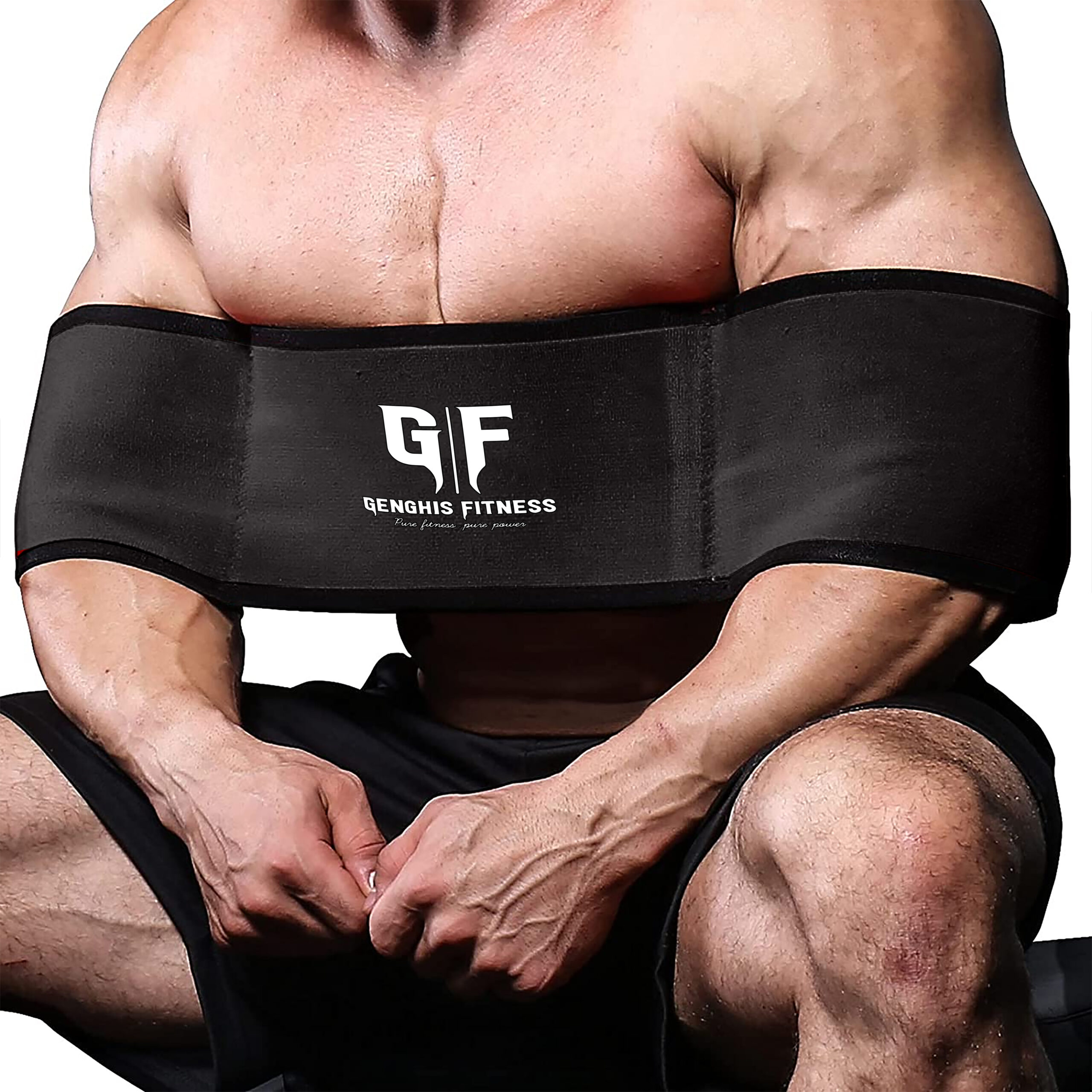
The bench blaster (also sold as a slingshot bench press training device by different manufacturers) is an elastic sleeve worn around the elbows during the bench press that stores elastic energy at the bottom of the press and releases it during the concentric phase, allowing the athlete to lift significantly more weight through the full range of motion than they can unassisted. This creates supramaximal loading through the lockout portion of the press, the range where the triceps and anterior deltoid are the primary movers, while simultaneously providing mechanical assistance through the stretched-pectoral bottom range where the pec is under maximum load. The device is a legitimate training tool with research support for specific adaptations when used correctly, and a misused piece of equipment when athletes use it as a substitute for developing true strength through full-range, unassisted pressing. Understanding exactly how it works and when it genuinely benefits bench press development determines whether it belongs in your training.
The Overload Mechanism: Why Supramaximal Loading Works
The primary training benefit of the bench blaster is supramaximal overload through the lockout range. An athlete with a 140 kg raw bench press can typically use 160 to 180 kg with a bench blaster due to the elastic energy contribution at the bottom of the press, loading the triceps and anterior deltoid through the top two-thirds of the movement with weights exceeding their unassisted maximum. Research on accommodating resistance tools published in the Journal of Strength and Conditioning Research found that supramaximal loading through partial ranges significantly increases muscle activation in the primary movers through the overloaded range, producing strength adaptations in the lockout position that standard full-range pressing at sub-maximal loads does not target as effectively. For powerlifters and competitive bench pressers, developing lockout strength is often the limiting factor in maximum bench press performance, making the overload stimulus of the bench blaster directly relevant to competition performance. The Genghis Fitness bench blaster sling provides the accommodating resistance profile needed for this overload application.
Shoulder Protection and Volume Accumulation
A secondary benefit of the bench blaster is reducing the shoulder stress during high-volume pressing phases. The elastic assistance through the bottom range of the press (where the pectoralis major is under maximum stretch and the shoulder joint is under its greatest internal rotation and anterior capsule stress) reduces the total shoulder loading during each repetition. This allows athletes to accumulate more total pressing volume during hypertrophy and conditioning phases without the shoulder overuse accumulation that unrestricted high-volume pressing creates. Competitive bench pressers who perform 20 to 30 sets of pressing per week during volume phases use the bench blaster for a portion of that volume specifically to protect the shoulder joint during the accumulated rep count while still providing adequate pectoral and tricep stimulus. Using wrist wraps alongside the bench blaster during heavy supramaximal sessions maintains wrist protection during the higher loads that the elastic assistance enables.
Correct Use: Sizing and Programme Integration
Bench blasters and slingshot devices come in multiple resistance levels (light, regular, and heavy for most manufacturers) that provide different percentages of assistance at the bottom of the press. Starting with the light resistance level allows the athlete to learn the device mechanics and identify the correct sizing before progressing to heavier assistance. The device should sit just below the elbow crease, not around the bicep or at the mid-forearm. Correct sizing provides noticeable assistance at the bottom of the press without causing discomfort or restricting wrist position. Programme integration: use the bench blaster for 2 to 4 sets of 3 to 5 reps at 10 to 20 percent above your raw maximum for supramaximal overload work, or for 3 to 4 sets of 8 to 12 reps at your normal working weight for volume accumulation with reduced shoulder stress. Never use the bench blaster as a substitute for raw pressing training. The complete bench press programming approach including equipment integration is in our bench press guide.
Who Benefits Most
The bench blaster benefits powerlifters and competitive bench pressers who need to develop lockout strength at supramaximal loads. It benefits athletes in high-volume pressing phases who want to accumulate pressing volume with reduced shoulder stress. It benefits athletes returning to bench pressing after shoulder injuries who need to re-establish pressing volume without full shoulder loading. It provides minimal benefit to beginners whose raw pressing strength is still developing rapidly through standard programming, where the added complexity and cost of a bench blaster is not warranted. The general guideline is that the bench blaster becomes genuinely useful once an athlete’s raw bench press exceeds their bodyweight, at which point the lockout demands and shoulder volume management considerations that the device addresses become training-relevant.
Integrating the Bench Blaster Into a Training Cycle
The most effective integration of the bench blaster uses it as a supplementary tool in volume and accumulation phases. During volume phases, using the bench blaster for 2 to 3 working sets at normal training weight reduces cumulative shoulder stress. In the strength phase 8 to 12 weeks out from competition, performing 1 to 2 sets at 10 to 15 percent above raw maximum develops the lockout strength that transfers to competition. In the peaking phase 3 to 4 weeks out, discontinue the bench blaster entirely. Using wrist wraps for supramaximal blaster sets protects the wrists during higher loads that elastic assistance enables, and a powerlifting belt for heavy overhead pressing provides intra-abdominal pressure support. Athletes who use the bench blaster strategically in this periodisation pattern develop the lockout strength and shoulder durability advantages of the tool without developing a movement pattern dependency that diverges from competition raw pressing mechanics. The complete bench press periodisation approach for strength athletes is in our bench press programming guide.
Frequently Asked Questions
Does the Bench Blaster Count for Powerlifting Competition?
No. All powerlifting federations (IPF, USAPL, and their affiliates) prohibit the use of bench blasters, slingshots, and any elastic pressing aids during competition. The device is a training tool exclusively. Competition bench press is performed raw (no pressing aids) in most federations, or with an approved bench shirt in equipment divisions. Training with the bench blaster is legal and common among powerlifters as a training aid but has no role in competition performance. Raw strength developed through blaster-assisted training transfers to raw competition pressing through the overload adaptations described above.
How Much More Weight Can You Press With a Bench Blaster?
Most athletes find they can press 10 to 25 percent more weight with a bench blaster compared to their raw maximum, depending on the resistance level of the device and individual mechanics. An athlete with a 120 kg raw bench press can typically manage 135 to 150 kg with a light-to-regular resistance bench blaster. This percentage overload is the primary mechanism through which the device produces training adaptations above what raw pressing alone provides.
Overload the Lockout. Protect the Shoulder. Press Beyond Your Max.
The training tool that builds the strength to break your records on competition day.
Shop Bench BlasterShop Wrist WrapsCertified strength and conditioning specialists with over 10 years of experience in powerlifting, nutrition, and evidence-based fitness content. Based in New York City.
PROTECT YOUR BENCH AND PUSH MORE WEIGHT
A bench blaster overloads your lockout, wrist wraps lock your joint, elbow sleeves keep the tendons warm.
Elbow SleevesBrowse all related guides in the gym accessories guides for how-to guides, buying recommendations, and training applications across every gym accessory.